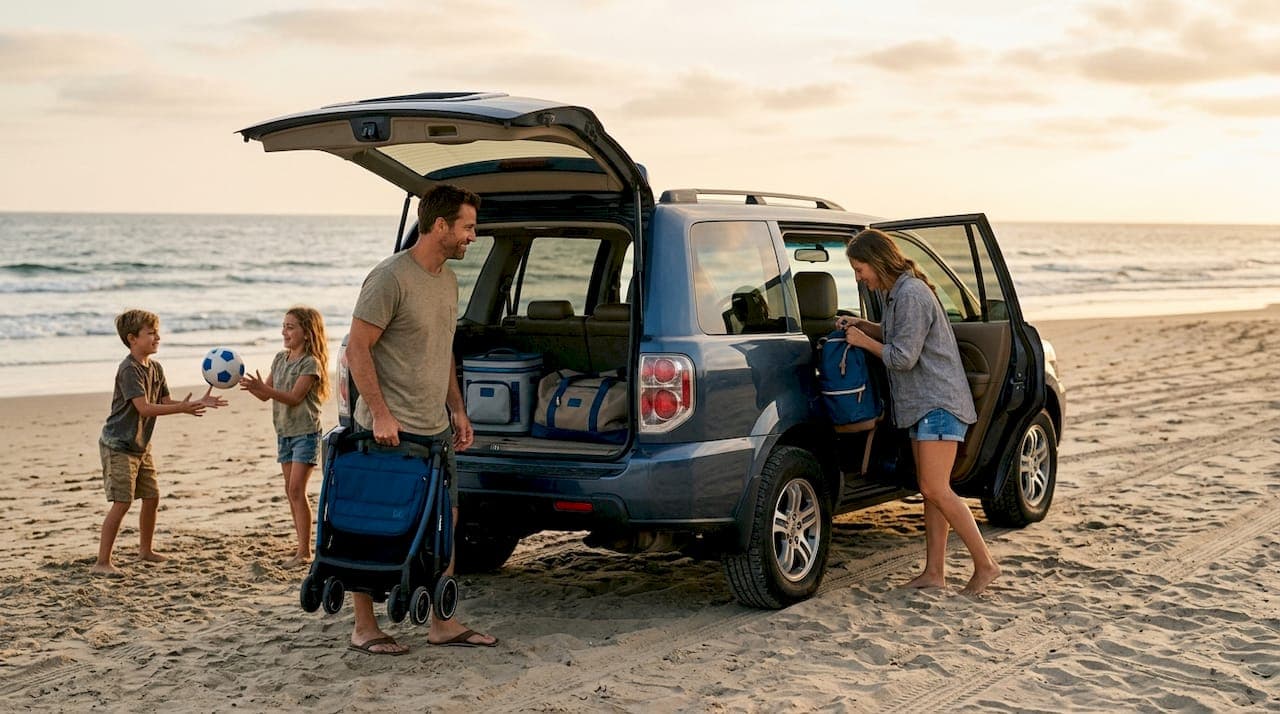
Pre-owned family SUVs are defined as certified or non-certified used sport utility vehicles selected specifically for their capacity, safety, and cost advantages over new models. The benefits of pre-owned family SUVs are well documented: lower purchase prices, reduced insurance costs, slower depreciation, and access to higher trim levels within a realistic family budget. Brands like Toyota, Honda, and Hyundai consistently top reliability rankings, making their used SUVs particularly strong choices. Families who buy a two to three year old SUV often capture nearly all the safety technology and interior space of a new vehicle while avoiding the steepest portion of the depreciation curve.
1. Why pre-owned family SUVs cost less to own
The financial case for buying used is straightforward and backed by data. The Q3 2025 average monthly payment for a used vehicle was $532, compared to $748 for a new car. That $216 monthly difference adds up to more than $2,500 per year, money that most families can redirect toward education, travel, or an emergency fund.
Lower sticker prices also reduce the loan principal, which shrinks monthly payments even when used car loan APRs run slightly higher than new car rates. Insurance premiums follow the same logic: lower insurance and registration costs are a consistent advantage of used vehicles because insurers base premiums largely on replacement value. A three year old Honda CR-V simply costs less to insure than a brand new one.
Depreciation is the hidden cost most buyers overlook. New vehicles lose roughly 20% of their value in the first year alone. When you buy pre-owned, the previous owner absorbs that loss. Your vehicle's value stabilizes, and your equity position is far stronger from day one.
Key financial advantages at a glance:
- Monthly payments averaging $216 less than new car equivalents
- Lower comprehensive and collision insurance premiums
- Reduced registration fees in most states
- Slower ongoing depreciation protecting your equity
Pro Tip: Put at least 15 to 20% down on a pre-owned SUV to keep your loan term under 60 months. Longer terms on used vehicles increase total interest paid and can leave you owing more than the car is worth.
2. How used family SUVs deliver space and practicality
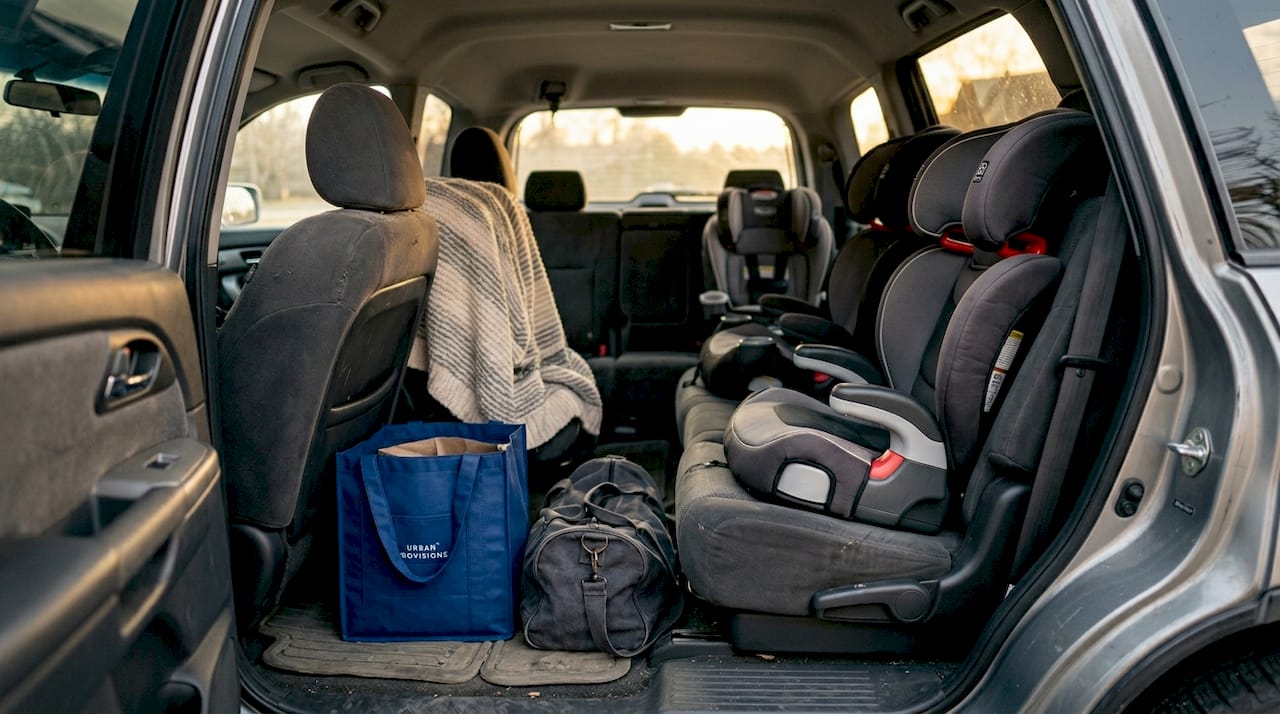
Space is non-negotiable for families, and pre-owned SUVs deliver it at a fraction of the cost of new models. Three-row configurations seat six to eight passengers, accommodating car seats, booster seats, and teenagers without the cramped conditions of a standard sedan or crossover. The Hyundai Santa Fe, for example, seats seven and offers substantial cargo volume, with a hybrid variant that keeps fuel costs manageable for daily school runs and weekend trips.
The Honda Pilot and Toyota Highlander are two other models families consistently favor for their second and third row legroom. The Pilot's second row slides forward to ease third-row access, a detail that matters enormously when you are loading children into car seats in a parking lot. These practical engineering choices do not change between model years, so a three year old Pilot delivers the same usability as a new one.
Cargo space is where families need to think carefully. Many families underestimate how much storage disappears when the third row is occupied. A vehicle that offers 84 cubic feet of cargo space with the third row folded may offer fewer than 16 cubic feet with all seats up.
| Model | Third row up (cu ft) | Third row folded (cu ft) |
|---|---|---|
| Honda Pilot | 16.5 | 83.9 |
| Toyota Highlander | 16.0 | 84.3 |
| Hyundai Santa Fe | 13.5 | 72.1 |
| Ford Explorer | 18.2 | 87.8 |
Pro Tip: Before committing to any three-row SUV, load your actual gear into the cargo area with the third row up. Grocery bags, a stroller, and a sports bag will tell you more than any spec sheet.
3. Are pre-owned family SUVs reliable and safe?
Reliability is the single most important factor in long-term ownership cost, and it is where the right pre-owned SUV pays for itself repeatedly. Consumer Reports reliability data shows a strong correlation between high reliability scores and lower repair costs over time, which directly protects family budgets from unexpected expenses. Toyota and Honda models consistently rank at the top of these surveys, with owner-reported problem rates well below the industry average.
Modern SUVs built from 2020 onward include safety technology that was optional or unavailable on vehicles from just five years earlier. Automatic emergency braking, blind-spot monitoring, lane-keeping assist, and rear cross-traffic alert are now standard or near-standard on mid-trim and above configurations. Buying a three year old SUV means accessing this technology at a used price.
Certified pre-owned (CPO) programs add another layer of protection. CPO SUVs carry manufacturer-backed coverage with extended warranties and multi-point inspections, giving families the confidence of a near-new purchase without the new-car price tag. Toyota's CPO program, for instance, extends powertrain coverage to seven years or 100,000 miles from the original sale date.
"Reliability acts as a cost-control strategy. For families, minimizing expensive repairs is just as important as the purchase price itself." — Consumer Reports Annual Auto Survey insight
Safety features commonly found on pre-owned SUVs from 2020 onward:
- Automatic emergency braking (AEB)
- Blind-spot monitoring with rear cross-traffic alert
- Adaptive cruise control
- Lane departure warning and lane-keeping assist
- Rearview camera (federally mandated from 2018)
4. Which pre-owned family SUVs hold their value best?
Resale value is a financial metric that directly affects how much a family loses between purchase and trade-in. Strong residual values reduce the total cost of ownership and protect equity when it is time to upgrade as kids grow. Edmunds analysis shows the Toyota 4Runner retains 83% of its original value after three years, and the Toyota Corolla Cross holds 81.7%. These figures are exceptional in a market where the average vehicle retains closer to 60 to 65% over the same period.
The RAV4 Hybrid is another standout. Its combination of fuel efficiency and Toyota's reliability reputation creates sustained demand in the used market, which keeps prices firm. For families who plan to trade up every four to five years, residual value above 80% means the financial hit at trade-in is minimal. You can browse Toyota models for sale at Autovendorsfl to see current inventory across these high-retention models.
Honda CR-V also performs well, with consistent demand from families and commuters alike keeping its used prices stable. The Honda CR-V sits in a sweet spot: compact enough for city driving, spacious enough for a family of five, and reliable enough to hold value across multiple ownership cycles.
| Model | 3-year value retention | Key strength |
|---|---|---|
| Toyota 4Runner | 83% | Off-road capability, brand loyalty |
| Toyota Corolla Cross | 81.7% | Fuel efficiency, compact footprint |
| Toyota RAV4 Hybrid | ~78% | Hybrid demand, reliability |
| Honda CR-V | ~72% | Family practicality, resale demand |
5. Practical buying tips for families considering used SUVs
The ideal age and mileage window for a pre-owned family SUV is two to four years old with under 45,000 miles. This range captures the steepest depreciation drop while leaving substantial service life ahead. Buying a 2 to 3 year old SUV often means accessing the same features and safety technology as a new model at a significantly reduced price.
Here is a practical checklist for evaluating your options:
- Pull a vehicle history report. Services like Carfax or AutoCheck reveal accident history, title issues, and service records. A clean report is not a guarantee, but a problematic one is a clear signal to walk away.
- Request a pre-purchase inspection. Have an independent mechanic inspect any used SUV before you sign. A $150 inspection can save you thousands in hidden repair costs.
- Prioritize certified pre-owned when budget allows. CPO vehicles offer manufacturer-backed warranties and have passed rigorous multi-point inspections, reducing ownership risk substantially.
- Evaluate fuel economy honestly. Midsized SUVs average 18 to 22 mpg, while hybrid variants reach 30 mpg or above. For families driving 15,000 miles per year, the fuel cost difference between a standard and hybrid powertrain can exceed $1,000 annually.
- Match size to your actual needs. A three-row SUV is only worth the trade-offs in cargo space and fuel economy if your family genuinely needs seven seats regularly. Many families find a well-equipped five-seat crossover serves daily life better.
- Negotiate on total price, not monthly payment. Dealers can stretch loan terms to make any monthly figure work. Focus on the out-the-door price and total interest paid over the loan term.
Pro Tip: Features like a panoramic sunroof, heated rear seats, and a power liftgate add real daily value for families. Buying a used higher trim often costs less than adding these options to a new base model.
Key takeaways
Pre-owned family SUVs deliver the strongest combination of affordability, space, and reliability when buyers focus on models with proven value retention and CPO-backed coverage.
| Point | Details |
|---|---|
| Monthly cost advantage | Used SUV payments average $216 less per month than new equivalents, per Experian Q3 2025 data. |
| Space requires honest assessment | Third-row cargo space drops sharply when all seats are occupied; test with real gear before buying. |
| Reliability controls costs | Toyota and Honda models with top Consumer Reports scores minimize repair expenses over ownership. |
| Value retention protects equity | Toyota 4Runner retains 83% of value after three years, reducing financial loss at trade-in. |
| CPO programs reduce risk | Manufacturer-backed certified pre-owned coverage gives families near-new confidence at used prices. |
Why I think most families buy the wrong SUV size
Most families walk into a dealership fixated on three rows and leave with a vehicle that is too large for 90% of their actual driving. I have seen this pattern repeatedly. The third row gets used four times a year, the cargo space is perpetually compromised, and the fuel bills are higher than they needed to be.
The smarter move, in my view, is to buy one size smaller than you think you need and invest the savings in a higher trim with better safety technology and comfort features. A pre-owned Honda CR-V or Toyota RAV4 in a top trim will serve most families of four or five better than a base-trim three-row SUV. You get the reliability, the safety tech, and the resale value without the bulk.
If you genuinely need seven seats, prioritize models where the third row is actually usable for adults, not just children. The Honda Pilot and Kia Telluride are honest about their third-row dimensions. Many others are not. Certified pre-owned programs are worth the modest price premium because the warranty coverage and inspection history remove the single biggest risk of used vehicle ownership: an expensive surprise repair in year two.
The families who get the most from a pre-owned SUV are the ones who assess their real needs first, then find the vehicle that fits those needs precisely.
— Allen
Find your family's next pre-owned SUV at Autovendorsfl
Autovendorsfl in Fort Lauderdale carries a curated selection of pre-owned family SUVs, including certified options from Toyota, Honda, and Hyundai that meet the reliability and value standards families need.
Whether you are looking for a Santa Fe for your family or a Honda CR-V in Fort Lauderdale, the team at Autovendorsfl offers personalized guidance to match your family's specific needs, budget, and lifestyle. Flexible financing options are available to keep monthly payments within reach, and the inventory is regularly updated with quality pre-owned vehicles that have been carefully selected for condition and value. Contact Autovendorsfl directly for a no-pressure consultation and let the team help you find the right fit.
FAQ
What are the main benefits of pre-owned family SUVs?
Pre-owned family SUVs offer lower purchase prices, reduced insurance costs, and access to higher trim levels within a family budget. Models from Toyota and Honda also deliver strong reliability and resale value, reducing total ownership costs over time.
Should I buy a certified pre-owned SUV or a standard used one?
Certified pre-owned SUVs carry manufacturer-backed warranties and pass multi-point inspections, making them the lower-risk choice for families. The modest price premium is typically worth it for the coverage and peace of mind, especially on vehicles with 30,000 to 60,000 miles.
Which used family SUVs hold their value best?
The Toyota 4Runner retains 83% of its value after three years, and the Toyota Corolla Cross holds 81.7%, according to Edmunds analysis. The Honda CR-V and Toyota RAV4 Hybrid also perform well above the market average for value retention.
How much can a family save by buying a used SUV instead of new?
Based on Experian Q3 2025 data, the average monthly payment on a used vehicle is $532 versus $748 for a new car. That difference of $216 per month translates to over $2,500 in annual savings before accounting for lower insurance and registration costs.
What mileage is ideal when buying a pre-owned family SUV?
A pre-owned SUV with under 45,000 miles and two to four years of age offers the best balance of value and remaining service life. This range avoids peak depreciation while leaving enough life in major components to minimize near-term repair risk.