
The role of the digital car buying process is to let buyers complete most research, financing, and deal steps online before ever setting foot in a dealership. According to Cox Automotive's 2025 study, only 7% of buyers complete a fully online purchase, while 63% prefer a mix of digital and in-person steps. That split tells you everything about where car buying actually stands today. The process is not about replacing the dealership. It is about arriving there prepared, confident, and ready to close.
How does digital car buying improve efficiency and buyer satisfaction?
Digital car buying, known in the industry as omnichannel retailing, produces measurable gains in both time savings and buyer confidence. Buyers who complete more than 50% of their purchase steps online save an average of 41 minutes at the dealership. Forty-one minutes may sound modest, but in a high-stakes transaction involving tens of thousands of dollars, that time represents fewer redundant conversations, less paperwork repetition, and a cleaner path to signing.
The efficiency gains come from specific pre-arrival actions. Buyers who submit financing applications and trade-in valuations online avoid last-minute surprises and preserve deal momentum once they arrive. Dealertrack's research confirms that pre-completed financing keeps deals from stalling at the finance desk, which is historically the most time-consuming part of any dealership visit.
AI-assisted tools add another layer of confidence. When buyers use AI to compare vehicles, review pricing data, and understand financing terms before visiting, they arrive with fewer unresolved questions. That reduction in uncertainty directly correlates with higher satisfaction scores, according to Cox Automotive's findings.
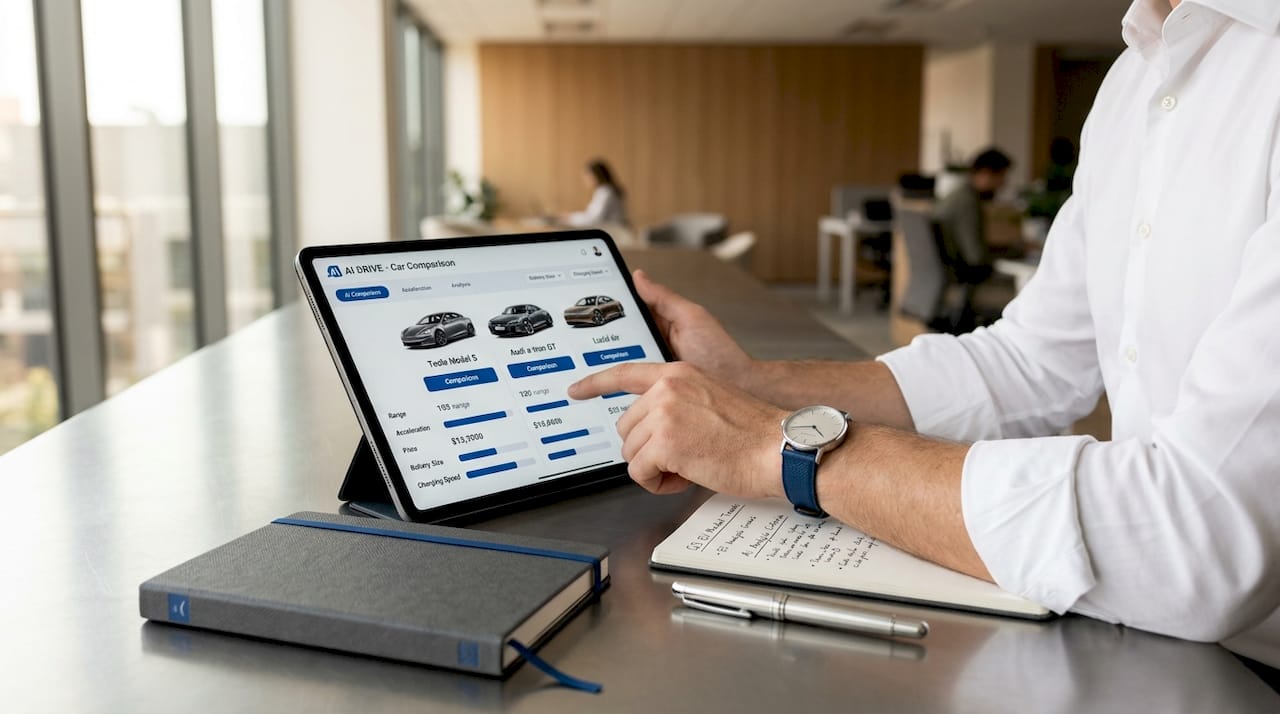
Pro Tip: Complete your financing pre-approval and trade-in estimate online before visiting any dealership. These two steps alone eliminate the longest delays in the in-person process and give you stronger negotiating footing.
What are the common steps in the online car purchase process?
The online car purchase process follows a recognizable sequence, though not every buyer completes every step digitally. Understanding where the process works best online helps you decide where to invest your preparation time.
The most common digital steps include:
- Model research and comparison: Platforms like Edmunds, Cars.com, Autotrader, and Kelley Blue Book are the starting point for most buyers. Third-party platforms like these heavily influence both early research and final decision stages.
- Pricing and availability checks: Buyers use these platforms to compare dealer asking prices against market averages, identify available inventory, and flag vehicles worth visiting.
- Financing applications: Submitting a credit application through a lender's website or a dealership's online portal locks in rate estimates before you negotiate. Experian notes that financing and insurance steps can be initiated digitally, though final verification often requires documentation at the dealership.
- Trade-in valuation: Tools like Kelley Blue Book's Instant Cash Offer give buyers a defensible number before they walk in.
- Price negotiation and discount review: Many dealerships now offer digital quote tools that allow buyers to negotiate via email or chat before visiting.
- Contract review: Some dealerships send deal summaries digitally for review, though final signatures typically require in-person presence.
The gap between what buyers want to do online and what they actually complete digitally is still wide. Most buyers research extensively online but revert to in-person steps for anything involving money movement or legal documentation.
| Step | Commonly done online | Typically requires in-person |
|---|---|---|
| Model research | Yes | No |
| Price comparison | Yes | No |
| Financing pre-approval | Yes | Verification often in-person |
| Trade-in valuation | Yes | Final inspection in-person |
| Contract signing | Rarely | Yes, in most states |
| Vehicle inspection and test drive | No | Yes |
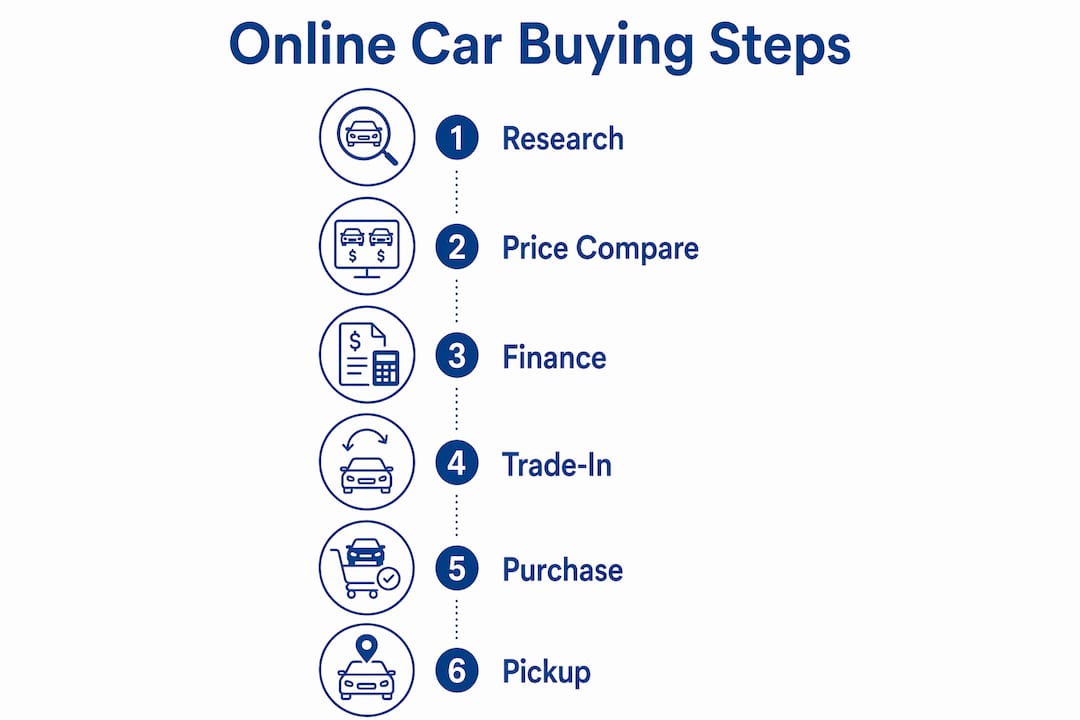
This table reflects the practical reality of digital automotive buying in 2026. The online process handles information and preparation. The dealership handles verification and execution.
Why can't car buying be completely digital?
The short answer is regulation. State laws require in-person signatures on automotive sales contracts in most regions of the United States, making a fully digital purchase legally impossible in the majority of markets. Consumer Reports confirms that contracts and financing arrangements almost always require physical presence at some point in the transaction.
Beyond legal requirements, practical trust factors keep buyers coming back to the lot. 86% of consumers want to see the vehicle in person before completing a purchase. That figure from CarGurus reflects something no amount of digital photography or virtual tours has yet replaced: the confidence that comes from sitting in the driver's seat, hearing the engine, and feeling the build quality firsthand.
The remaining in-person requirements include:
- Physical contract execution: Due to diverse state requirements, contract signature rules remain the largest single hurdle to fully digital auto purchases.
- Proof of insurance: Lenders and dealers require active coverage documentation before releasing a vehicle, which often involves real-time verification.
- Vehicle inspection: Even buyers who have pre-selected a vehicle online frequently request a final walkthrough or independent inspection before signing.
- Title and registration processing: These government-issued documents involve state DMV requirements that vary widely and rarely accommodate fully remote completion.
"Consumers increasingly want to do more from home but still prefer to inspect and negotiate in person, using digital research to arrive prepared." — CarGurus Study on AI and Omnichannel Shopping
The takeaway is not that digital buying is limited. It is that the process is designed to be hybrid by nature. Digital steps handle the cognitive load. In-person steps handle the legal and sensory verification that protects both buyer and seller.
How is AI reshaping the car buying journey?
AI is now a standard research tool for a meaningful share of buyers. 19% of all car buyers currently use AI tools for research and vehicle comparisons, with that figure rising to 25% among new-car buyers specifically. Those who use AI report higher satisfaction, suggesting the technology reduces the confusion that often accompanies a complex, high-value purchase.
The practical applications of AI in car buying are specific and worth understanding. AI tools help buyers filter inventory by precise criteria, compare total cost of ownership across models, interpret financing terms, and flag pricing anomalies relative to market data. These are tasks that previously required hours of manual research across multiple websites.
AI works best as a support layer, not a replacement for human judgment or physical verification. AI is most effective when used to clarify options and reduce errors rather than to replace the steps that require trust and direct interaction. A buyer who uses AI to narrow a shortlist from 20 vehicles to 3 still needs to drive those 3 before committing.
Looking forward, 83% of consumers believe AI will have a major impact on car buying within the next decade. That expectation is shaping how dealerships invest in their digital infrastructure, with omnichannel platforms increasingly incorporating AI-powered chat, personalized inventory recommendations, and predictive financing tools.
Pro Tip: Use AI tools like ChatGPT or Google Gemini to generate a side-by-side comparison of your shortlisted vehicles, including fuel costs, insurance estimates, and resale value projections. Then verify those numbers against Edmunds or Kelley Blue Book before your dealership visit.
Key takeaways
The digital car buying process works best as an omnichannel approach where buyers complete research, financing, and pricing steps online, then finalize contracts and inspect vehicles in person.
| Point | Details |
|---|---|
| Digital prep saves real time | Buyers completing over 50% of steps online save an average of 41 minutes at the dealership. |
| Omnichannel is the norm | Only 7% of buyers go fully digital; 63% prefer a blend of online and in-person steps. |
| AI boosts buyer confidence | 19% of buyers use AI tools, and those buyers report higher satisfaction scores. |
| Regulation limits full digitization | Most U.S. states require in-person contract signatures, making hybrid buying legally necessary. |
| In-person validation still matters | 86% of buyers want to see the vehicle before purchasing, regardless of digital preparation. |
What I've learned about the digital car buying process after years in the market
Most buyers approach digital car buying as an either/or choice. Either they do everything online, or they walk into a dealership cold. Both approaches leave value on the table.
The buyers who get the best outcomes treat the digital phase as preparation, not purchase. They use Edmunds and Kelley Blue Book to build a defensible price position. They submit financing applications before they visit so they are not negotiating from a blank slate. They arrive knowing exactly which trim levels they want to compare and why. When they sit down with a sales advisor, the conversation moves faster because both sides are working from the same information.
What surprises most first-time buyers is how much the in-person visit still matters, even after thorough digital research. A Honda CR-V that looks perfect in photos can feel different in person. A financing term that seemed reasonable online can shift once you factor in dealer fees and add-ons. The digital process gives you the knowledge to ask the right questions. The dealership visit gives you the answers that actually close the deal.
My honest advice: do not skip the test drive, even if you are 90% certain about a vehicle. And do not skip the digital prep, even if you prefer in-person buying. The two phases are not competing. They are sequential, and the buyers who treat them that way consistently report the most satisfying experiences.
— Allen
How Autovendorsfl supports your digital and in-person buying journey
Autovendorsfl at Auto Vendors Inc in Fort Lauderdale is built for buyers who arrive prepared. Whether you have spent hours researching online or are just beginning to narrow your shortlist, the team offers personalized guidance that picks up exactly where your digital research leaves off.
Browse the current inventory of Mercedes-Benz S-Class vehicles and Lexus models online to compare specifications, pricing, and availability before your visit. The dealership's hands-on approach means you will never feel pressured to make decisions you have not had time to consider. When you are ready to move from digital research to a test drive and final paperwork, Autovendorsfl provides the in-person experience that completes the process with the care and precision that luxury vehicle buyers expect.
FAQ
What does the digital car buying process actually include?
The digital car buying process covers model research, price comparison, financing pre-approval, trade-in valuation, and sometimes price negotiation, all completed online before visiting a dealership. Final contract signing and vehicle inspection typically still require an in-person visit.
How much time does online car buying preparation save?
Buyers who complete more than 50% of steps online save an average of 41 minutes at the dealership, according to Cox Automotive's 2025 research. That time savings comes primarily from pre-completed financing and trade-in steps.
Can you buy a car completely online in the United States?
Fully online purchases are possible through a small number of retailers, but state laws requiring in-person signatures on contracts make it legally impractical in most states. Only 7% of buyers currently complete a fully digital purchase.
How does AI help with buying a car online?
AI tools assist with vehicle comparisons, pricing analysis, and financing term interpretation, and 25% of new-car buyers now use them during research. Buyers who use AI report higher satisfaction, though the technology works best as a research aid rather than a replacement for in-person verification.
What is the best approach to buying a car in 2026?
The most effective approach is omnichannel: complete research, financing, and pricing steps digitally, then visit the dealership for a test drive, final negotiation, and contract signing. 63% of buyers already prefer this hybrid method, and satisfaction scores reflect it.