A vehicle finding service is a technology-driven solution that locates specific vehicles using GPS, telematics, license plate lookup systems, and consolidated database searches, replacing manual lot-walking and phone calls with fast, automated results. For busy individuals and families, understanding why vehicle finding service saves time comes down to one core shift: fragmented, manual searching gets replaced by a single, real-time lookup that delivers location and status in seconds. Autovendorsfl has seen this shift transform the car-buying experience for clients who simply cannot afford to spend hours tracking down a vehicle. The technology is no longer a dealership-only tool. It is a practical resource for anyone who values their time.
Why vehicle finding service saves time on every search
The traditional vehicle search process is slow by design. A buyer calls a dealership, waits on hold, gets transferred, and still may not get a confirmed answer. Multiply that across several dealerships or lots, and a single search can consume an entire afternoon.
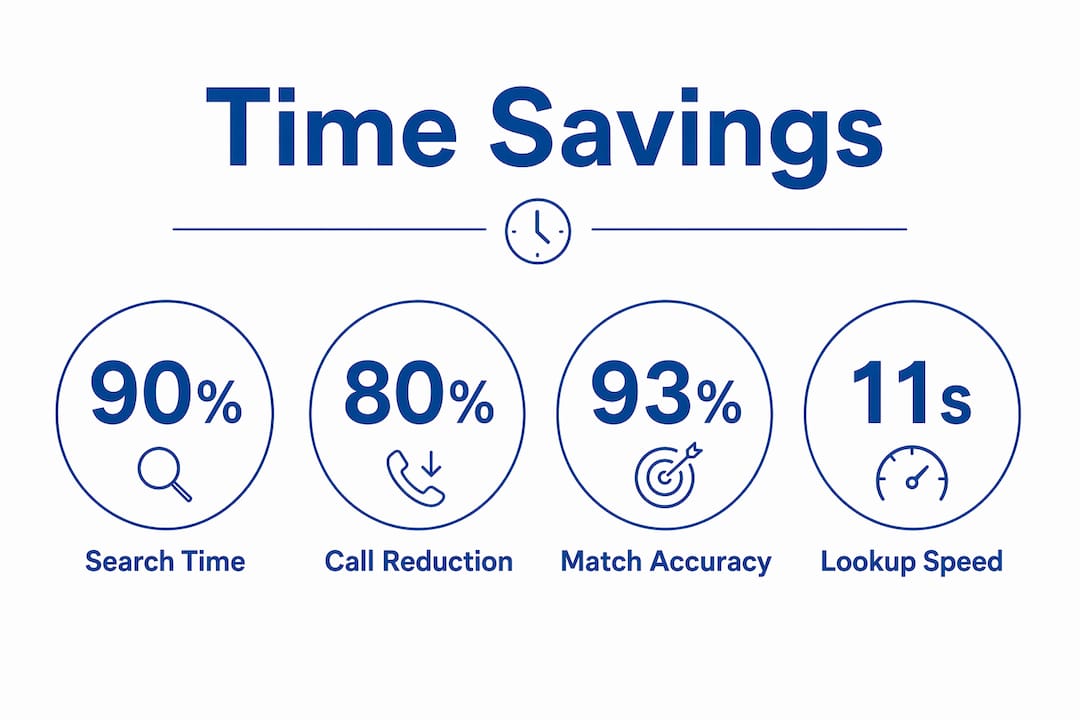
Vehicle locating services replace that process with automated lookups that pull from multiple data sources simultaneously. Locating services cut search time by up to 90% by replacing lot-walking and calls with quick lookups. That figure represents hours returned to your day on a single transaction.
Here is how the automation works in practice:
- Input a vehicle identifier such as a license plate, VIN, or make and model.
- The system queries multiple databases simultaneously, including lot inventory systems, GPS trackers, and telematics feeds.
- A consolidated result returns with the vehicle's current location, status, and availability, often in under 30 seconds.
- Staff or the buyer acts immediately on confirmed information rather than spending time verifying unconfirmed leads.
This four-step process collapses what used to be a 30-minute phone chain into a single lookup. The time savings are not marginal. They are structural.
Pro Tip: When using a vehicle locating service, always provide the most specific identifier you have. A license plate or VIN produces faster, more accurate results than a general description like "red SUV."
One often-overlooked cost of manual searching is the labor it consumes on the dealership side. A dealership loses roughly $21,000 annually on misplaced keys and wastes about 25 sales hours weekly just searching for vehicles and keys. That wasted labor translates directly into longer wait times for buyers. When a service automates the search, both sides of the transaction move faster.

How does real-time visibility reduce delays?
Real-time vehicle location data does more than tell you where a car is. It removes the friction between finding a vehicle and acting on that information.
Consider the test drive scenario. Without live tracking, a sales associate must physically walk a lot to confirm a vehicle is available, then retrieve the keys, then bring the car around. That sequence can take 20 minutes or more. With real-time visibility, the associate knows the car's exact location before leaving the desk. The GPS tracking improves lot visibility, which speeds the sales process and reduces customer walkaways caused by delays. Fewer walkaways means more completed transactions and less time wasted for everyone involved.
The downstream benefits extend beyond test drives:
- Service department throughput improves because technicians know exactly where vehicles are in the service queue without asking multiple colleagues.
- Handoff friction between departments drops when every team member sees the same live data rather than relying on verbal updates.
- Customer wait times shrink because staff act on confirmed information rather than estimates.
- Status calls decrease significantly. Live tracking cuts inbound calls by up to 80%, meaning buyers spend less time calling for updates and more time on their actual day.
That last point deserves emphasis. An 80% reduction in status calls is not a minor convenience. For a family coordinating a vehicle purchase around school pickups and work schedules, eliminating repeated check-in calls reclaims meaningful blocks of time.
Near real-time telematics updates, as highlighted by Verizon Connect, give both staff and customers accurate vehicle statuses through desktop and mobile apps. The result is a shared, accurate picture of where things stand, without anyone having to ask.
Does data accuracy affect vehicle finding efficiency?
The speed of a vehicle locating service depends heavily on the quality of the identifier used to initiate the search. Not all search inputs produce equal results.
| Search Input | Average Match Accuracy | Approximate Search Time |
|---|---|---|
| License plate or VIN | ~93% | 11–30 seconds |
| Make, model, and color | ~60–70% | Several minutes or more |
| Partial description only | Below 50% | Often inconclusive |
License plate lookups achieve roughly 93% match accuracy and average search times around 11 seconds. Partial descriptor searches, by contrast, often require multiple verification cycles that each add minutes to the process.
Modern lookup systems consolidate results from multiple databases in a single query. Mobile lookup tools reduced query times from around 5 minutes to approximately 17 seconds. That compression is only possible when the input identifier is precise enough to return a clean match on the first attempt.
The practical implication is straightforward. If you are working with a vehicle locating service, gather the license plate number or VIN before initiating a search. Doing so eliminates the back-and-forth that turns a 15-second lookup into a 15-minute verification loop.
Pro Tip: Photograph the license plate of any vehicle you are tracking or considering purchasing. That single image gives you the most reliable identifier for any locating service query.
High-quality identifiers also prevent repeated searches. Precise identifiers like license plates or VINs close searches faster and avoid the time-consuming verification cycles that vague descriptions trigger. Every repeated search cycle is time you are not spending on something else.
How do busy families benefit from vehicle locating services?
The operational benefits described above translate directly into daily life advantages for families and individuals managing packed schedules. The car buying process has historically demanded significant time investment. Vehicle locating services change that equation.
Here is what the experience looks like for a typical busy family:
- No more calling multiple dealerships. A single query through a locating service surfaces available vehicles across multiple sources without a single phone call.
- Live ETAs replace guesswork. Instead of wondering when a vehicle will be ready for pickup or delivery, buyers access real-time status through an app or portal.
- Fewer wasted trips. Confirming a vehicle's availability before driving to a lot saves the time and frustration of arriving to find the car already sold or unavailable.
- Faster decisions. When location and status data are immediately available, buyers spend less time in the research phase and more time moving toward a decision.
- Reduced back-and-forth communication. Tracking portals stream live vehicle data, which eliminates the repeated calls that fragment a buyer's day.
The cumulative effect is significant. A family that previously spent three to four hours across multiple days coordinating a vehicle search can compress that process into a single focused session. That reclaimed time goes back to school runs, work commitments, and family activities.
Delegating your car search to a dealer with integrated locating tools takes this further. Rather than managing the search yourself, you hand off the process to someone with direct access to live inventory data and the tools to act on it immediately. The result is a faster outcome with less personal time invested.
For context on how automation affects broader vehicle workflows, automated vehicle recovery workflows cut median recovery times from 47 days to 15 days, a 68% reduction. The same principle applies to the buying process. Automation compresses timelines that manual processes inflate.
Key takeaways
Vehicle finding services save time by replacing fragmented, manual searches with automated, real-time lookups that deliver accurate results in seconds, not hours.
| Point | Details |
|---|---|
| Automation cuts search time | Locating services reduce manual search time by up to 90% compared to lot-walking and phone calls. |
| Real-time visibility removes friction | Live GPS and telematics data speed up test drives, service handoffs, and customer communication. |
| Identifier quality determines speed | License plate or VIN searches return 93% accuracy in under 30 seconds; vague descriptions trigger slow, repeated cycles. |
| Status calls drop sharply | Live tracking portals reduce inbound status calls by up to 80%, freeing time for buyers and staff alike. |
| Families reclaim meaningful time | Consolidating the search into one automated process eliminates wasted trips, calls, and coordination delays. |
What i've learned about vehicle finding technology after years in the market
Most conversations about vehicle finding services focus on GPS coordinates. That framing misses the bigger picture. The real time savings come from what happens after the vehicle is located, not just from the location itself.
The best systems I have seen do not just tell you where a car is. They tell you who to contact, what the next step is, and whether the vehicle is ready to act on. Integrated workflows merge location data with contact information and recommended next steps, collapsing the gap between finding and doing. That gap is where most of the time actually gets lost.
The other thing I would push back on is the assumption that these tools are only useful for dealerships or fleet operators. A family buying one vehicle every few years benefits just as much. The search process is unfamiliar to most buyers, which makes it slow. A locating service with integrated guidance removes that unfamiliarity from the equation.
My honest advice: do not treat vehicle finding as a background feature. Treat it as the first step in a faster, less stressful buying process. When you work with a team that has these tools built into their workflow, you are not just saving time on the search. You are saving time on every step that follows. For busy buyers managing daily schedules, that compounding effect is where the real value lives.
— Allen
Find your next vehicle faster with Autovendorsfl
Autovendorsfl brings the same vehicle finding efficiency described in this article directly to your buying experience. The team at Auto Vendors Inc in Fort Lauderdale uses personalized, hands-on search assistance to locate the right vehicle for you without the back-and-forth that typically slows the process down.
Whether you are looking for a Mercedes-Benz S-Class in Fort Lauderdale or a practical family vehicle like the Dodge Grand Caravan, Autovendorsfl handles the search so you can focus on your day. The dealership's long-standing expertise in the South Florida market means faster answers, fewer wasted trips, and a buying experience built around your schedule. Reach out to the Autovendorsfl team and let the search work for you.
FAQ
What is a vehicle finding service?
A vehicle finding service uses GPS, telematics, and database lookups to locate a specific vehicle quickly. It replaces manual searches, phone calls, and lot-walking with automated, real-time results.
How much time can a vehicle locating service save?
Locating services cut manual search time by up to 90% compared to traditional methods. License plate-based lookups return results in as little as 11 seconds with roughly 93% accuracy.
Why does identifier quality matter for vehicle search speed?
License plates and VINs produce the fastest, most accurate results. Vague descriptions like make and color drop match accuracy below 70% and often require multiple verification cycles that add significant time.
How do live tracking tools reduce status calls?
Live tracking portals give buyers and staff real-time vehicle location and status updates through apps. Businesses report up to 80% fewer inbound status calls after enabling these portals.
Can busy families realistically benefit from these services?
Yes. Vehicle locating services eliminate wasted trips, reduce phone-based coordination, and compress a multi-day search into a single focused session, returning meaningful time to daily family schedules.