
Full-service dealerships are defined as automotive retailers that combine vehicle sales, financing, and certified maintenance under one roof, giving busy professionals a single point of contact for every stage of vehicle ownership. The core advantage is not just convenience. It is the elimination of the coordination tax that comes from splitting purchases, financing, and service across multiple providers. According to the JD Power 2026 U.S. Customer Service Index, dealer service satisfaction improved 3 points in 2026, with minimizing disruption to customers' daily lives identified as the defining factor. For professionals who measure time in billable hours or back-to-back meetings, that distinction matters enormously. Operations like Preston Automotive Group and technology platforms like Solera's digital check-in suite are already reshaping what the full-service dealership experience looks like in practice.
Why full-service dealerships benefit professionals in the purchasing process
The vehicle buying process at a full-service dealership is fundamentally different from the fragmented experience of sourcing a car from one place, financing from another, and negotiating trade-in value at a third. Centralized digital workflows eliminate the repeated data entry and back-and-forth that drain time from a professional's day. When all deal components live in one system, the transaction moves faster and with fewer errors.
Preston Automotive Group demonstrated this concretely. By deploying iPads loaded with AutoFi software, the group reduced dealership labor by 70% while simultaneously increasing per vehicle retail revenue. That is not a marginal improvement. It means a professional can walk in, configure a deal on a tablet, review financing terms in real time, and close without the traditional multi-hour ordeal.
The cognitive benefit is equally significant. When a customer drives the deal setup process on a screen rather than waiting for a salesperson to shuttle paperwork between offices, the experience shifts from passive waiting to active decision-making. That shift reduces frustration and builds confidence in the transaction.
- Arrive with your trade-in value already estimated. Most full-service dealerships now offer online appraisal tools that pull live market data before you set foot on the lot.
- Request a tablet-driven deal setup. Dealerships using systems like AutoFi can present financing, trade-in, and add-on options simultaneously rather than sequentially.
- Confirm all financing is handled in-house. An integrated finance office means one credit inquiry, one set of documents, and one closing appointment.
- Ask for a digital copy of all signed documents. Full-service dealerships with modern document management systems can deliver these instantly via email.
Pro Tip: Before visiting any dealership, confirm they use a centralized deal management platform. The presence of tablet-driven sales tools is a reliable signal that the rest of the operation is equally organized.
What service advantages do full-service dealerships offer vs. aftermarket providers?
The comparison between full-service dealerships and aftermarket providers is not simply about price or speed. It is about the type of expertise and accountability each brings to a vehicle. Dealership mechanics are factory-trained on specific makes and models, and customers trust dealer mechanics more for complex repairs and warranty work than their aftermarket counterparts. That trust is earned through specialization, not marketing.
Speed is the one area where aftermarket providers hold a clear edge. Only 17% of dealer service customers have their work completed within an hour, compared to 52% at aftermarket shops. This gap matters, but it does not tell the full story. A professional who needs a transmission recalibration or a software update on a Mercedes-Benz S-Class cannot substitute that work with a quick-lube chain. The dealership's depth of expertise is irreplaceable for anything beyond routine maintenance.
Photo and video documentation during service is another differentiator that increases customer trust and satisfaction significantly, yet remains underutilized outside premium dealership segments. When a service advisor sends a short video showing exactly why a brake pad replacement is needed, the professional customer can approve the work in seconds from their phone rather than taking a call mid-meeting.
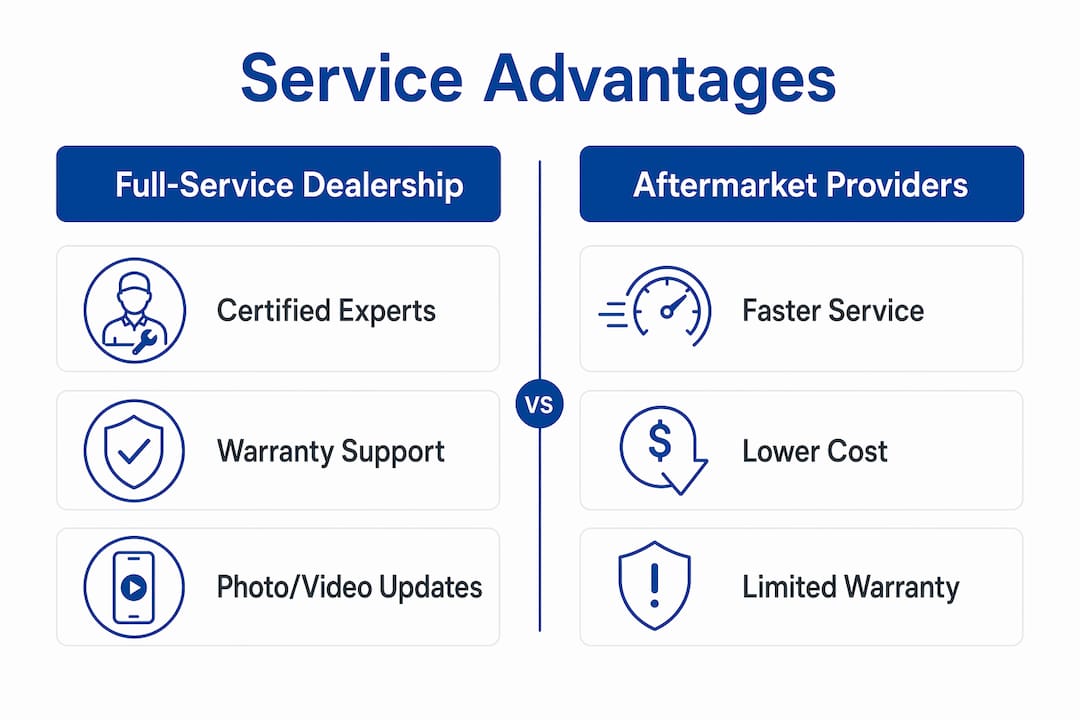
| Factor | Full-service dealership | Aftermarket provider |
|---|---|---|
| Completion within one hour | 17% of visits | 52% of visits |
| Complex repair expertise | Factory-trained, model-specific | General mechanical training |
| Warranty work eligibility | Yes, certified | Typically no |
| Service history integration | Full vehicle record on file | No cross-visit record |
| Photo/video documentation | Available at premium dealers | Rare |
Pro Tip: Ask your service advisor to send photo or video updates during any repair that requires approval. Dealerships equipped with digital service intake tools can do this automatically, saving you the interruption of a phone call.
How do full-service dealerships use technology to reduce wait times?
Technology is the mechanism through which full-service dealerships close the gap between their expertise advantage and the speed advantage held by aftermarket providers. Solera's Check-In platform is the clearest example currently in wide deployment. The system uses digital VIN decoding and recall detection to pre-populate service records, flag open recalls, and present recommended maintenance before the customer even speaks with an advisor. Manual transcription errors disappear. Check-in time drops.
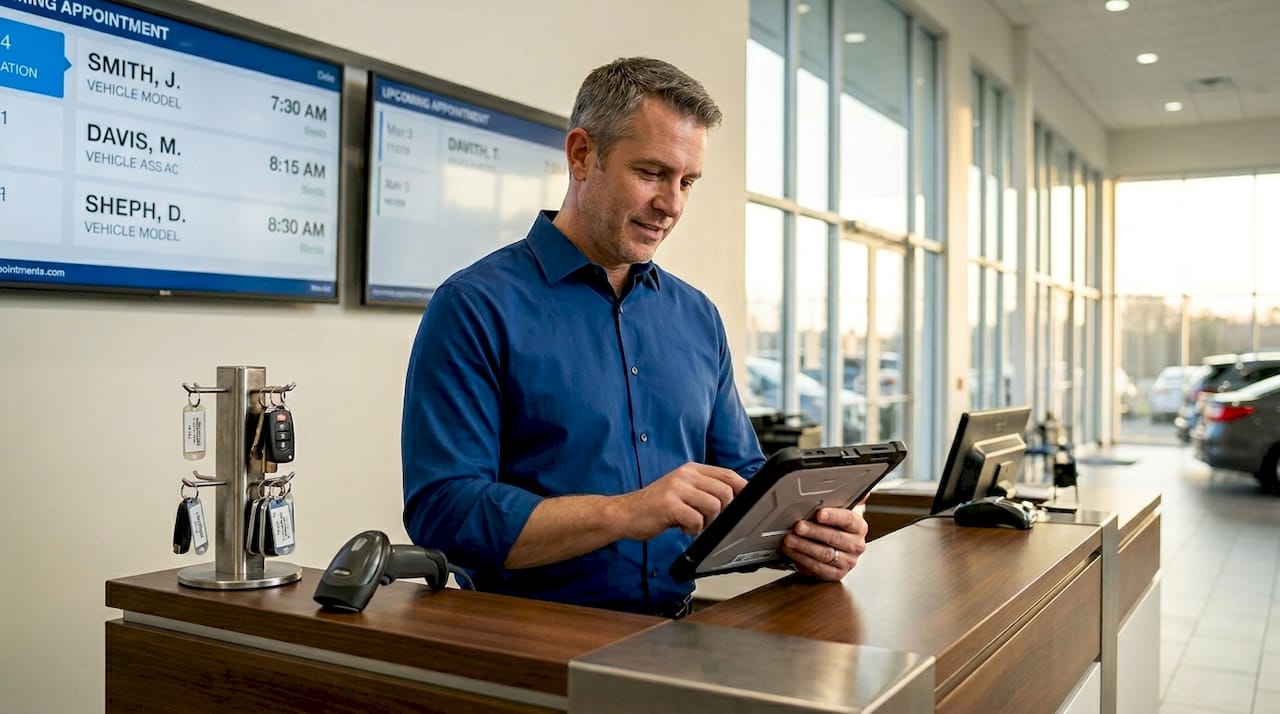
Mobile check-in extends this further. A professional can complete intake from their phone before arriving, so the service lane visit becomes a handoff rather than a form-filling exercise. Text message updates replace phone calls throughout the service process. Over half of customers prefer texts for service updates, and satisfaction scores are measurably higher when communication matches that preference. For a professional in back-to-back meetings, a text requiring a one-tap approval is categorically less disruptive than a five-minute phone call.
The operational impact of guided digital workflows extends beyond the customer experience. When maintenance recommendations and recall notices are presented upfront during intake, advisors spend less time chasing approvals mid-service. The result is faster overall throughput, which directly reduces the time a professional's vehicle is off the road.
Here is what to look for when evaluating a dealership's technology stack:
- Digital VIN-based intake. The system should auto-populate vehicle history and flag recalls without manual entry.
- Mobile check-in capability. Pre-arrival intake eliminates the service lane queue entirely.
- Text-based communication. Approval requests and status updates should arrive by text, not phone call.
- Upfront maintenance presentation. All recommended work should be disclosed at intake, not discovered mid-repair.
- Real-time status tracking. A professional should be able to check service progress without calling the dealership.
What should professionals consider when choosing a full-service dealership?
Choosing the right full-service dealership is not simply a matter of finding the closest location with the right brand. The quality of the operational experience varies significantly between dealerships even within the same manufacturer network. The first question to ask is whether the dealership uses integrated digital intake. A dealership still relying on paper forms and manual data entry will not deliver the time-saving experience that makes full-service worth the premium.
Add-on awareness is equally important. Consumer Reports advises professionals to evaluate dealership add-ons carefully, distinguishing optional extras from factory-included features before signing. A full-service dealership should be transparent about what is included in the vehicle price versus what is being added at the point of sale. Any hesitation to provide that breakdown clearly is a signal worth heeding.
The hospitality experience also matters more than most professionals expect. A dealership with a well-designed waiting area, reliable Wi-Fi, and a private workspace allows a professional to continue working during a service appointment rather than losing that time entirely. Some premium dealerships now offer loaner vehicles as a standard service benefit, which eliminates the disruption of a service visit almost completely.
- Verify digital intake is in use. Ask specifically whether the dealership uses VIN-based digital check-in before your first service appointment.
- Request a full price breakdown before signing. Separate factory-included features from dealer-added options line by line.
- Ask about photo and video service updates. This single feature saves more time than almost any other during the service process.
- Confirm loaner vehicle availability. For professionals, a loaner transforms a service day from a disruption into a non-event.
- Check service advisor communication preferences. A dealership that defaults to text updates is built for professionals who cannot take calls during the day.
Pro Tip: Visit the service department before you buy. The quality of the service experience is a better predictor of long-term satisfaction than the sales experience, and a five-minute walk through the service lane tells you everything about how the dealership operates.
Key takeaways
Full-service dealerships benefit professionals most when they combine factory-trained expertise, digital intake technology, and transparent communication into a single, low-friction ownership experience.
| Point | Details |
|---|---|
| Integrated purchasing process | Tablet-driven deal tools like AutoFi reduce transaction time and eliminate back-and-forth paperwork. |
| Trust in complex repairs | Dealer mechanics hold higher customer trust for warranty work and model-specific repairs than aftermarket shops. |
| Digital intake reduces disruption | VIN-based systems like Solera Check-In pre-populate records and flag recalls, cutting check-in time significantly. |
| Text communication preference | Over half of customers prefer text updates during service, and satisfaction rises when that preference is honored. |
| Evaluate add-ons carefully | Consumer Reports recommends separating factory-included features from dealer extras before any purchase commitment. |
Why the dealership experience is finally catching up to professional expectations
I have spent years watching professionals default to aftermarket providers for routine service simply because the dealership experience felt too slow and too unpredictable. That calculus is changing, and the shift is driven by technology adoption rather than attitude adjustment.
What strikes me most about the current moment is that the dealerships investing in platforms like Solera's Check-In suite are not doing it to win awards. They are doing it because the dealership-level auto care gap with aftermarket providers was becoming a retention problem. When a professional can get an oil change done in under an hour at a chain shop but has to block out half a morning for the same service at a dealership, the loyalty math stops working regardless of how much better the dealer's expertise is.
The dealerships that get this right are the ones treating the professional customer's time as the scarcest resource in the transaction. That means mobile check-in, text approvals, upfront disclosure of all recommended work, and a loaner vehicle waiting when the job runs long. It is not complicated. It just requires operational discipline that many dealerships have historically lacked.
The trust advantage dealers hold for complex repairs is real and durable. No quick-lube chain is going to recalibrate a Lexus suspension or handle a manufacturer recall with the same precision as a factory-trained technician. The opportunity for full-service dealerships is to match that expertise with an experience that respects the professional's schedule. The ones doing both are building the kind of loyalty that survives price competition.
— Allen
How Autovendorsfl serves professionals in Fort Lauderdale
Autovendorsfl is built for professionals who want the full-service dealership experience without the friction that has historically come with it. The inventory at Auto Vendors Inc centers on premium vehicles, including Mercedes-Benz S-Class models and a curated selection of Lexus vehicles chosen for their engineering quality and long-term reliability.
Every vehicle in the Autovendorsfl inventory is evaluated against high standards for craftsmanship and performance before it reaches the lot. The team provides personalized vehicle finding assistance, so professionals who know what they need but cannot spend hours searching get direct access to the right options. If you are a professional in the Fort Lauderdale area looking for a vehicle purchase experience that respects your time and delivers expert guidance, Auto Vendors Inc is the place to start.
FAQ
What is a full-service dealership?
A full-service dealership combines vehicle sales, financing, and certified maintenance under one roof, allowing customers to handle every aspect of vehicle ownership with a single provider. This structure eliminates the need to coordinate between separate businesses for purchasing, financing, and service.
Why do professionals prefer full-service dealerships over aftermarket providers?
Professionals favor full-service dealerships for complex repairs, warranty work, and model-specific expertise that aftermarket providers cannot match. The trust advantage for specialized service outweighs the speed advantage aftermarket shops hold for routine maintenance.
How does digital intake technology improve the dealership service experience?
Systems like Solera's Check-In use digital VIN decoding to pre-populate service records, detect open recalls, and present maintenance recommendations before check-in begins. This eliminates manual errors, reduces wait times, and allows professionals to approve work by text rather than phone call.
What should I ask a dealership before my first service appointment?
Ask whether the dealership uses digital VIN-based intake, offers text-based status updates, and provides photo or video documentation during service. These three features indicate an operation built to minimize disruption for busy customers.
Are dealership add-ons worth the cost?
Consumer Reports recommends evaluating each add-on individually and separating factory-included features from dealer-added options before signing. Many add-ons are optional and negotiable, so a line-by-line review before commitment protects against unnecessary cost inflation.