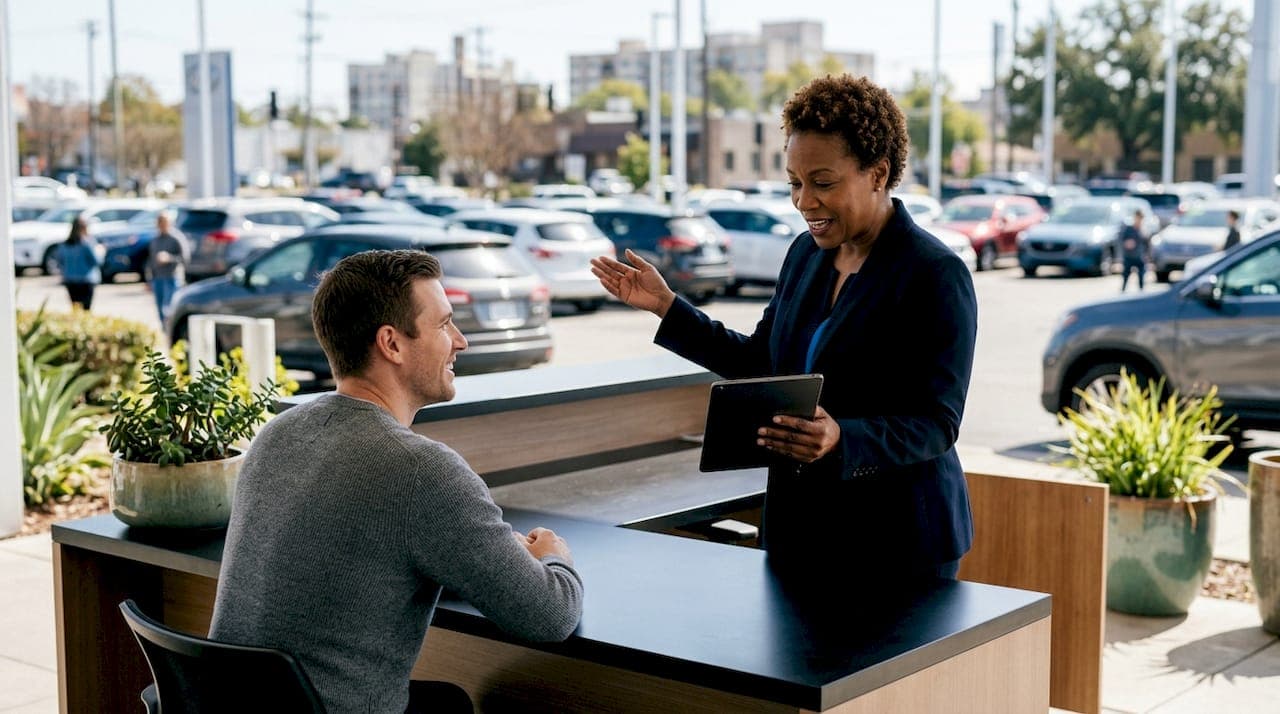
Dealership efficiency, the industry term for how quickly and transparently a dealership moves customers through purchase and service, is the single biggest driver of whether you return to that dealer or walk away for good. Understanding why time-saving dealership services matter is no longer optional for car buyers and leasing customers. 88% of consumers say service experience directly affects their likelihood of repurchasing. That number alone reframes every minute you spend waiting in a service lounge or signing paperwork at a sales desk.
Why time-saving dealership services matter for loyalty and profit
Service speed is not a comfort feature. It is a revenue driver for dealerships and a loyalty signal for customers. The data is direct: customers returning for service are 30 percentage points more likely to buy their next vehicle from the same dealer. That means every oil change, tire rotation, or warranty visit is also a sales opportunity, won or lost based on how long you waited.
Long waits push customers toward aftermarket providers. Once that habit forms, it is hard to break. Dealerships that fail to address service duration do not just lose a repair order. They lose the next vehicle sale attached to that customer relationship.
The financial stakes extend beyond individual transactions. Fixed operations, meaning service and parts revenue, represent a disproportionately large share of dealership profit margins compared to new vehicle sales. Dealers who treat service efficiency as a back-office concern rather than a front-line priority leave significant revenue on the table.
Key factors connecting service speed to dealership profitability:
- Repurchase intent: Customers who rate service highly are far more likely to return for their next vehicle purchase.
- Aftermarket defection: Slow service drives customers to independent shops, reducing both service revenue and future sales.
- Fixed ops contribution: Service and parts departments sustain dealership profitability during slow new vehicle sales cycles.
- Relationship value: Each service visit is a touchpoint that either strengthens or weakens the customer relationship.
What operational and tech approaches reduce dealership wait times?
Sales automation produces the clearest measurable result in reducing purchase time. Comprehensive sales automation cuts average vehicle buying time from 3 hours 42 minutes to about 1 hour 48 minutes, a 51% reduction. Without automation, the average new car purchase hovers near 3.7 hours. That is time most customers find frustrating and unnecessary.

Digital workflows extend beyond the sales floor. Real-time vehicle status updates, including photos and videos sent directly to customers during service, reduce anxiety and increase work approval rates. Digital communication like photos and videos increases average repair order spend by $230 and boosts approval rates. Customers who can see what is being done to their vehicle approve additional work more readily and trust the process more.
Parts management and technician scheduling are equally critical. Matching technician skills to specific jobs and organizing express versus mainline service teams increases throughput and cuts wait times. Predictive analytics help dealerships anticipate labor and parts needs before a vehicle even arrives. That preparation eliminates the most common source of delay: waiting for a part that should have been ordered yesterday.
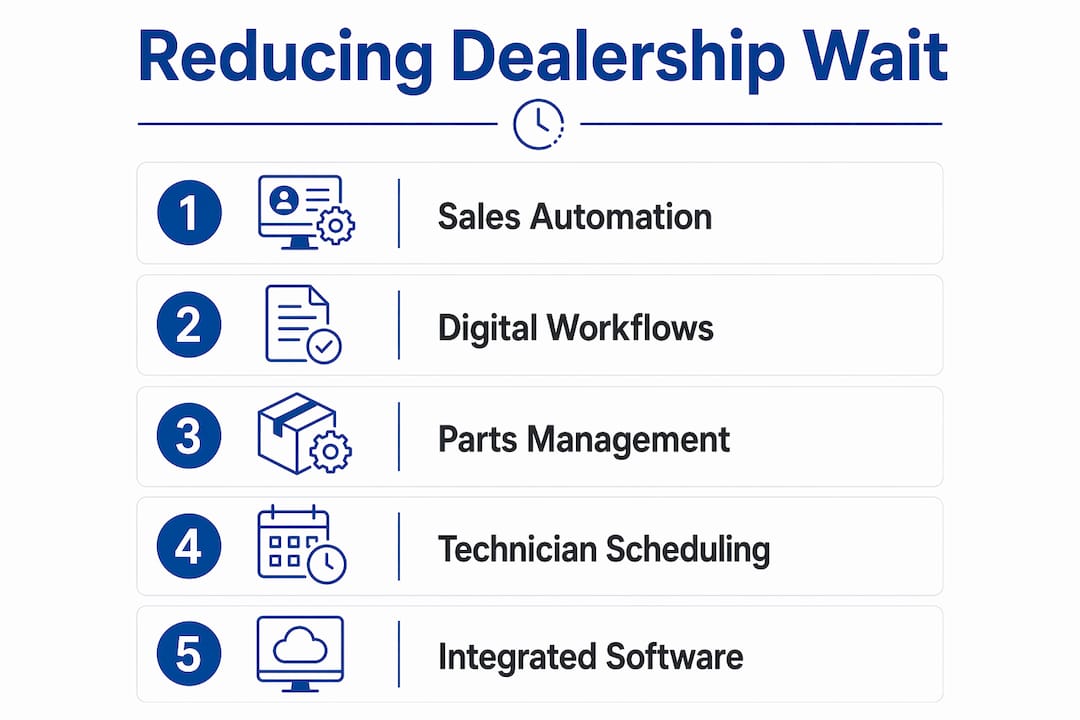
CRM, parts inventory, and scheduling software integration is the operational backbone of a fast dealership. When these systems do not communicate, technicians sit idle, advisors make manual errors, and customers wait longer than necessary. Technician idle time costs revenue and frustrates customers simultaneously.
Pro Tip: When evaluating a dealership, ask whether their service advisors use integrated scheduling software. A dealership running disconnected systems will almost always deliver slower service, regardless of how many staff they have on the floor.
Why do customers see aftermarket providers as faster, and how can dealerships close this gap?
The perception gap between dealerships and aftermarket providers is real and measurable. Aftermarket providers complete 62% of visits in under one hour. Dealerships average 1.61 to 2.46 hours per visit, and only 17% of dealer service customers have same-day work completed within one hour. Those numbers explain why customers associate quick service with independent shops rather than franchised dealers.
The perception problem runs deeper than actual wait times. Service loyalty is often lost before the vehicle even enters the shop. A 50-point gap exists between customers who intend to return to a dealer and those who actually schedule an appointment. That gap is filled by aftermarket providers who make booking easier and communicate timelines more clearly.
Dealerships hold genuine advantages that aftermarket shops cannot match. Technical expertise on specific makes and models, access to manufacturer parts, and warranty compliance are all areas where dealerships win. The problem is that dealerships win on trust and technical skill but lose ground on perceived speed and convenience.
Closing this gap requires two things: proactive communication and early digital engagement. Sending recall notifications, service reminders, and appointment confirmations through digital channels captures customers before a competitor does. Transparent upfront timelines, communicated at drop-off and updated throughout the visit, shift the customer's experience from uncertainty to confidence.
Pro Tip: Before your next service visit, confirm that the dealership will send you a status update mid-appointment. If they cannot commit to that, you are likely to spend time wondering what is happening rather than getting on with your day.
How can you use dealership efficiency to improve your car buying experience?
You have more control over your dealership experience than most customers realize. Preparation before you arrive is the single most effective way to reduce time spent at the dealership. Preparing documents and preferences before your visit, combined with dealership sales automation, creates the fastest possible buying experience.
Practical steps to get the most from time-efficient dealership services:
- Gather your documents in advance. Bring your driver's license, proof of insurance, trade-in title, and financing pre-approval. Waiting for paperwork is one of the most common sources of delay.
- Use digital scheduling tools. Dealerships offering online appointment booking with confirmed time slots respect your schedule more than those relying on walk-in queues.
- Ask about status communication. Confirm whether the dealership sends real-time updates during service. This one question tells you a lot about how they operate.
- Look for integrated sales and service. Dealerships that unify their sales and service experience digitally, as high-performing dealerships do, create a smoother ownership experience from purchase through maintenance.
- Evaluate the service advisor's responsiveness. A knowledgeable, communicative advisor is a reliable indicator of how the entire dealership operates.
You can also review how a dealership handles personalized service evaluation before committing to a purchase. Dealerships that invest in relationship management, meaning a dedicated point of contact who knows your vehicle history, reduce friction at every visit. That relationship pays off over years of ownership, not just on the day you sign.
Pro Tip: If a dealership cannot tell you the estimated completion time for your service appointment before you drop off your vehicle, that is a sign their scheduling process needs work. A well-run service lane always has a time estimate ready at check-in.
Key Takeaways
Dealerships that prioritize service speed retain more customers, generate higher fixed operations revenue, and earn stronger repurchase loyalty than those that do not.
| Point | Details |
|---|---|
| Service speed drives repurchase | 88% of customers say service experience affects their likelihood of buying from the same dealer again. |
| Automation cuts purchase time in half | Sales automation reduces average buying time from 3 hours 42 minutes to about 1 hour 48 minutes. |
| Digital communication increases revenue | Real-time status updates via photos and videos raise average repair order spend by $230. |
| Aftermarket providers win on speed perception | 62% of aftermarket visits finish under one hour versus 1.61 to 2.46 hours at dealerships. |
| Customer preparation accelerates the process | Arriving with documents and preferences ready, combined with dealership automation, creates the fastest buying experience. |
The efficiency gap is the real competitive threat
I have spent years watching dealerships invest heavily in showroom renovations, vehicle inventory, and marketing, while leaving their service lane operations largely unchanged. That is the wrong priority. The service lane is where customer relationships are won or lost over the long term, and right now, too many dealerships are losing those relationships to independent shops that simply answer the phone faster and finish the job sooner.
What strikes me most about the current data is the 50-point gap between customers who intend to return to a dealer and those who actually book an appointment. That gap is not about price or quality. It is about friction. Customers drift toward convenience, and dealerships that do not remove friction from the booking and service process will keep losing ground, regardless of how good their technicians are.
The dealerships I find most impressive are those treating digital engagement as a service tool, not just a sales tool. Sending a video of your vehicle mid-inspection, confirming a pickup time via text, and following up after service with a direct message from the advisor: these are not luxury features. They are the baseline expectation for customers who have experienced them once. Digital and AI-driven engagement integrated with operational efficiency will define which dealerships remain competitive as margins tighten.
The good news is that the gap is closable. Dealerships that commit to process integration, proactive communication, and honest timeline management can shift customer perception quickly. The technology exists. The data supports the investment. What is missing, in most cases, is the organizational will to treat service speed as a strategic priority rather than an afterthought.
— Allen
Autovendorsfl connects you with dealerships built around your time
Car buyers and leasing customers who value their time deserve dealerships that feel the same way. Autovendorsfl focuses on connecting customers with dealers who prioritize transparency, fast service, and a purchase process that respects your schedule.
Autovendorsfl offers resources that help you identify dealerships with digital scheduling, proactive service communication, and efficient car buying processes built for how people actually live. Whether you are purchasing a luxury vehicle or managing a lease, the right dealership makes the entire ownership experience easier. Visit Autovendorsfl to find dealer partners who treat your time as seriously as you do.
FAQ
Why does service speed affect whether I buy from the same dealer again?
Service experience directly shapes repurchase decisions. Research shows 88% of customers factor service quality into their next vehicle purchase choice, and returning service customers are 30 percentage points more likely to buy from the same dealer.
How much faster is the car buying process with sales automation?
Sales automation reduces average purchase time from 3 hours 42 minutes to about 1 hour 48 minutes, a 51% reduction. Arriving prepared with documents and financing pre-approval accelerates the process further.
Why do aftermarket shops feel faster than dealerships?
Aftermarket providers complete 62% of visits in under one hour. Only 17% of dealership service customers finish within one hour, creating a clear speed perception gap that dealerships must address through better scheduling and communication.
What should I look for when choosing an efficient dealership?
Look for digital appointment scheduling, real-time service status updates, and a dedicated service advisor. These three features indicate a dealership has invested in the operational processes that reduce wait times and improve your overall experience.
How can I reduce my own time at the dealership?
Prepare your documents, financing details, and vehicle preferences before you arrive. Combined with a dealership using integrated scheduling and sales automation, this preparation produces the fastest and least stressful buying or service experience available.