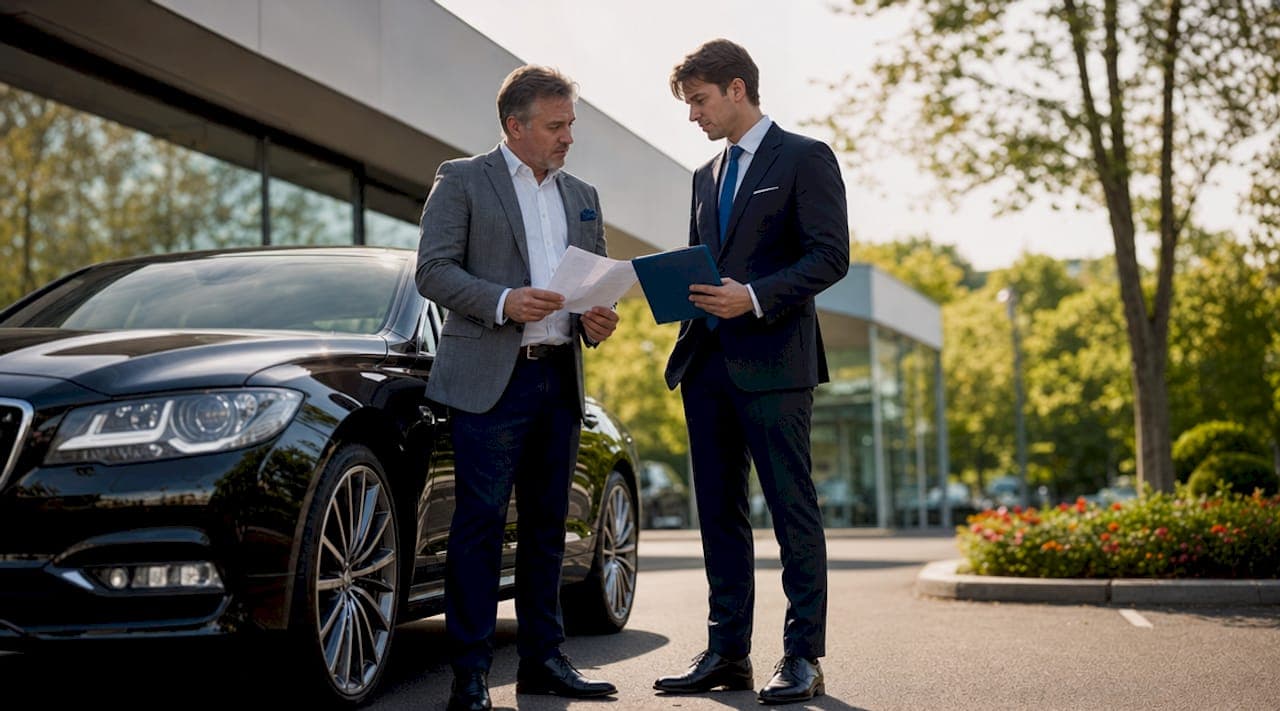
A luxury vehicle trade-in appraisal is a structured evaluation that determines what a dealership will offer for your car based on its current condition, real-time market data, and the cost of preparing it for resale. Unlike standard vehicles, luxury models carry unique appraisal variables: specialty paint, advanced technology modules, and premium interior materials all affect the final number in ways most owners do not anticipate. Understanding how this process works, from the initial walkaround to the final offer, puts you in a far stronger position at the negotiating table. The appraisal typically takes 30 to 90 minutes and involves far more than a quick glance at mileage.
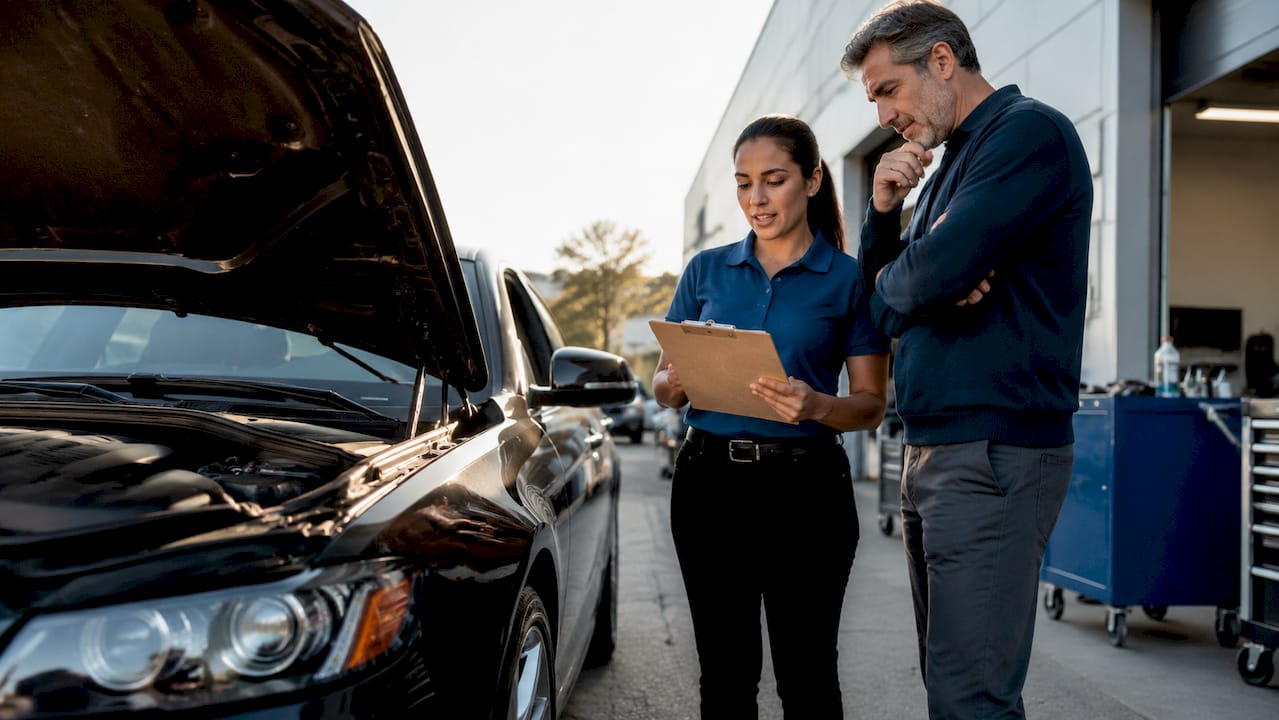
How luxury vehicle trade-in appraisal works at a dealership
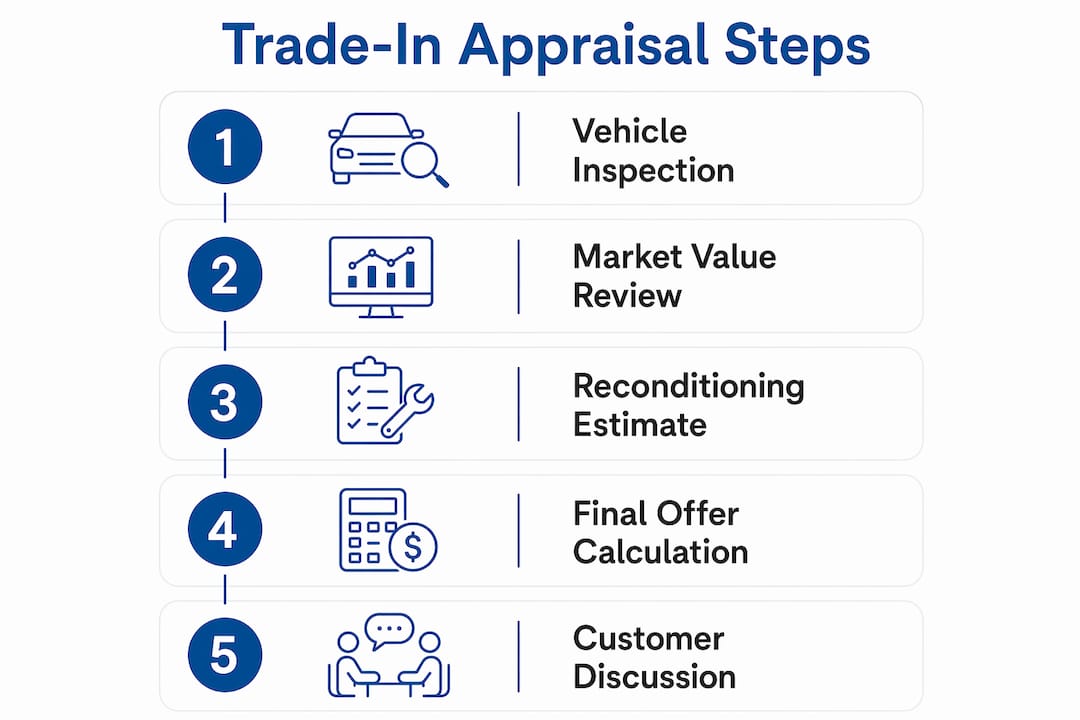
The appraisal process follows a defined sequence, and knowing each step helps you understand why the offer lands where it does.
-
Exterior and interior walkaround. The appraiser photographs every panel, checks paint depth with a paint thickness gauge, and documents scratches, dents, and interior wear. For luxury vehicles, this step is more detailed because materials like Nappa leather, carbon fiber trim, and specialty wood inlays require specialized repair rather than standard fixes.
-
Multi-point mechanical inspection. Technicians assess the engine, transmission, brakes, tires, suspension, and all electronic systems. Luxury vehicles from brands like Mercedes-Benz, BMW, and Audi carry complex onboard systems, and a single faulty module can add thousands to reconditioning costs.
-
Market valuation lookup. Appraisers use tools like Black Book and vAuto to pull real-time auction data specific to the make, model, trim, and mileage. This produces the Actual Cash Value (ACV), which reflects what the vehicle would realistically fetch at auction, not what you paid or what you owe.
-
Reconditioning cost estimate. The appraiser calculates what it will cost to bring the vehicle to retail-ready condition. For luxury cars, this figure is consistently higher than for standard vehicles due to parts pricing and labor complexity.
-
Final offer calculation. The dealer subtracts reconditioning costs, holding costs, and a profit margin from the ACV. The result is the trade-in allowance presented to you.
Pro Tip: Ask the appraiser to walk you through the reconditioning estimate line by line. Understanding what deductions were applied gives you a factual basis for negotiation rather than a guessing game.
Which factors affect luxury vehicle trade-in value differently
Luxury vehicles are not simply appraised on a higher scale of the same criteria applied to standard cars. Several factors carry disproportionate weight.
- Specialty paint finishes. Matte paint, two-tone finishes, and custom wraps require costly repair work that standard body shops cannot perform. A matte paint repair can run $1,500 to $2,500 per panel, and appraisers deduct accordingly even when the damage appears minor.
- Interior material condition. Perforated leather, Alcantara headliners, and exotic wood trim are expensive to restore. A single torn seat bolster on a Bentley or Range Rover can cost more to repair than an entire interior replacement on a standard sedan.
- Advanced technology modules. Luxury vehicles from brands like Lexus, Audi, and Mercedes-Benz carry adaptive suspension systems, night vision cameras, and heads-up displays. A malfunctioning module that costs $200 to diagnose may cost $3,000 to replace, and appraisers factor that into their estimate.
- Mileage thresholds. Crossing certain mileage marks, typically 30,000, 60,000, and 100,000 miles, affects Certified Pre-Owned eligibility and triggers reconditioning requirements. A luxury vehicle just over a threshold may receive a noticeably lower offer than one just under it.
- Modifications. Aftermarket wheels, suspension lifts, or non-factory audio systems typically reduce appraisal value. Dealers must reverse or disclose modifications, which adds cost and complexity.
- Maintenance documentation. Transparency with service records directly improves appraisal outcomes. A complete dealer-stamped service history signals lower reconditioning risk and supports a higher ACV.
"Luxury vehicles with special paint or expensive tech options often incur larger appraisal deductions due to repair difficulty and cost, even when superficially clean." This is the single most underestimated factor luxury owners face during the trade-in appraisal process.
How reconditioning costs shape the appraisal offer
Dealers treat every trade-in as a retail conversion project. Before setting an allowance, they calculate what it will cost to make the vehicle front-line ready, and that estimate comes directly off the top of your offer.
Daily vehicle carrying costs at dealerships average $37 to $45 per day, with luxury vehicles running higher due to specialized detailing, premium parts, and longer recon timelines. A vehicle that sits for 30 days before sale costs the dealer $1,100 to $1,350 in holding costs alone, before a single repair is made. That figure is baked into the appraisal math.
| Reconditioning item | Typical cost range for luxury vehicles |
|---|---|
| Full detail and paint correction | $500 to $1,200 |
| Matte or specialty paint repair | $1,500 to $2,500 per panel |
| Brake pad and rotor replacement | $800 to $1,800 per axle |
| Technology module replacement | $1,500 to $4,000 per unit |
| Tire replacement (set of four) | $1,200 to $2,800 |
The table above illustrates why a luxury vehicle with several minor issues can receive an offer that feels disproportionately low. Each line item compounds. A car needing tires, a brake service, and a paint correction could see $4,000 to $6,000 deducted before the dealer's profit margin is even applied.
Pro Tip: Address high-visibility, low-cost cosmetic issues before the appraisal. A professional detail and minor paint touch-up costing $300 to $500 can reduce the dealer's recon estimate by more than it costs you.
Consulting a luxury car maintenance checklist before your appraisal appointment helps identify which items are worth addressing in advance and which are better left to the dealer.
How to prepare for a luxury vehicle trade-in appraisal
Preparation is the most controllable variable in the appraisal process. Owners who arrive organized consistently receive better offers than those who arrive unprepared.
- Clean the vehicle thoroughly. A professional detail signals care and reduces the appraiser's instinct to assume hidden problems. First impressions affect the tone of the entire inspection.
- Gather all documentation. Bring service records, title, and insurance proof along with all keys and key fobs. Missing a second key fob on a luxury vehicle can result in a $300 to $600 deduction.
- Address cosmetic issues selectively. Fix small chips, scratches, and interior scuffs that are inexpensive to resolve. Leave major mechanical work to the dealer unless you have a trusted independent shop with documented receipts.
- Use online valuation tools as benchmarks. Kelley Blue Book (KBB) and Edmunds provide reference ranges that help you identify whether an offer is reasonable. These are not guarantees, but they establish a credible floor for negotiation.
- Separate the trade-in from the new car negotiation. Negotiating both simultaneously allows dealers to obscure value by adjusting one number to offset the other. Lock in the new car price first, then negotiate the trade-in as a separate transaction.
- Get multiple offers. Competing offers from two or three dealerships give you real leverage. A dealer who knows you have a competing offer is more motivated to sharpen their number.
Reviewing a pre-owned luxury car inspection checklist before your appointment helps you see the vehicle through the appraiser's eyes and address issues proactively.
Online instant offers vs. in-person appraisals for luxury cars
Both methods have a place in the trade-in process, but they serve different purposes and carry different limitations.
| Factor | Online instant offer | In-person appraisal |
|---|---|---|
| Speed | 2 to 5 minutes | 30 to 90 minutes |
| Accuracy | Conditional on self-reported condition | Based on physical inspection |
| Adjustment risk | High if condition differs from input | Low, all issues assessed on-site |
| Best use | Establishing a benchmark | Finalizing the actual offer |
| Luxury-specific accuracy | Lower due to cosmetic complexity | Higher, specialty items evaluated directly |
Online offers, including those generated by platforms that use VIN, mileage, and owner-reported condition, are best treated as starting points. Online offers are conditional and can adjust significantly after a physical inspection reveals damage, modifications, or undisclosed issues. For luxury vehicles, where a single cosmetic or mechanical variable can shift value by thousands of dollars, the gap between an online estimate and a final in-person offer is often wider than owners expect.
The digital car buying process has made online tools more accurate over time, but they still cannot account for the condition of Nappa leather, the function of a panoramic roof motor, or the integrity of a ceramic coating. Use both methods strategically: get the online offer first to establish a floor, then use the in-person appraisal to confirm or improve it.
Key takeaways
Luxury vehicle trade-in appraisals are driven by Actual Cash Value, reconditioning costs, and market demand, not by what you paid or what you owe.
| Point | Details |
|---|---|
| ACV drives the offer | Dealers base trade-in allowances on auction market value, not retail price or loan balance. |
| Reconditioning deductions compound | Multiple minor issues add up fast; a detail, brake service, and paint repair can reduce an offer by $4,000 to $6,000. |
| Luxury-specific factors matter | Matte paint, tech modules, and specialty interiors carry repair costs that standard appraisal tools underestimate. |
| Preparation improves outcomes | Service records, a clean vehicle, and multiple competing offers consistently produce better trade-in results. |
| Separate negotiations protect value | Locking in the new car price before discussing the trade-in prevents dealers from obscuring value across both numbers. |
What I have learned after years of watching luxury trade-ins go wrong
Most luxury car owners walk into an appraisal thinking the dealer will recognize the premium they paid for their vehicle. That is not how the math works. The dealer is pricing a retail conversion job, not honoring your purchase decision. The appraisal reflects what the car will sell for at auction or on the lot, minus the cost of getting it there, minus a profit margin. That is the reality, and accepting it early makes the entire process less frustrating.
What I find consistently underestimated is the cosmetic penalty. Owners see a small scratch and think nothing of it. The appraiser sees a panel respray on a luxury vehicle with a specialty finish, and that is a $1,500 to $2,500 line item. Luxury vehicles require specialist cosmetic repairs that standard body shops cannot perform, and dealers price that risk into every offer.
The owners who get the best outcomes are the ones who arrive prepared, transparent, and emotionally detached from the number. They have their service records organized, they have gotten two or three competing offers, and they negotiate the trade-in separately from the new car. They also choose dealerships that specialize in luxury vehicles, because a dealer who regularly handles Mercedes-Benz, Lexus, and Audi trade-ins understands the reconditioning economics far better than a general-market store. That expertise translates directly into a fairer, more accurate appraisal.
— Allen
Explore luxury trade-ins and premium inventory at Autovendorsfl
Autovendorsfl at Auto Vendors Inc in Fort Lauderdale specializes in luxury vehicle acquisitions and trade-ins, with hands-on experience appraising and sourcing models from Mercedes-Benz, Lexus, Audi, and more. The team understands the nuances that affect luxury appraisals, from specialty paint to advanced technology systems, and provides transparent, personalized service throughout the process.

Whether you are ready to trade in your current vehicle or searching for your next luxury car, Autovendorsfl offers a curated inventory and expert guidance. Browse the Mercedes-Benz S-Class inventory or explore Lexus models for sale in Fort Lauderdale. Contact the team directly to schedule a trade-in appraisal with specialists who know exactly what your luxury vehicle is worth.
FAQ
How long does a luxury vehicle trade-in appraisal take?
A luxury vehicle trade-in appraisal typically takes 30 to 90 minutes, covering the physical inspection, market data lookup, reconditioning estimate, and final offer preparation. Luxury vehicles often take longer than standard cars due to the complexity of their systems and materials.
Does my loan payoff balance affect my trade-in offer?
No. Dealers base trade-in offers on Actual Cash Value, which reflects current market and auction data, not your remaining loan balance. If you owe more than the ACV, the difference is negative equity that carries into your next transaction.
Why is my luxury car's trade-in offer lower than I expected?
Reconditioning costs for luxury vehicles are significantly higher than for standard cars, and those costs are deducted from the ACV before the offer is made. Specialty paint, technology modules, and premium interior repairs compound quickly, often reducing the offer by several thousand dollars even on a well-maintained vehicle.
Should I fix cosmetic damage before a trade-in appraisal?
Address low-cost, high-visibility issues like minor scratches, interior scuffs, and missing key fobs before the appraisal. Avoid expensive mechanical repairs unless you have documented receipts from a reputable shop, as dealers may not credit the full cost of work performed elsewhere.
Is an online trade-in offer accurate for a luxury vehicle?
Online instant offers are conditional estimates based on self-reported information and should be treated as benchmarks rather than final values. For luxury vehicles, the gap between an online estimate and the in-person offer is often wider because cosmetic and mechanical variables specific to high-end models cannot be captured digitally.