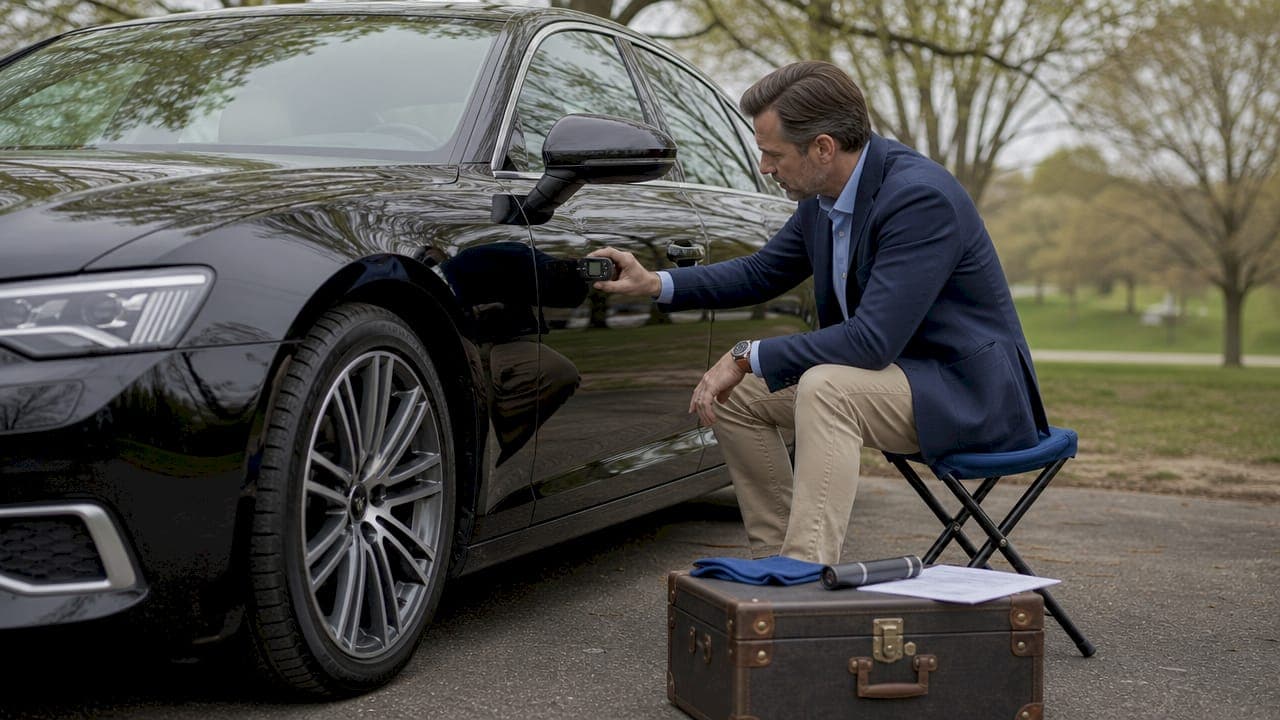
A pre-owned luxury vehicle inspection is a structured evaluation of a used high-end car's history, physical condition, mechanical systems, and electronics to confirm its true value before purchase. Buyers who skip this process face repair bills that can quickly exceed the savings gained from buying used. The industry term for this process is a pre-purchase inspection, or PPI, and it covers everything from a Carfax history report to platform-specific diagnostic scans. This guide walks you through every stage of a thorough used luxury car inspection so you can buy with confidence.
What does a proper pre-owned luxury vehicle inspection require?
A complete pre-owned vehicle assessment starts before you ever see the car in person. You need the right tools and the right paperwork, and both matter equally.
Physical tools to bring:
- A flashlight with a focused beam for inspecting door jambs, wheel wells, and undercarriage
- A small inspection mirror to see behind bumpers and under body panels
- A tire tread depth gauge to measure wear accurately
- A refrigerator magnet to detect body filler under paint
Documents to request before the visit:
- A vehicle history report from Carfax or AutoCheck. History reports cost roughly $25–$40 and catch non-mechanical deal-killers like salvage titles and flood damage that no physical inspection can reveal.
- Complete service records showing scheduled maintenance and any repair history
- The original window sticker or build sheet, which confirms factory options and original specifications
Timing also matters. Inspect the car in full daylight, outdoors, on a flat surface. Never inspect a car that has just been driven or recently washed, because a warm engine hides cold-start noises and a wet surface masks paint defects.
Pro Tip: Schedule your inspection for a dry, sunny morning. Overcast light flattens paint surfaces and makes ripples and color mismatches nearly impossible to spot.
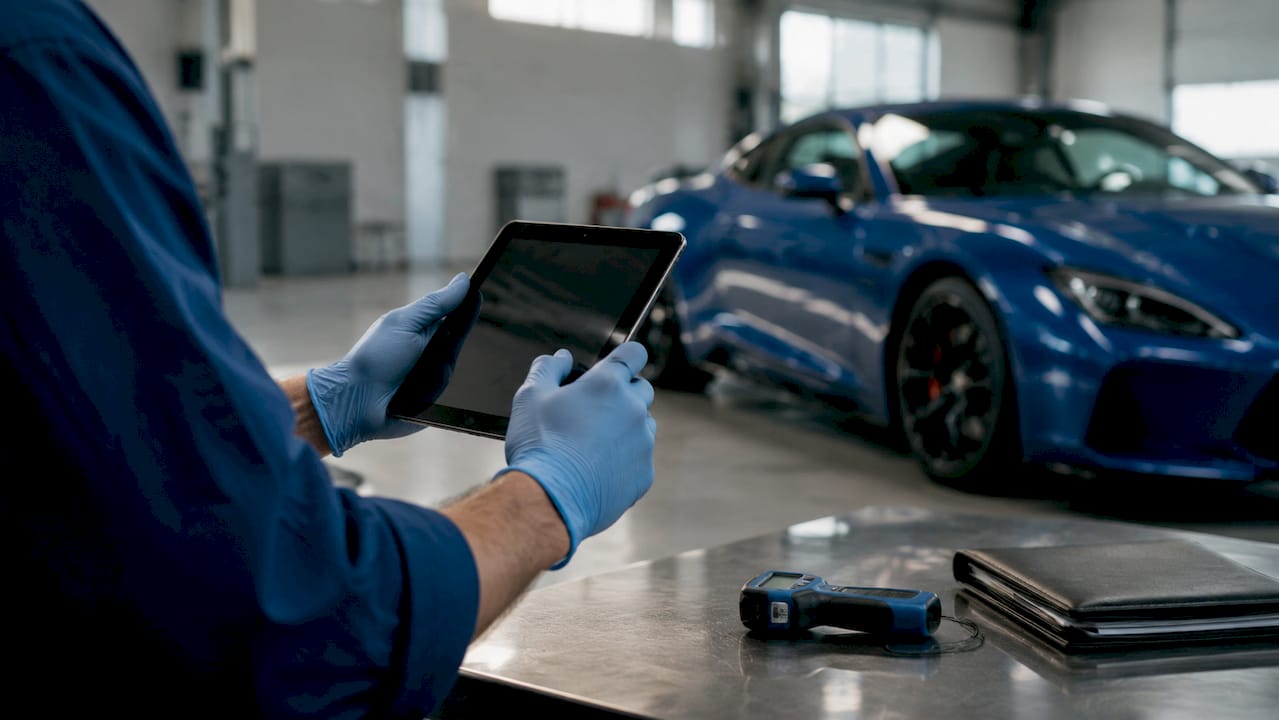
| Preparation step | Why it matters |
|---|---|
| Pull vehicle history report | Reveals salvage titles, flood damage, and odometer issues |
| Bring a magnet | Detects body filler under paint, indicating past collision repairs |
| Inspect in daylight | Sunlight exposes paint inconsistencies and panel ripples |
| Request service records | Confirms maintenance history and electronic system care |
How to inspect the exterior and body condition
The exterior tells the most honest story about a car's past. Panel ripples and inconsistent gaps under bright sunlight reveal poor accident repairs, and a rebuilt vehicle can cost far more to maintain than its price suggests.
Follow these steps in order:
- Stand at each corner of the car. Look down the length of each panel. Waves, ripples, or color shifts indicate repainting after a collision.
- Check all panel gaps. Gaps between doors, fenders, and the hood should be even and consistent. Uneven gaps signal a frame or panel replacement.
- Run the magnet across every body panel. A magnet loses grip over body filler. Any panel that fails this test has been repaired with filler rather than properly straightened metal.
- Inspect under the bumpers and inside the wheel wells. Look for overspray, mismatched paint, or fresh undercoating applied to hide rust.
- Examine the door jambs and trunk jambs. Original paint in these areas should match the exterior perfectly. Overspray or bare metal here confirms a repaint.
- Check all four tires. Uneven tire wear signals potential suspension or alignment neglect, both of which are high-cost repairs on luxury vehicles. Wear on the inner or outer edges specifically points to alignment problems.
Pro Tip: Bring a paint thickness gauge if you can. Readings above 200 microns on any panel confirm filler or multiple repaint layers, even when the surface looks perfect to the eye.
A clean exterior on a luxury car is not proof of a clean history. Sellers invest in professional detailing before listing. Your job is to look past the shine.
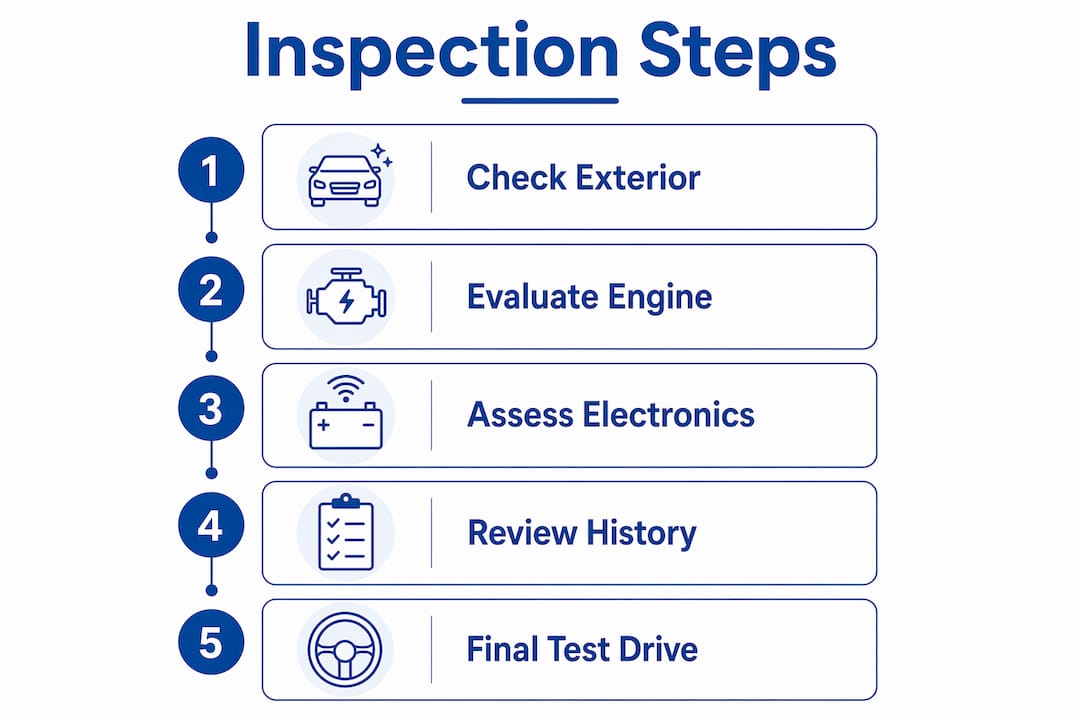
How to evaluate the engine, mechanical systems, and undercarriage
Mechanical issues on luxury vehicles cost significantly more to repair than on standard cars, so this stage of the inspection demands the most attention.
- Arrive before the seller starts the car. A cold start is the single most revealing mechanical test available. Cold start inspections reveal timing chain rattles, piston slaps, and other noises that disappear once the engine reaches operating temperature.
- Open the hood and look before you listen. Check for fresh oil residue around valve covers, coolant stains near the radiator cap, and any sign of recent cleaning. A suspiciously clean engine bay on a high-mileage car often means someone wiped away evidence of a leak.
- Check all fluid levels and conditions. Oil should be amber to dark brown, never milky. Milky oil indicates coolant mixing with engine oil, which points to a head gasket failure. Transmission fluid should be red or pink, not brown or burned-smelling.
- Request a lift inspection. A vehicle raised on a lift reveals oil pan leaks, worn CV axle boots, cracked exhaust components, and corroded brake lines that are invisible from above.
- Inspect the brake rotors and pads. Luxury vehicles use larger, more expensive brake components. Deep grooves in rotors or pads worn below 3mm mean immediate replacement costs.
- Insist on a road test. Listen for suspension clunks over bumps, steering pull to one side, and any transmission hesitation or harsh shifts. A thorough inspection includes a road test, lift inspection, and a comprehensive scanner review using manufacturer-specific software to check all electronic modules.
Pre-purchase inspection costs for luxury vehicles typically range from $200 to $600 due to platform complexity and specialized diagnostics. That cost is a fraction of what a single undisclosed mechanical fault can cost to repair.
How do you assess luxury electronics, ADAS, and interior condition?
Modern luxury vehicles carry more electronic complexity than most buyers realize. A 2023 or newer BMW, Mercedes-Benz, or Porsche can have dozens of electronic control modules managing everything from adaptive suspension to night vision cameras.
Test every electronic system in sequence:
- Power windows, sunroof, and all door locks
- Infotainment screen responsiveness and navigation accuracy
- All ADAS features: lane-keeping assist, adaptive cruise control, blind-spot monitoring, and parking sensors
- Heated and ventilated seats, steering wheel heating, and massage functions
- Head-up display brightness and clarity
- All exterior lighting including adaptive headlights
Up to 50% of electronic system faults remain undetected without marque-specific diagnostics like PIWIS for Porsche or ISTA for BMW. A general mechanic's OBD-II scanner reads basic fault codes but misses module-level failures entirely. This is the most common and costly mistake buyers make.
Check the interior for flood damage signs. Musty odors, water stains under floor mats, rust on seat rail bolts, and corrosion inside the trunk are all indicators. Flood-damaged luxury vehicles are particularly dangerous because water destroys electronic modules that may not fail immediately but degrade over months.
Pro Tip: Pull back the carpet near the spare tire well and under the rear seats. These areas trap water longest and show flood evidence even after a professional interior detail.
Review the service records specifically for electronic system updates and recalls. Luxury brands issue software updates for ADAS systems regularly. A car with no record of these updates may have unresolved safety-related software issues. For a complete pre-owned luxury car checklist covering all electronic checkpoints, Autovendorsfl has published a detailed 2026 resource.
How to interpret vehicle history reports and seller transparency
A vehicle history report is not optional. It is the foundation of any credible pre-owned vehicle assessment.
Key red flags to identify in any history report:
- Salvage or rebuilt title designation
- Flood damage notation from any insurer
- Odometer rollback indicators or mileage inconsistencies
- Multiple ownership changes in a short period
- Accident reports with structural damage noted
VIN verification across three spots is the standard fraud check: the dashboard VIN plate, the driver-door jamb sticker, and the title document must all match exactly. Any mismatch is an immediate deal-breaker and cannot be explained away by any seller.
Seller behavior during the inspection is as informative as the car itself. A seller who refuses to allow an independent inspection, rushes the process, or discourages a lift inspection is signaling a problem. Seller reluctance to allow independent inspections is a justified cause to walk away from any deal, regardless of price.
"The willingness of a seller to allow a thorough, independent inspection is the clearest signal of how much confidence they have in the vehicle they are selling."
Certified Pre-Owned programs offer a structured alternative for buyers who want documented inspection rigor. CPO programs provide 161–182 point checks and manufacturer warranties, with a price premium of 2–8% over non-certified used vehicles. That premium buys documented peace of mind. Understanding how to check luxury car history alongside mileage context gives you the full picture of a vehicle's real condition.
Key takeaways
A thorough pre-purchase inspection combining a vehicle history report, physical evaluation, and marque-specific diagnostic scan is the only reliable way to confirm the true condition of a used luxury vehicle.
| Point | Details |
|---|---|
| Use platform-specific diagnostics | General mechanics miss up to 50% of electronic faults without tools like PIWIS or ISTA. |
| Always pull a history report | Reports costing $25–$40 catch salvage titles and flood damage no physical check can find. |
| Verify VIN in three locations | Dashboard, door jamb, and title must match exactly to rule out fraud. |
| Inspect cold, in daylight | Cold starts reveal engine noises; sunlight exposes paint defects and panel inconsistencies. |
| Treat seller refusal as a red flag | Any seller who blocks an independent inspection gives you reason to walk away. |
What I've learned from watching buyers get burned on luxury cars
I've seen buyers spend $80,000 on a pre-owned vehicle and skip the $400 inspection because the car "looked perfect." Three months later, a failed transfer case or a water-damaged infotainment module turned that apparent bargain into a financial headache. The inspection fee is not a cost. It is insurance.
The single biggest mistake I see repeatedly is hiring a general mechanic for a luxury vehicle inspection. A competent general mechanic will catch obvious mechanical issues. They will not catch a failing air suspension compressor that only faults under load, or a transmission module storing a soft code that predicts failure within 10,000 miles. You need a specialist who works on that specific marque daily and owns the proprietary diagnostic software. For Porsche, that means PIWIS. For BMW, ISTA. For Mercedes-Benz, XENTRY. There is no substitute.
The second mistake is letting a great price override inspection findings. Buyers negotiate hard on price, then accept a car with known issues because they feel invested in the deal. Walk away from any car with unresolved structural damage, flood history, or a seller who blocks access. The right car at the right price exists. Hiring a personal car buying service with luxury market expertise removes the emotional pressure that leads to these mistakes.
Armed with inspection data, you negotiate from a position of knowledge. Every documented fault is a legitimate reason to adjust the price or request a repair before purchase. That is how experienced buyers protect their investment.
— Allen
How Autovendorsfl helps buyers evaluate pre-owned luxury vehicles
Autovendorsfl specializes in curating premium pre-owned luxury vehicles and applies rigorous quality standards to every car in its Fort Lauderdale inventory. Each vehicle goes through a thorough condition review before it reaches buyers, so you are not starting your evaluation from zero.
Buyers who want personalized guidance on evaluating a specific model can work directly with the Autovendorsfl team, which brings deep expertise in luxury vehicle sourcing and condition assessment. Whether you need help interpreting an inspection report or finding a specific make and model that meets your standards, the team provides hands-on support at every step. Visit Autovendorsfl's luxury inventory to see current pre-owned offerings and connect with a specialist who knows the market.
FAQ
What does a pre-purchase inspection cover for a luxury car?
A pre-purchase inspection for a luxury vehicle covers the exterior, engine, undercarriage, electronics, and vehicle history. A complete inspection also includes a road test and a marque-specific diagnostic scan to check all electronic modules.
How much does a luxury car pre-purchase inspection cost?
Pre-purchase inspections for luxury vehicles typically cost $200–$600, depending on the marque and the diagnostic tools required. European brands and exotic vehicles can reach $1,000 for a full inspection.
Why does a luxury car need a specialist inspector?
Up to 50% of electronic system faults go undetected without platform-specific tools like PIWIS or ISTA. A general mechanic's scanner reads basic fault codes but cannot access the full range of control modules in a modern luxury vehicle.
What are the biggest red flags in a vehicle history report?
Salvage titles, flood damage notations, odometer rollback indicators, and structural accident damage are the most serious red flags. Any one of these findings warrants walking away from the purchase.
Is a Certified Pre-Owned vehicle safer to buy than a standard used luxury car?
CPO vehicles go through 161–182 point inspections and come with manufacturer warranties, making them a lower-risk option. The price premium of 2–8% over non-certified used vehicles reflects that documented assurance.