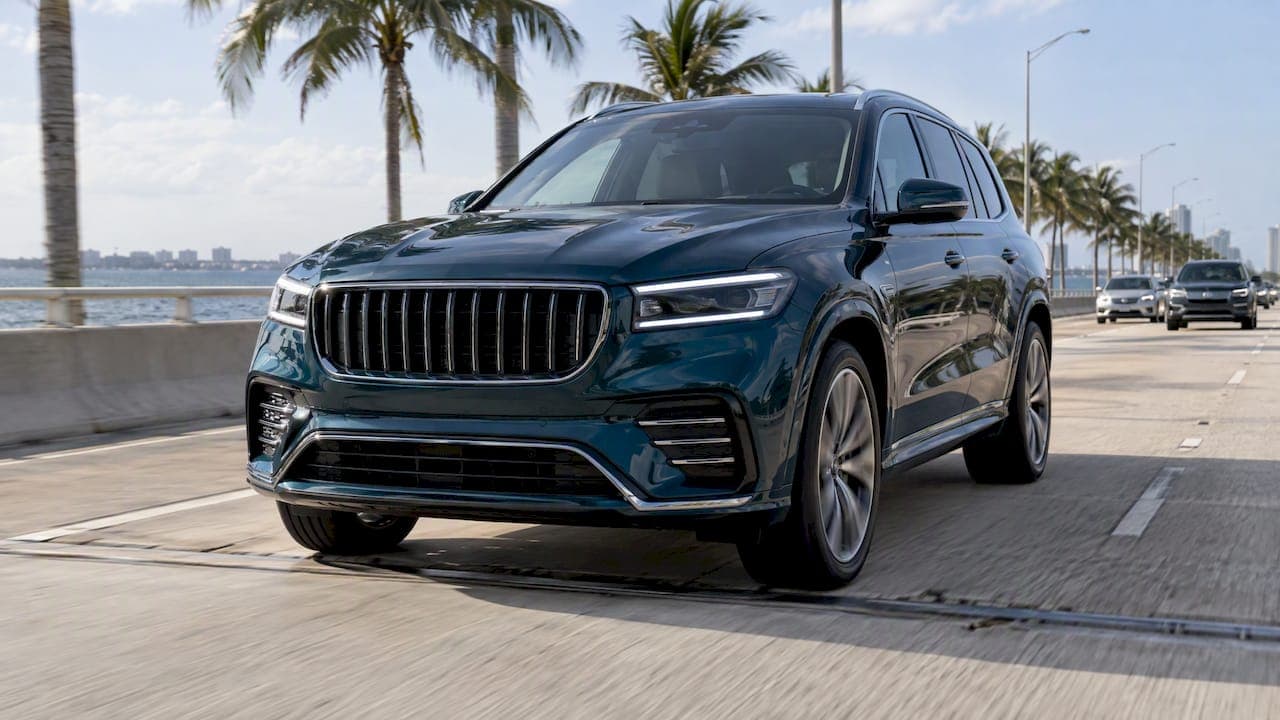
A comfortable luxury SUV comes down to four things: a suspension tuned for softness rather than cornering, tires with enough sidewall to absorb bumps, seats that adjust to your body, and a cabin that keeps road noise out. Brand badge and price matter less than those four. If you are shopping used, there is a fifth: whether the comfort hardware still works the way it did when the vehicle was new.
This guide explains how each piece works, which models testers rate highest by size, where buyers get tripped up (large wheels and sport packages are the usual culprits), and how to check ride quality before you sign anything.
TL;DR
- Ride comfort is now judged on cabin isolation from noise and vibration, seat support on long drives and easy controls, not only on how softly the suspension absorbs bumps.
- Edmunds' 2026 testing put the Mercedes-Benz GLS, BMW X5, Mercedes-Benz GLB and Genesis GV70 at or near the top of their size classes for comfort.
- Smaller wheels with taller sidewalls and a comfort-oriented suspension setting usually ride better than big wheels and a sport package.
- Advanced air and active suspensions ride beautifully but can cost more to maintain, so on a used SUV, test every drive mode and look for warning messages.
- Always drive the exact vehicle you plan to buy, on rough pavement as well as smooth.
Table of Contents
- What ride comfort really means
- How suspension shapes the ride
- Wheels and tires: the comfort trade-off buyers miss
- Be careful with sport packages
- Comfort leaders by size
- Comfort that lasts: reliability matters
- Buying a used luxury SUV for comfort
- A test drive built for comfort
- Our perspective
- Find your comfortable SUV with us
- FAQ
- Sources
What ride comfort really means
Most people describe comfort as "soft." That is only part of it. A truly comfortable SUV feels calm: it doesn't float or bounce after a dip, it doesn't thump over expansion joints, and you can talk at a normal volume at 70 mph.
Edmunds' reviewers describe the most comfortable SUVs as having roomy interiors, ride comfort prioritized over ultimate cornering grip, and big door openings that make getting in and out easy. That framing is useful because it treats comfort as a whole experience, from the moment you open the door to the moment you step out after a long drive.
In practice, comfort breaks into five parts:
- Ride quality: how the suspension and tires handle bumps, cracks and broken pavement.
- Isolation: how well the cabin blocks wind, tire roar and vibration. Heavy acoustic glass, dense door seals and underbody insulation do most of this work.
- Seats: cushion length, lumbar support, and how many ways you can adjust them. Heating, ventilation and massage are bonuses.
- Space and access: headroom, legroom, step-in height and rear-seat room.
- Ergonomics: controls you can use without hunting through menus.
The last point is easy to overlook. A car that rides like a cloud but makes you dig through three screens to adjust the climate is not relaxing. Our MBUX vs iDrive guide covers how to confirm an infotainment system suits you before you buy.
How suspension shapes the ride
Suspension is the biggest single factor in how a luxury SUV feels. You will meet three broad types.
Conventional steel springs and dampers
The simplest setup uses coil springs with shock absorbers or struts. A well-tuned conventional system can be very comfortable, and it is the cheapest to repair. Its limit is that the tuning is fixed: it has to compromise between a soft ride and body control.
If you want a plain-language explanation of how the two main damping parts differ, this short piece on shocks versus struts is a helpful primer. It matters when a used SUV starts to feel floaty or noisy over bumps, because worn dampers are a common reason an older vehicle no longer rides as it once did.
Adaptive dampers
Adaptive systems change the damping firmness electronically, often in milliseconds. They let one SUV feel plush in Comfort mode and tighter in Sport. They add some complexity but usually less than full air suspension.
Air and active suspension
Air springs replace steel coils with flexible rubber bellows, which lets the vehicle adjust ride height and spring rate. The result is the smoothest ride you can buy. Mercedes-Benz's optional E-Active Body Control, for instance, helped the 2026 GLS earn an 8.5 out of 10 comfort score from Edmunds, with testers praising how well it smooths road imperfections.
At the very top of the market, the Rolls-Royce Cullinan goes further. Car and Driver describes a cloud-like, tranquil ride, and the vehicle uses road-scanning cameras to adjust air suspension height ahead of pavement imperfections.
The trade-off is upkeep. Edmunds notes that complex electronic systems can increase maintenance complexity over time compared with mechanically simpler setups. On a used SUV, that means inspecting the system carefully, which we cover below.
Wheels and tires: the comfort trade-off buyers miss
Large wheels look expensive. They also tend to ride worse. A bigger wheel usually means a lower, stiffer tire sidewall, and the sidewall is part of the suspension: it flexes to absorb impacts before the springs ever react.
Edmunds' guidance is that smaller wheel diameters with higher sidewall tires absorb road impacts better and reduce harshness. First-time luxury buyers often choose the largest wheel option for looks, then wonder why the ride feels busy.
Practical rules:
- If you have a choice of wheel sizes on a used SUV, the smaller set usually rides softer.
- Check the tires. Worn, mismatched or overinflated tires can make a good suspension feel harsh. Tire noise is also a major part of cabin sound.
- On an older SUV, replacing tires with a quality touring tire often improves comfort more than any other single change.
Be careful with sport packages
Many luxury SUVs offer a sport-tuned suspension, bigger brakes and larger wheels as a bundle. These packages improve cornering grip. They also tend to produce a firmer ride on city streets. J.D. Power's review of the BMW X3, for example, covers how the vehicle's character changes with its suspension and wheel choices, a reminder to test the exact configuration rather than the brand.
If long-distance comfort is your priority, Edmunds suggests putting seat adjustability and suspension tuning ahead of athletic handling. Ask yourself honestly how often you will use the extra grip. For most families and commuters on South Florida roads, the answer is rarely. If your daily drive is a mix of stop-and-go traffic and highway cruising, a comfort-oriented setup will serve you better.
Comfort leaders by size
The following scores come from Edmunds' 2026 comfort testing. They are a good starting point, not a final answer, since comfort is personal and used examples vary with age and mileage.
| Size class | Model | Edmunds comfort score | What testers liked |
|---|---|---|---|
| Large | Mercedes-Benz GLS | 8.5/10 | Serene cabin, adjustable heated and ventilated seats, optional E-Active Body Control |
| Midsize | BMW X5 | 8.5/10 | Smooth ride, quiet interior, calm demeanor |
| Compact | Mercedes-Benz GLB | 8.5/10 | Smooth ride |
| Compact | Genesis GV70 | 8.4/10 | Supportive, highly adjustable seats and well-calibrated suspension |
Source: Edmunds, Most Comfortable SUVs.
Other rankings point the same way on the principle. U.S. News names the all-electric 2026 Lucid Gravity its most comfortable luxury SUV, crediting standard air suspension that soaks up imperfections. Car and Driver, reviewing the 2025 Mercedes-Benz GLC, singles out a supple ride quality as a high point. In both cases, the common thread is a suspension tuned for refinement.
That said, a new-vehicle ranking is only one input when you are buying used. Model years differ, and older vehicles of the same nameplate may use different suspension hardware. Treat the rankings as a way to build a shortlist, then verify each candidate in person.
Comfort that lasts: reliability matters
A smooth ride loses its appeal fast if the screen freezes or the transmission shifts roughly. Experts make this point often: reliability is part of the luxury experience.
Consumer Reports describes Lexus as one of the few luxury automakers that pairs advanced technology with consistently great reliability, with quiet interiors and finely crafted materials. A Yahoo Autos comparison of the two brands notes that Lexus models, including the NX, RX and TX, often score higher than rivals such as Acura on reliability, and credits long-proven platforms over rushed new technology.
The lesson for a comfort shopper is balance. The most advanced suspension may deliver the softest ride when everything works. A simpler, proven setup may deliver a nearly-as-good ride for far fewer worries. If you want to compare brands head to head on dependability, our breakdown of Acura vs. Infiniti reliability walks through the data.
For buyers who want a large, quiet, proven SUV, we also list the Lexus GX 460, a body-on-frame model with a reputation for durability. Ask us about current availability and condition.
Buying a used luxury SUV for comfort
Used is where luxury value gets interesting. Depreciation means a large share of the original price has already been absorbed by the first owner. But comfort features are also the parts that wear. Here is what to check.
Air suspension and adaptive dampers
Air suspension can leak or fail with age. One buyer-oriented guide notes that on a used vehicle with adjustable air suspension, every drive mode should work, and that warning messages, slow height changes or a failure to switch modes can signal costly problems.
Before you commit, look for these signs:
- The vehicle sits lower at one corner after being parked overnight.
- A suspension warning appears on the dash at startup.
- The ride height changes slowly, or not at all, when you change modes.
- You hear a compressor running more than briefly after startup.
We wrote a dedicated piece on 5 owner checks for Mercedes air suspension leaks that goes into detail. If you are considering a large Mercedes sedan or SUV with this hardware, it is worth reading first. As an example of the sort of vehicle it applies to, we list a 2017 Mercedes-Benz S-Class, and you can browse the S-Class page for more.
Dampers, bushings and tires
On any used luxury SUV, listen for clunks over bumps, watch for the body continuing to bounce after a dip, and look at tire wear. Uneven wear can point to alignment or suspension problems. A pre-purchase inspection by an independent mechanic is cheap insurance on any vehicle with complex suspension.
Seats and cabin
Sit in the vehicle for more than a minute. Run every seat adjustment, heating and ventilation setting. Worn bolsters, failed lumbar motors and rattling trim are all signs of heavy use and all affect long-drive comfort.

Midsize examples
If the midsize class is your target, the BMW X5 sits near the top of Edmunds' comfort list in its current form. We list an older 2013 BMW X5 as an example of how that nameplate shows up on the used market. An older vehicle will not match a 2026 model's score, so the test drive and inspection matter even more.
A test drive built for comfort
A ten-minute loop on smooth roads tells you very little. Plan a drive that exposes the ride.
- Find rough pavement. Look for expansion joints, patched asphalt or a railroad crossing. Notice whether the impact is a single muted thud or a sharp, repeated shock.
- Drive at highway speed. Listen for wind noise around the mirrors and tire roar on coarse pavement. Try talking at normal volume.
- Cycle the drive modes. Switch between Comfort, Normal and Sport. The change should be obvious and smooth.
- Park and adjust the seat for yourself. Then adjust it for the person who will ride in the back. Check rear legroom and headroom.
- Use the controls. Change the climate, radio and navigation without taking your eyes off the road more than a glance.
- Stay long enough. Comfort problems like lower-back fatigue show up after 20 to 30 minutes, not two.
Our luxury SUV test drive checklist expands this into a full printable-style list. If you have kids, our guide on installing car seats in a luxury SUV covers fit and safety, which is part of family comfort.
Our perspective
We talk to buyers every week who say they want a luxury SUV, and when we ask what they mean, "comfort" comes up before horsepower or badge. That matches what the research says about how ride quality is judged today: isolation, seat support and ease of use count as much as suspension softness.
Here is how we advise buyers.
Start with how you drive, not the spec sheet. A family doing school runs and highway trips has different needs from an enthusiast. Many of our customers are busy professionals who log long hours behind the wheel, and for them a calm, quiet cabin is worth more than a sport package.
Be honest about complexity. An air suspension is wonderful when it works. We would rather you buy it knowing what to inspect than be surprised later. For some buyers, a proven conventional setup in a reliable brand is the smarter luxury purchase.

Choose the vehicle, not the reputation. Two used SUVs of the same model can feel different depending on wheels, tires, maintenance and mileage. That is why we encourage a proper test drive and an independent inspection.
Let us do the legwork. Our team curates a selection of used luxury vehicles with a focus on quality, and if what you want is not on the lot, we offer personalized vehicle finding assistance. Tell us you want a quiet, soft-riding SUV with supportive seats, and we can search with that in mind.
— Allen
Find your comfortable SUV with us
If you would rather not spend weekends scanning listings, our Car Finder service is built for this. Tell us the size, the budget and what comfort means to you, and we will look for matches. You can also browse our SUVs for sale in Fort Lauderdale, compare options in our sedan inventory, or start with the Car Finder on our home page. We also handle trade-in valuation and financing options, so the whole purchase can happen in one place.
FAQ
Which luxury SUV has the smoothest ride?
It depends on the class and your budget. In Edmunds' 2026 testing, the Mercedes-Benz GLS led large luxury SUVs and the BMW X5 led midsize ones, each at 8.5 out of 10. At the ultra-luxury end, the Rolls-Royce Cullinan is praised for a cloud-like ride. Always test the specific vehicle you are considering.
Is air suspension worth it on a used luxury SUV?
It can be, if the system is in good order. Air suspension gives the softest ride, but it can be costly to repair when parts leak or fail. Test every drive mode, look for warning messages, and have an independent mechanic inspect the system before you buy.
Do bigger wheels make a luxury SUV ride worse?
Usually, yes. Larger wheels typically carry lower-profile tires, which absorb less of each impact. Smaller wheels with taller sidewalls generally ride more comfortably, so choose them if comfort matters more than looks.
Which compact luxury SUV is the most comfortable?
Edmunds' 2026 testing put the Mercedes-Benz GLB at 8.5 out of 10 and the Genesis GV70 at 8.4. The GLB was noted for its smooth ride, and the GV70 for supportive seats and well-calibrated suspension. Used examples vary, so drive before you decide.
Which luxury brand is most reliable?
Consumer Reports describes Lexus as consistently strong on reliability, and its reliability rankings show every Lexus model rated average or better. Reliability still varies by model, year and maintenance history, so check the individual vehicle.
Sources
- Most Comfortable SUVs, Edmunds
- The Most Comfortable Luxury SUVs in 2026, U.S. News
- 2027 Rolls-Royce Cullinan Review, Car and Driver
- 2025 Mercedes-Benz GLC-Class Review, Car and Driver
- 2025 BMW X3 Review, J.D. Power
- Lexus Cars and SUVs, Consumer Reports
- Who Makes the Most Reliable New Cars, Consumer Reports
- Acura vs Lexus Reliability, Yahoo Autos
- Air Suspension: Everything You Need to Know Before Buying a Car With It, Auto4Export