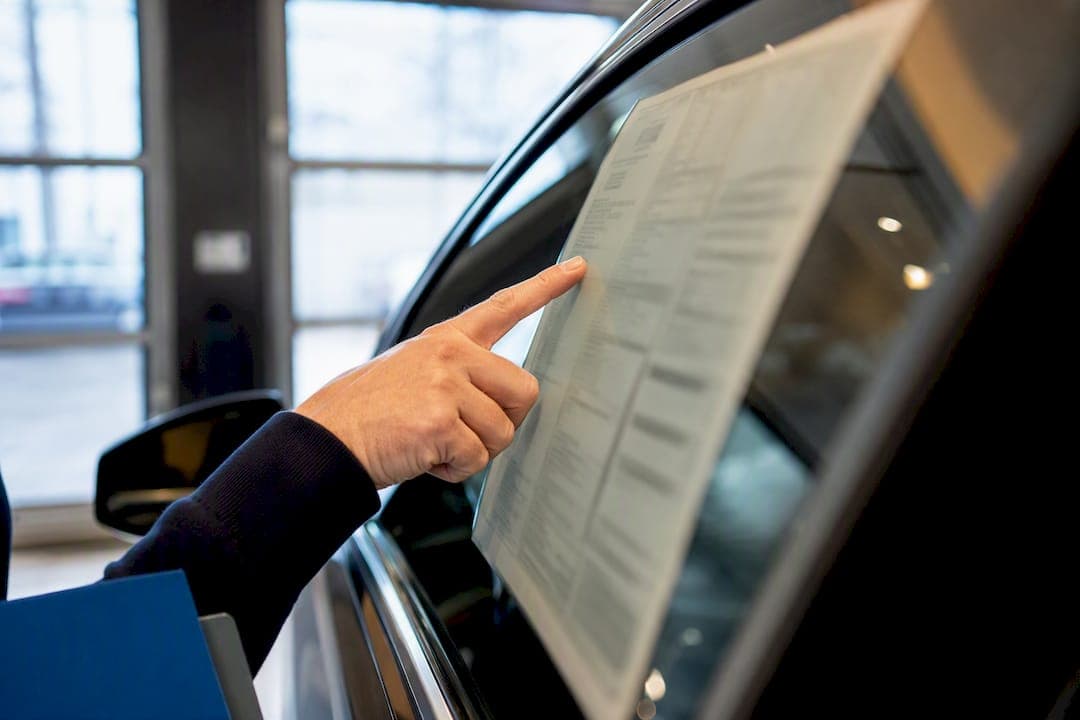
The single most reliable proof of a special-order trim is the original window sticker or factory build sheet, not a badge or a listing description. If the seller can't produce one, run a VIN-decoded build report or call the brand's parts department directly. Treat exterior badges and aftermarket touches as decoration, not documentation.
TL;DR:
- The original window sticker or factory build sheet is the most reliable proof of a special-order trim, not badges or aftermarket decorations.
- Verifying trims requires confirming factory documentation, VIN-based build reports, or direct contact with the manufacturer’s parts department, especially if original papers are missing.
- Badge inflation and superficial modifications are common red flags; matching physical details with official codes reduces the risk of misrepresentation.
- Factory options that add resale value include genuine premium paint, performance packages, and factory-installed advanced safety or tech features, all verifiable through official documents.
- A thorough checklist involves VIN decoding, obtaining original documentation, confirming codes in person, negotiating discrepancies, and considering costs and time for verification processes.
Table of Contents
- How Do You Verify Special Order Trims Used On A Car Today?
- How Do Sellers Misrepresent Special Order Trims?
- What's The Difference Between A Trim Level, A Package, And A Special Edition?
- Do Special Order Options Really Increase Resale Value?
- What's The Full Checklist Before You Pay For A Special Order Trim?
- How Auto Vendors Inc Confirms Special Order Trims
- Skip The Guesswork And Shop Verified Inventory
- Quick Resources For Verifying A Build
- Sources
How Do You Verify Special Order Trims Used On A Car Today?
Verifying special order trims used on a car today starts and ends with paper trail, not paint. The original window sticker (Monroney label) or factory build sheet is the definitive proof of what left the factory, including every optional package, standalone option, and its original MSRP. Nothing a seller tells you over the phone carries that weight.
Here's what each document actually shows you:
- Window sticker (Monroney label): standard equipment, optional packages, individual option prices, paint code, and interior trim code.
- Factory build sheet: VIN-decoded option codes, production-specific extras, and special-edition designations that don't always show up on a sticker.
Pro Tip: Ask the seller for the window sticker before you ask about price. A seller who can't find it in five minutes probably never had one.
If the physical sticker is long gone, you have three practical paths. Free VIN registry checks will confirm basic trim and drivetrain data. Paid VIN-decoding and build-sheet services, like Motorscan's factory-fitted options check, go deeper and list every factory-fitted extra along with paint and interior codes. Contacting the manufacturer's parts department directly is often faster than either. Parts staff need exact VIN-specific option codes to source replacement components, so they're usually more willing to email a build report PDF than a sales team ever will be. Most of these requests take a few days to a week, and a paid decode report is worth the small fee when you're negotiating on a car with genuine rarity.
How Do Sellers Misrepresent Special Order Trims?
Badge inflation is the oldest trick in the used-car business, and it works because most buyers never check further. A dealer or previous owner slaps on a sport badge, a trim emblem, or a special-edition decal, and the listing suddenly reads like a factory-built rarity. Badges alone prove nothing; they're inexpensive, easy to source, and even easier to install in a driveway.
Watch for these red flags in listings:
- Vague phrasing like "sport package" or "special edition" with no option codes or documentation mentioned.
- Wheels, trim pieces, or vinyl wraps that look slightly inconsistent with factory photos of the same model year.
- Interior photos that don't match the exterior badge's implied trim level.
- A seller who deflects when you ask for the build sheet or window sticker.
Pro Tip: Compare the VIN-decoded interior and paint codes against what you see in person. A mismatch there is harder to fake than a badge.
If a seller can't produce a build sheet and gets defensive when asked, that's your signal to walk or renegotiate hard. Aftermarket parts can look convincing, but they never carry the factory's paper trail.
What's The Difference Between A Trim Level, A Package, And A Special Edition?
These three terms get used interchangeably in listings, but they mean different things, and mixing them up costs buyers money.
- Trim level describes the base configuration, such as LX, EX, or Sport, and covers the standard equipment set a vehicle ships with. Differences between trims usually involve interior equipment, cosmetic details, and occasionally mechanical changes like engine or suspension tuning.
- Option package bundles extras on top of a trim level. Common package types include appearance packages (wheels, badges, trim accents), performance packages (suspension, exhaust, engine tuning), towing packages (hitch, wiring, cooling upgrades), safety packages (advanced driver assist features), and technology packages (navigation, premium audio, connectivity).
- Special or limited edition refers to a production run tied to a specific configuration, often a factory-only combination of paint, interior, and options not available on standard order sheets.
Manufacturers name these consistently within a model line, so a naming pattern that seems unfamiliar for that brand and year is worth a second look before you assume its factory.
Do Special Order Options Really Increase Resale Value?
Genuine factory options can add real money at resale, but only when you can prove they're real. A genuine factory tech package, panoramic roof, or premium interior trim can be worth hundreds or thousands of dollars more than the base configuration, and that gap widens for premium paint colors and mechanical performance options.
The options that consistently hold value include:
- Factory premium paint (not a repaint matching a factory color code)
- Performance or mechanical packages tied to a specific engine or suspension code
- Premium audio systems installed at the factory
- Advanced driver assist packages bundled at production
Use the window sticker's original MSRP for each option as your negotiation baseline. If a seller is asking a premium for a "loaded" trim but can't verify it, you have grounds to ask for a price reduction equal to the unverified option's original value, or push for a service credit instead. Verification itself usually takes a few days, and lookup services typically charge a modest fee. Combining a vehicle history report with the window sticker resolves most disputes about missing or misdescribed equipment before you ever sit down at the negotiating table.
What's The Full Checklist Before You Pay For A Special Order Trim?
Confirming a special-order trim before you sign anything comes down to five steps, run roughly in this order.
- Pull a VIN-decoded build report and a vehicle history report. The build report lists factory-fitted options by code; the history report flags title issues, accident history, and ownership churn that affect both risk and value.
- Request the original window sticker or a parts-department build sheet. Ask the seller directly: "Can you provide the original Monroney label or a build sheet from the dealer's parts department?" If they can't, ask permission to contact the parts department yourself using the VIN.
- Match physical details to the codes. Confirm the paint code, interior trim code, and drivetrain or engine code against what the VIN decode shows, and physically test any tech or safety features the sticker claims are included.
- Negotiate based on discrepancies. If a claimed option can't be verified, ask for a price reduction equal to its original MSRP, or request a service credit covering the gap. Our negotiation guide for used luxury cars walks through specific scripts for this exact situation.
- Budget your time and money. VIN history checks are often free or low cost, paid build decodes run a modest fee, and parts-department email turnaround typically lands within a few business days.
Pro Tip: Bring a printed copy of the VIN decode to the test drive. Matching codes to physical trim in real time catches mismatches faster than comparing photos later.
Our pre-owned luxury car inspection checklist covers the physical inspection points in more depth, and our guide on inspecting a pre-owned luxury vehicle pairs well with this checklist when you're evaluating electronics and tech packages specifically.
How Auto Vendors Inc Confirms Special Order Trims
Provenance isn't an afterthought at Autovendorsfl. Every vehicle that carries a special-order trim or factory package gets checked against its original documentation before it's presented to a buyer, the same VIN-decoded build reports and parts-department confirmations covered above. That habit exists because a documented car sells faster and holds its value better than one riding on a badge and a story.
We also pull vehicle history reports as a matter of course, since title and ownership history matter just as much as option codes when you're paying a premium for a rare configuration. Buyers researching imported or foreign-market special editions will find our guide on importing unique foreign models useful for understanding how provenance questions shift once a car has crossed borders.
— Allen
Skip The Guesswork And Shop Verified Inventory
Some dealerships offer documented provenance behind special-order trims on their vehicles. Instead of chasing a parts department yourself or hoping a VIN decode confirms what a listing claims, you're working with a dealership that already ran that verification before the car was ever listed for sale.
That matters most on luxury and premium vehicles, where a factory tech package or genuine performance trim can swing the price by thousands. Personalized vehicle finding services paired with trade-in valuation and financing options can assist buyers looking for specific vehicle configurations. If you're specifically hunting for a well-documented, factory-optioned truck, our pickup inventory in Fort Lauderdale is a solid place to start browsing verified listings today.
Quick Resources For Verifying A Build
Start with a Monroney label lookup or a VIN-decoded build-sheet service to confirm factory options fast. If either comes up short, call the manufacturer's parts department directly and ask for a build report by VIN. That single call often resolves what a listing description never will.
Sources
- Monroney Labels — window stickers and factory option verification
- How to read a car window sticker — CARFAX
- Motorscan — factory-fitted options & build sheet check