
Run an NMVTIS-approved provider search and the free NICB VINCheck on the vehicle's VIN before anything else. Those two checks surface title brands, salvage or total-loss status, and theft flags within minutes. If either returns a hit, or even if both come back clean, buy a full detailed history report that includes auction photos and claims data, then schedule a brand-specific pre-purchase inspection (PPI) before you sign anything.
This order matters because each step catches something the others miss. NMVTIS data and NICB VINCheck expose legal and title problems fast. A paid report adds the texture, auction images, insurance claims, ownership timeline, that a free check won't show. The PPI is the only step that confirms actual mechanical and structural condition.
Before you start, gather:
- The 17-digit VIN, photographed directly off the dashboard or door jamb
- The exact state and plate code, if you're searching by plate instead of VIN
- Proof of the seller's identity and, if possible, a copy of the title
- A pre-arranged inspection slot with a shop that specializes in the make
Pro Tip: Run the NICB check first. It's free, takes under a minute, and will immediately tell you if a car has been reported stolen or salvage-branded, before you spend a dollar on anything else.
Key Takeaways
Verifying a luxury vehicle's history requires stacking free federal and industry checks with a paid detailed report and a brand-specific inspection, never relying on just one.
| Point | Details |
|---|---|
| Start with free checks | Run NICB VINCheck and an NMVTIS-approved provider search before spending any money. |
| Buy a full report on any hit | A detailed report with auction photos and claims data catches what quick checks miss. |
| Match every VIN location | Compare the dashboard, door jamb, title, and chassis stamp to catch tampering or cloning. |
| Treat reports as a starting point | Reports show what was documented; a brand-specific PPI confirms actual condition. |
| Verify service gaps directly | Call listed dealers and request signed invoices, since boutique shops often skip databases. |
Table of Contents
- How Do You Run a VIN or License Plate Check Correctly?
- What Should You Look for in a Vehicle History Report?
- How Do You Validate What the Report Actually Claims?
- How Long Do These Checks Take and What Do They Cost?
- What Should You Do If the Report Shows Red Flags?
- Why Do History Reports Still Miss Things on Luxury Vehicles?
- An Experienced Buyer's Approach to Verifying a Luxury Vehicle
- Where to Verify Official Vehicle History Data
- Frequently Asked Questions
- Sources
How Do You Run a VIN or License Plate Check Correctly?
Getting an accurate history report starts with getting the input right. A single mistyped character in the VIN, or a missing plate code, sends you a "no records found" result that tells you nothing.
- Locate the 17-digit VIN on the dashboard, driver door jamb, and title, and photograph it. Confirm all three match.
- Run the free NICB VINCheck and an NMVTIS-approved provider search using that exact VIN.
- If you're searching by plate, enter the precise state and any specialty or vanity plate code. Missing that code is one of the most common reasons plate searches return nothing.
- If any records surface, purchase the full history report immediately, before the seller has a chance to walk the listing back.
Pro Tip: Always compare the VIN stamped on the chassis, dashboard plate, and door jamb against the title and seller paperwork. A mismatch is one of the clearest signs of VIN tampering or cloning, and it's a dealbreaker every time.
Save every screenshot and PDF with a timestamp, and ask the seller for signed copies of any service records they claim to have. Verbal assurances disappear the moment a deal falls through.
What Should You Look for in a Vehicle History Report?
Title brands are the single most consequential field in any report. Salvage, rebuilt, flood, lemon, and junk designations each carry different implications, but "rebuilt" and "flood" brands hit luxury vehicles especially hard, because their electronics, leather, and precision components rarely recover fully from water exposure or major structural repair.
Accident records deserve equally close reading. Look at severity, impact zones, and whether airbags deployed, and note whether repairs were performed at a dealer or an independent shop. Auction photos frequently reveal structural or pre-repair damage that a clean-looking insurance summary won't mention, which is exactly why Kelley Blue Book flags auction imagery as one of the most valuable report elements for higher-value cars.
Odometer data needs a skeptic's eye. Watch for:
- Gaps between reported mileage readings, especially multi-year jumps with no data in between
- Mileage that decreases at any point in the chronology, a hard red flag
- Inconsistent mileage patterns across separate report sources
Service history separates luxury verification from ordinary used-car checks. A gap in manufacturer dealer records matters more here than it would on an economy car, since warranty-sensitive systems and performance components typically need documented, brand-specific maintenance to hold their value.
How Do You Validate What the Report Actually Claims?
A report is a starting point, not a verdict. Cross-check every title brand against NMVTIS's own federal data and, where accessible, your state DMV's title records. Discrepancies between the two are worth a phone call before they become a wire transfer.
Auction archives add another layer. Lot photos from services covering Copart or IAAI auctions often expose prior damage that a cosmetic repair later concealed from insurance records.
- Request physical service invoices, not just a summary line
- Call the listed dealer or shop to confirm the visit actually happened
- Match the mileage on any invoice to the mileage stamps inside the report
Pro Tip: Treat the report as a record of what was reported, not proof of the car's current condition. A brand-specific pre-purchase inspection is the only step that confirms what's actually true today.
How Long Do These Checks Take and What Do They Cost?
Speed and price vary a lot across the three layers of verification, and knowing the range ahead of time keeps you from overpaying or overwaiting.
- NICB and NMVTIS quick-checks: minutes, and NICB's VINCheck is free
- NMVTIS-approved provider single reports: commonly $10 to $30, delivered almost instantly
- Full commercial history reports with auction photos and claims data: roughly $25 to $75 per report, or a subscription if you're comparing multiple vehicles
- Brand-specific PPI: same-day to 48 hours depending on shop availability, with exotic and high-end inspections typically priced higher than standard used-car checks
A sensible sequence: run the free checks first, buy the full report only if anything surfaces or the vehicle warrants deep diligence, then book the PPI before you put down a deposit.
What Should You Do If the Report Shows Red Flags?
A red flag isn't automatically a dealbreaker, but it demands verification before you move forward.
- Call the insurer or auction house named in the record to confirm the specific event and its severity.
- Demand seller-supplied repair invoices, ideally with OEM parts documentation attached.
- Book a PPI with targeted tests, frame alignment, electronics diagnostics, and dealer-level scans, aimed directly at the flagged issue.
- If a title problem appears, run a lien search before any money changes hands.
Use documented evidence to negotiate the price down, or ask the seller to hold funds in escrow until a clear title or verified repair is confirmed. Some sellers can pursue a bonded title if the paperwork trail is genuinely missing rather than hidden.
Pro Tip: Walk away from mismatched VINs, undisclosed flood or total-loss history, or structural repairs with no professional paper trail. On a luxury vehicle, those issues rarely stay contained to one system.
Why Do History Reports Still Miss Things on Luxury Vehicles?
Even an NMVTIS-approved report and a full commercial history pull have real gaps, and luxury vehicles tend to fall into more of them than mainstream cars. NMVTIS itself discloses that consumer reports carry coverage limits, meaning some events simply never make it into the federal system.
Independent and specialty repair shops are the biggest blind spot. High-end vehicles often get serviced at boutique shops or by mobile specialists who never report to the databases that feed commercial history services. A car can carry extensive, well-documented maintenance that a report shows as a blank stretch of years.
Private-party repairs create a similar gap. If an owner pays out of pocket for bodywork instead of filing an insurance claim, that damage, and the repair quality behind it, never enters any database. Industry guidance on inspection versus reporting treats history reports as red-flag detectors rather than definitive condition statements, precisely because unreported repairs are common.
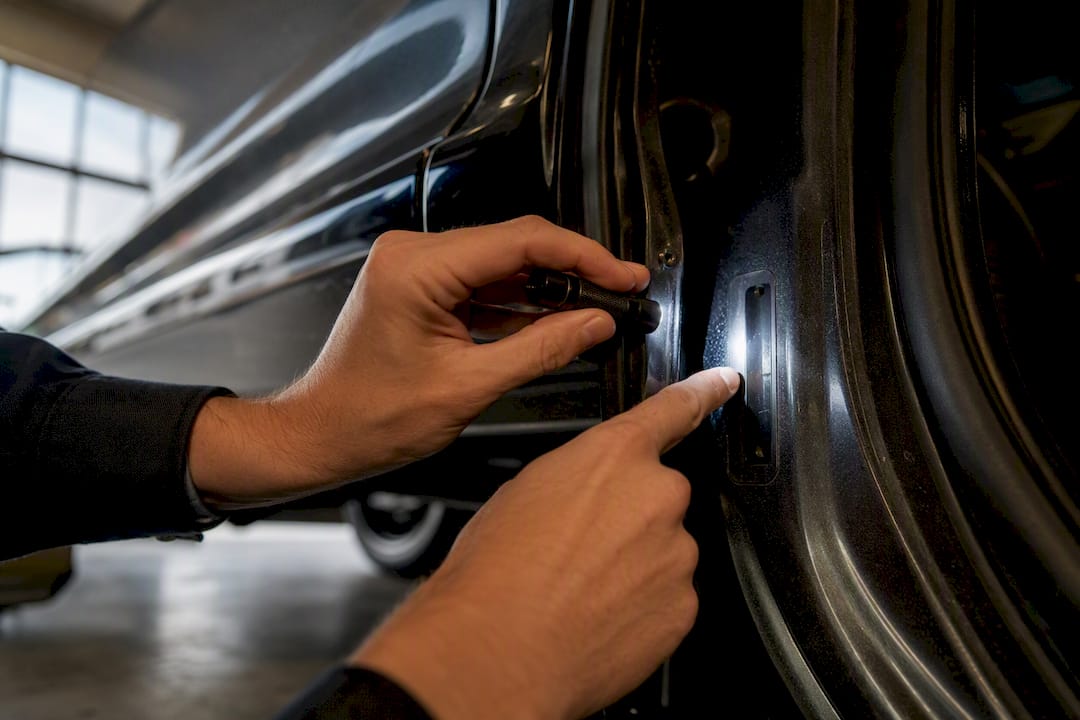
Imported vehicles and cars with a recent title transfer from another state can also show incomplete histories, since data-sharing between systems isn't instantaneous. And VIN cloning, where a legitimate VIN from another vehicle is placed on a stolen or rebuilt car, won't show up in a standard report at all. Detecting it requires physically comparing the stamped VIN locations against the title and checking for mismatched rivets or paint overspray around the VIN plate.
None of this makes a report useless. It just means the report answers "what was documented," not "what actually happened."
An Experienced Buyer's Approach to Verifying a Luxury Vehicle
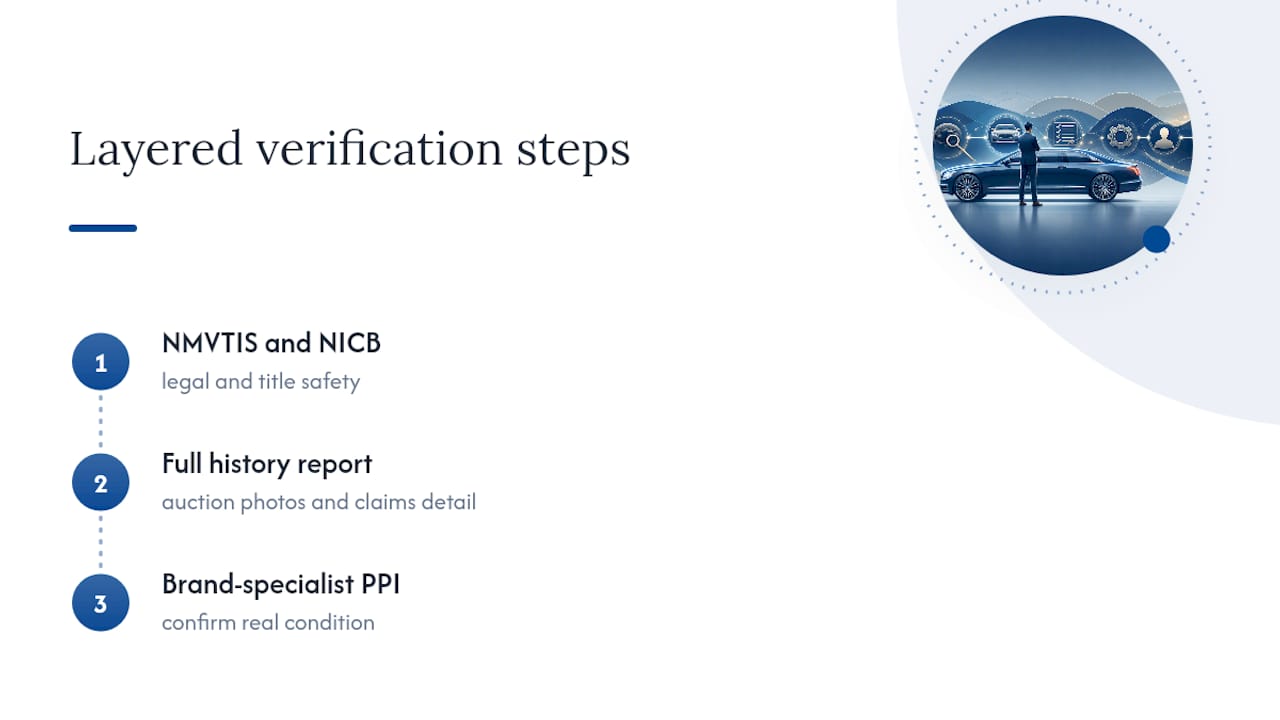
Layer your checks rather than trust one. Start with NMVTIS and NICB for legal and title safety, add a full history report for auction photos and claims detail, then finish with a brand-specialist PPI to confirm real condition. Skipping any one layer is how buyers end up owning someone else's expensive mistake.
Where to Verify Official Vehicle History Data
These sources carry the authority a luxury buyer needs, and each does a distinct job in the verification process.
- NMVTIS official research portal: the federal source for approved providers and title brand data
- Understanding an NMVTIS Vehicle History Report: explains what NMVTIS data does and doesn't cover
- NICB VINCheck: free theft and salvage flag lookup, no purchase required
- How to get a free VIN check: consumer guidance on running free checks before paying for a report
For a hands-on second opinion once your reports come back clean, Autovendorsfl's pre-owned luxury inspection checklist walks through exactly what a brand-specific PPI should cover, and our team at Autovendorsfl can help you source a vehicle that's already been through this level of scrutiny.
Frequently Asked Questions
What's the fastest way to verify a luxury vehicle history report? Run the free NICB VINCheck and an NMVTIS-approved provider search first. Both take minutes and immediately reveal theft flags or title brands before you spend money on a full report.
Does a clean history report mean the car has no problems? No. A report only shows reported events. Unreported private-shop repairs and boutique service work often never reach the databases that feed commercial reports, which is why a brand-specific pre-purchase inspection remains necessary.
How much does a full luxury vehicle history report cost? NMVTIS-approved single reports commonly run $10 to $30, while full commercial reports with auction photos and claims data typically cost $25 to $75, depending on depth and provider.
Can I verify a luxury vehicle by license plate instead of VIN? Yes, but you need the exact state and any specialty or vanity plate code. Missing that code is a common reason plate searches return no results even on legitimate vehicles.
How do I detect VIN cloning on a luxury car? Compare the VIN stamped on the dashboard, door jamb, and chassis against the title, and check for mismatched rivets or paint overspray around the VIN plate, a common sign of tampering.
Sources
Not every source does the same job, and luxury buyers who rely on just one report often miss something important. A quick pre-screen calls for NICB VINCheck plus a summary from an NMVTIS-approved data provider. Deep due diligence, the kind a $70,000 sedan or a collector coupe deserves, needs the full NMVTIS report layered with auction photos and, where you can get them, dealer service records.
Here's what each source actually delivers:
- Research Vehicle History | VehicleHistory
- NICB VINCheck
- Understanding an NMVTIS Vehicle History Report | VehicleHistory
For provenance or collector purchases, weight your search toward auction archives and original dealer invoices. A brand-specific shop's paperwork frequently tells you more about a car's real life than any database entry.
Federal data confirms that NMVTIS-approved providers are legally required to include title brand and total-loss information, which is exactly why an unapproved or informal VIN lookup site can leave gaps a luxury buyer can't afford.