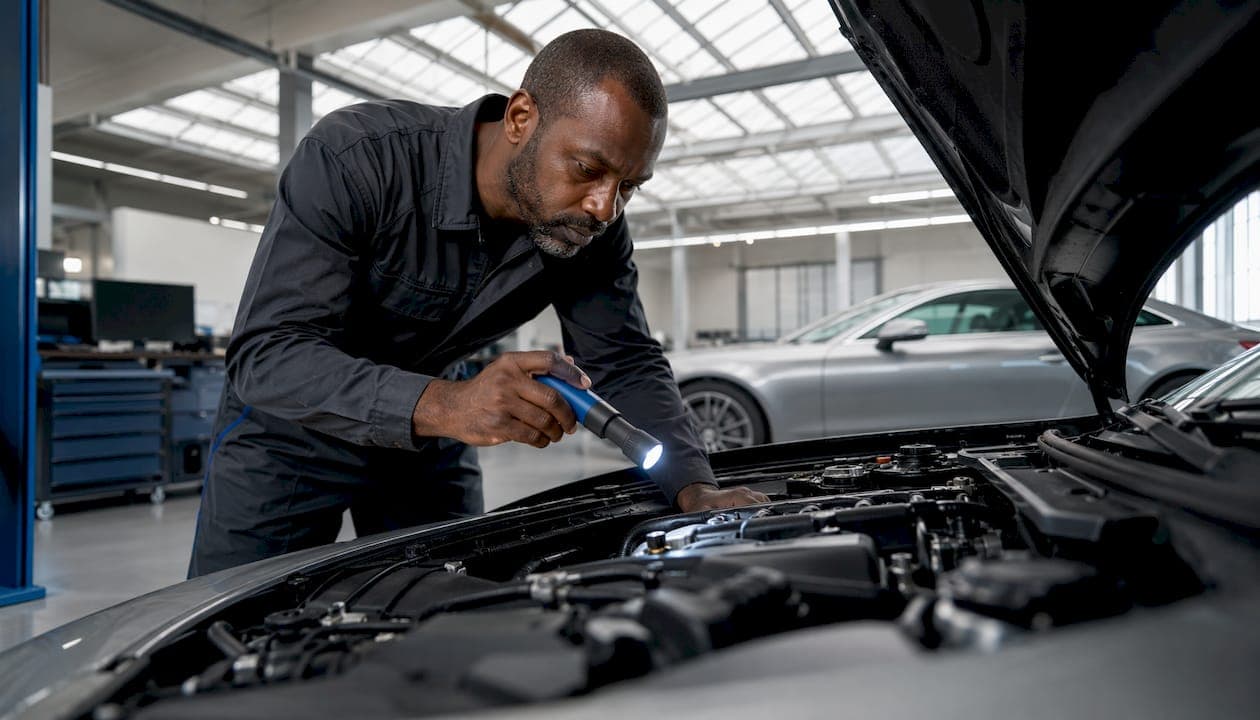
A pre-purchase inspection (PPI) is an independent, professional evaluation of a vehicle's condition conducted before any purchase offer is made. For used luxury vehicles, this step is not optional. The mechanical and electronic complexity of brands like BMW, Audi, Mercedes-Benz, Land Rover, and Mini Cooper means that hidden problems can easily escape a casual test drive, only to surface as four-figure repair bills weeks after you sign the paperwork.
A thorough pre-purchase inspection detects pending fault codes, structural damage, fluid issues, and safety system failures that are simply invisible during a normal viewing. Consumer protection organizations including the Federal Trade Commission and the American Bar Association recommend independent PPIs precisely because the stakes are high and the risks are real.
Here is why every used luxury buyer should insist on one before committing:
- Uncovers hidden mechanical and electronic defects before purchase
- Reveals structural damage, flood history, and mismatched body panels
- Provides documented leverage for price negotiation or repair requests
- Confirms whether deferred maintenance items are lurking near failure
- Protects your financial investment with an unbiased, factual report
Table of Contents
- Why pre-inspection matters: common issues found in used luxury vehicles
- What does a pre-purchase inspection actually cover?
- What are the real benefits of an independent pre-purchase inspection?
- Expert-identified red flags and insights to sharpen your inspection
- Autovendorsfl makes the used luxury buying process more transparent
- Key Takeaways
Why pre-inspection matters: common issues found in used luxury vehicles
Luxury vehicles carry more sophisticated systems than standard cars, and those systems fail in more expensive ways. An inspection on a used BMW 5 Series or Mercedes-Benz E-Class frequently turns up problems that the seller either did not disclose or genuinely did not know about.
The most common findings include:
- Engine wear and oil leaks: High-performance engines in vehicles like the Audi S-line or BMW M-series develop valve cover gasket failures and oil consumption issues that worsen quickly without intervention.
- Transmission irregularities: Dual-clutch and multi-speed automatic transmissions in luxury models are costly to rebuild. Inspectors check for slipping, delayed engagement, and fluid contamination.
- Suspension degradation: Air suspension systems on Land Rover Range Rovers and Mercedes-Benz S-Class models are notorious for compressor failures. High-cost maintenance items like air suspension replacement are frequently deferred by owners and can become expensive liabilities as the vehicle ages.
- Electronic fault codes: Stored or recently cleared codes in the onboard computer often indicate recurring problems that a seller has temporarily masked.
- ADAS malfunctions: Advanced driver-assistance systems require precise calibration. A minor fender repair on a Mercedes-Benz or Audi that was not followed by proper recalibration can leave lane-keeping or automatic braking systems silently compromised.
- Flood and structural damage: Mismatched paint, uneven panel gaps, and corrosion in hidden cavities are signs of prior collision or water intrusion that a vehicle history report alone may not capture.
- Cooling system failures: Luxury vehicles with turbocharged engines, common across BMW, Audi, and Mini Cooper lineups, are prone to coolant hose deterioration and water pump failures.
What does a pre-purchase inspection actually cover?
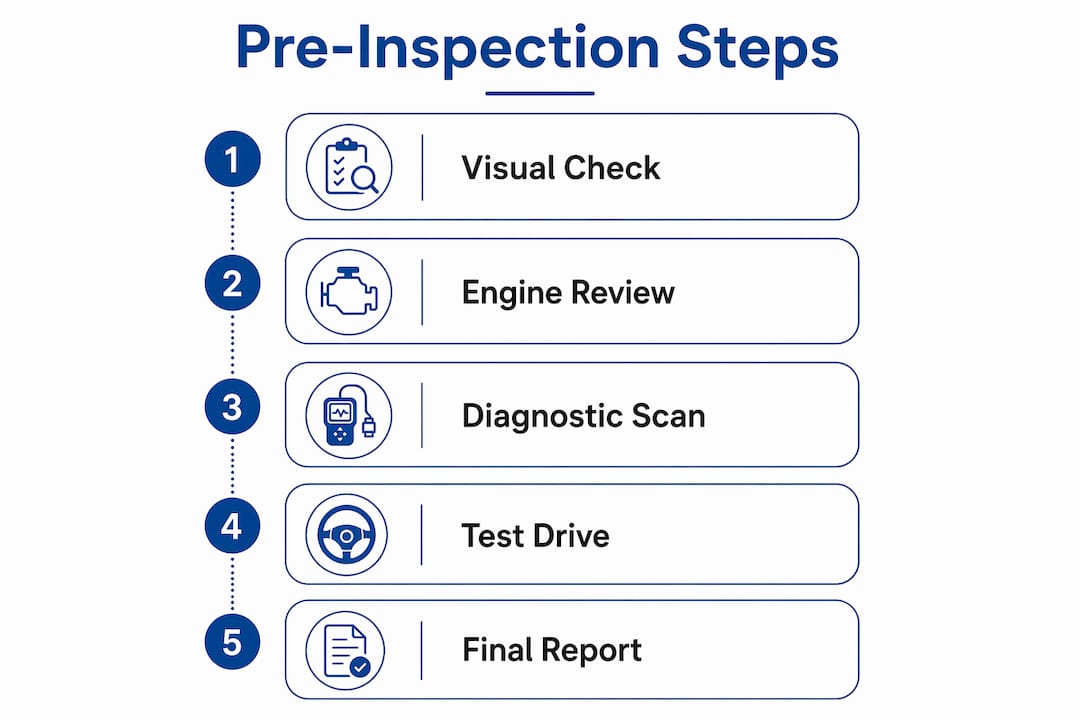
A professional PPI for a used luxury vehicle goes well beyond a visual walkaround. Inspectors follow a structured process that evaluates every major system, and the written report gives you a clear picture of the car's true condition.
The core components of a luxury vehicle PPI include:
- Engine and drivetrain: Oil condition, coolant level and color, belt and hose integrity, compression readings, and signs of leaks or burning smells under load.
- Transmission and differential: Fluid quality, shift behavior during a road test, and any signs of slippage or unusual noise.
- Advanced diagnostics: Luxury vehicle diagnostics require dealership-grade software rather than generic OBD-II scanners, which routinely miss pending codes, battery health data, and sensor calibration status. This distinction matters enormously for brands like BMW and Audi, whose proprietary systems communicate on manufacturer-specific protocols.
- Structural integrity: Frame measurements, panel alignment checks, and paint-depth readings to identify prior collision repairs or body filler.
- Flood damage assessment: Inspectors check under carpets, in trunk cavities, and around electrical connectors for moisture, corrosion, and waterline residue.
- ADAS and safety systems: Calibration verification for cameras, radar sensors, and parking systems, particularly after any prior bodywork.
- Interior and comfort systems: Climate control, infotainment, power seat motors, sunroof mechanisms, and all electronic accessories, since these are disproportionately expensive to repair in luxury models.
- Tires, brakes, and suspension: Wear measurements, rotor condition, and ride-height checks for air suspension vehicles.
For a detailed walkthrough of what to examine, Autovendorsfl's pre-owned luxury car inspection checklist covers each system with specific guidance for 2026 buyers.
What are the real benefits of an independent pre-purchase inspection?

The practical value of a PPI extends well beyond simply knowing the car's condition. An independent inspection provides a neutral, factual report that empowers you to negotiate based on documented findings rather than the seller's assurances.
Key benefits for used luxury buyers:
- Negotiation leverage: A written report identifying $3,000 in deferred maintenance gives you a concrete basis to request a price reduction or ask the seller to address repairs before closing.
- Walk-away confidence: If the inspection reveals serious structural damage or a pattern of cleared fault codes, you have objective grounds to decline the purchase without second-guessing yourself.
- Cost protection: A PPI typically costs between $150 and $250 for luxury vehicles, which is small compared to the potential cost of missed major repairs. That fee is modest compared to the thousands a missed transmission issue or failed air suspension can cost after purchase.
- Seller transparency signal: A seller who refuses an independent inspection is sending a clear message. Resistance to a third-party evaluation often indicates undisclosed defects, and that alone is a reason to walk away.
- Peace of mind: Buying a used luxury car is a significant financial commitment. A clean inspection report confirms the vehicle's condition and lets you proceed with genuine confidence.
Understanding how vehicle pedigree affects pricing helps put inspection findings in context, particularly when negotiating on a vehicle with a documented service history.
Expert-identified red flags and insights to sharpen your inspection
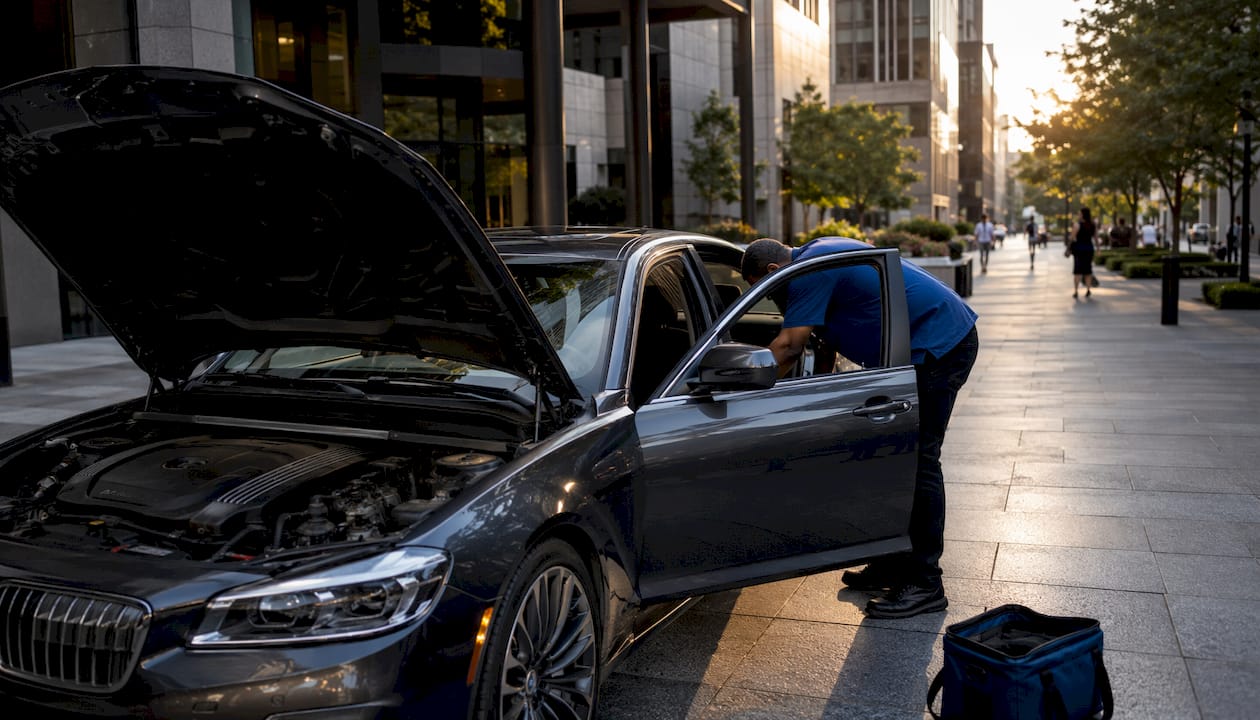
Industry professionals who specialize in luxury vehicle evaluations consistently flag a specific set of warning signs that buyers overlook during casual viewings. Knowing these before you schedule an inspection makes you a sharper buyer.
High-priority red flags identified by inspectors include:
- Mismatched body panels: Color variation between adjacent panels, even subtle, points to prior collision repair.
- Flood damage indicators: Rust on seat rail bolts, musty odors, and discolored or brittle wiring insulation are signs water reached the interior.
- Active or recently cleared fault codes: Sellers sometimes clear codes before a showing. Dealership-grade diagnostic tools can identify codes that were cleared within recent drive cycles.
- Air suspension wear: On Land Rover and Mercedes-Benz models, sagging ride height or compressor cycling noise during startup signals imminent failure.
- ADAS calibration gaps: Failure to recalibrate advanced driver-assistance systems after even minor bodywork can leave safety features silently malfunctioning, a risk that standard inspections sometimes miss without manufacturer-specific tools.
- Deferred high-cost maintenance: Carbon buildup on direct-injection engines (common in BMW and Audi models) and timing chain wear are expensive to address and frequently skipped by previous owners approaching resale.
Pro Tip: Even if a used luxury vehicle carries a Certified Pre-Owned designation, schedule an independent PPI. CPO inspections are performed by the selling dealership, which creates an inherent conflict of interest. An independent inspector has no stake in the transaction and no incentive to overlook anything.
Technicians also warn that generic diagnostic equipment simply cannot access the full data layer of luxury vehicle systems. If your inspector is not using manufacturer-specific or dealership-equivalent software, the inspection has real blind spots. Ask directly what diagnostic tools they use before booking.
For a deeper look at warning signs specific to the dealership side of the transaction, Autovendorsfl's guide on luxury car dealer red flags is worth reading before you visit any lot.
Autovendorsfl makes the used luxury buying process more transparent
Buyers who have done their research on pre-purchase inspections know what they want: a dealer that welcomes scrutiny rather than deflecting it. Autovendorsfl, based in Fort Lauderdale, FL, curates a premium selection of used luxury vehicles with exactly that standard in mind. Every vehicle in the inventory reflects a commitment to quality that goes beyond surface presentation.
Whether you are considering a Mercedes-Benz S-Class or another premium model, Autovendorsfl's team provides personalized guidance through every step of the evaluation process. The dealership's hands-on approach means you get real answers about a vehicle's condition, history, and value, not a sales pitch designed to move inventory. Reach out to Autovendorsfl directly to discuss the specific vehicle you have in mind and get the transparent, expert-backed support that serious luxury buyers deserve.
Key Takeaways
A pre-purchase inspection is the single most effective step a used luxury buyer can take to protect their investment and avoid costly post-purchase surprises.
| Point | Details |
|---|---|
| Inspection cost vs. repair risk | A PPI costs $150–$250 for luxury vehicles, a fraction of what missed issues like air suspension or transmission failure can cost. |
| Luxury-specific diagnostics | Generic OBD-II scanners miss pending codes and sensor data; dealership-grade software is required for BMW, Audi, and Mercedes-Benz systems. |
| CPO vehicles still need PPIs | Certified Pre-Owned inspections are done by the selling dealership; an independent inspection removes the conflict of interest. |
| Seller resistance is a red flag | A seller who refuses an independent inspection is a strong signal of undisclosed defects. |
| Autovendorsfl | Autovendorsfl in Fort Lauderdale offers transparent, expert-guided purchasing for used luxury vehicles, supporting buyers through the full evaluation process. |