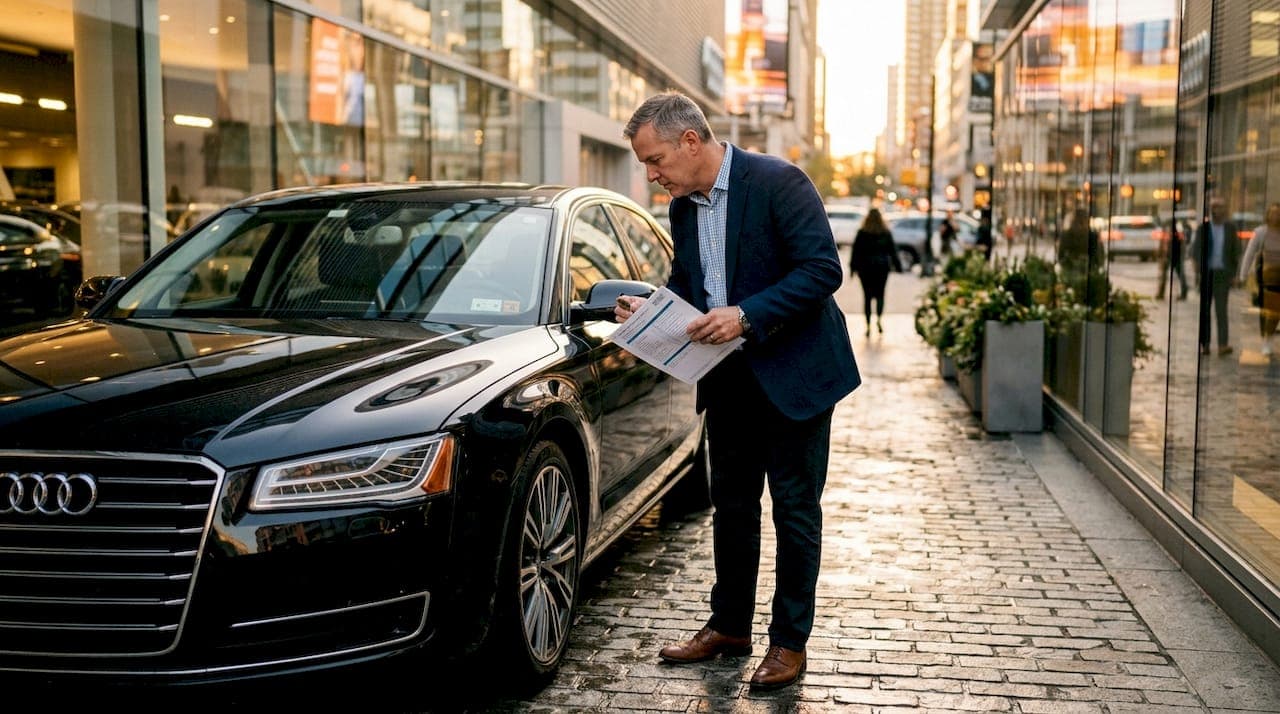
Luxury car dealer red flags are specific warning signs that reveal potential fraud, hidden costs, or dishonest practices when buying a high-end vehicle. The industry term for these patterns is "dealer malpractice," and consumer advocates have documented them across bait-and-switch pricing, phantom inventory scams, and fraudulent transport schemes. Buyers who recognize these signals before signing anything protect both their investment and their peace of mind. This guide covers the most critical warning signs, practical verification steps, and expert-backed tactics to help you choose a trustworthy dealer with confidence.
What are the top luxury car dealer red flags?
Pricing that sits well below market value is the single most reliable warning sign. Consumer advocate Geoff Cudd warns that prices significantly below market rates almost always hide future costs or serious defects. A $15,000 discount on a Mercedes-Benz S-Class that retails for $115,000 should trigger immediate scrutiny, not excitement.
The following warning signs appear most often in fraudulent or low-quality luxury dealerships:
- Bait-and-switch pricing. The advertised vehicle is "no longer available" the moment you arrive, replaced by a pricier alternative.
- Missing vehicle history reports. Sven Müller, a luxury auto specialist, notes that missing paperwork almost always conceals recalls or major mechanical problems. A trustworthy dealer provides a full CARFAX or AutoCheck report without being asked.
- Refusal to allow independent inspections. Consumer advocate Michael Douglas emphasizes that refusing third-party inspections signals the dealer is hiding leaks, rust, or structural damage. Walk away from any dealer who blocks this step.
- High-pressure sales tactics. Phrases like "this deal expires tonight" or "another buyer is coming tomorrow" are designed to prevent you from doing due diligence.
- Evasive answers about ownership history. A dealer who cannot explain previous ownership, accident history, or service records is not a dealer worth trusting.
- Suspicious or absent online reviews. Legitimate luxury dealerships accumulate verified reviews on Google, the Better Business Bureau, and Yelp over years. A thin or suspiciously perfect review profile is a red flag.
Pro Tip: Run the vehicle's VIN through the National Motor Vehicle Title Information System (NMVTIS) before any negotiation. This federal database flags salvage titles, odometer fraud, and total-loss records that dealers may not disclose.
A thorough purchasing process should never feel rushed. Any dealer who creates urgency around a luxury vehicle purchase is prioritizing their commission over your protection.

How do you verify a luxury car dealer's legitimacy?
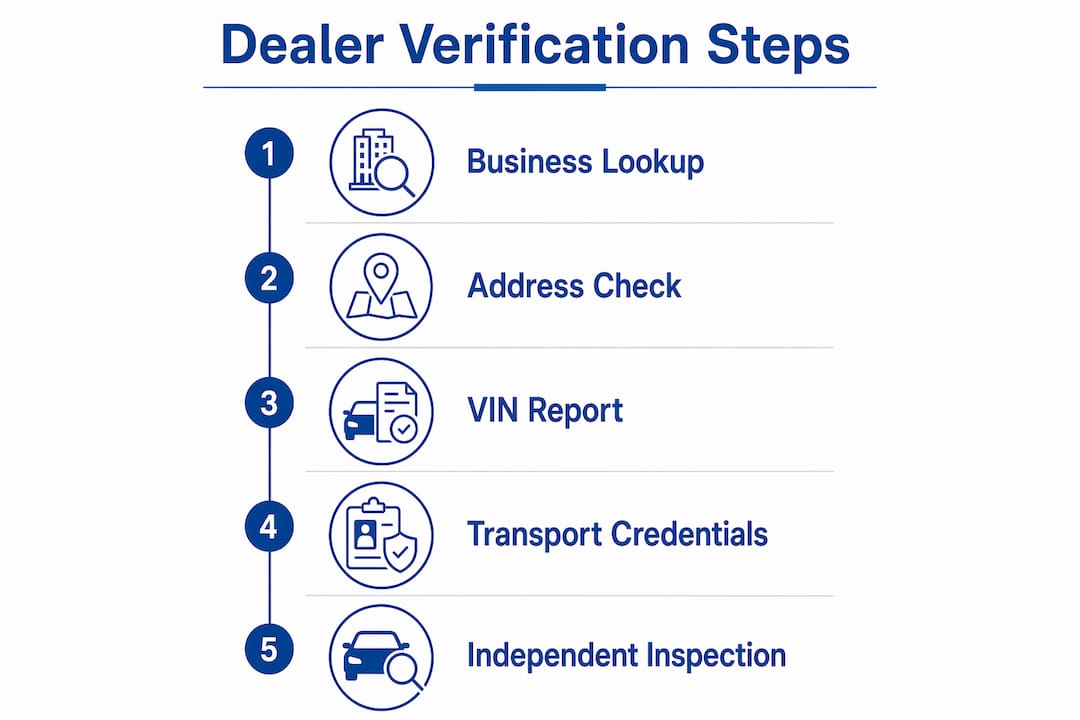
Dealer legitimacy verification is a structured process, not a gut check. Work through these steps before committing any funds.
- Check business registration. Confirm the dealership's legal name matches its state business registration. Discrepancies between the name on the website and the registered entity are a serious warning.
- Examine the website's domain history. New domain registrations claiming long business history should be treated with suspicion. Use a WHOIS lookup tool to see when the domain was created.
- Request a live video tour. Insist on a live 360-degree video call that shows specific features you request in real time, such as opening the hood or displaying the VIN plate. Pre-recorded videos are easy to fake.
- Run an independent VIN check. Use CARFAX, AutoCheck, or NMVTIS to verify title status, accident history, and odometer readings independently of anything the dealer provides.
- Verify third-party inspection access. A legitimate dealer welcomes an independent mechanic. If the dealer hesitates or adds conditions, treat it as a firm warning sign.
- Avoid wire transfers. Irreversible payment methods give you no recourse if the transaction turns fraudulent. Use escrow services or credit-based payment methods for deposits whenever possible.
Pro Tip: Cross-reference the dealer's physical address on Google Street View. Fraudulent listings frequently use addresses belonging to parking lots, storage facilities, or unrelated businesses.
The table below summarizes the key verification tools and what each one confirms.
| Verification method | What it confirms |
|---|---|
| State business registration lookup | Legal entity name and active status |
| WHOIS domain history check | How long the website has actually existed |
| NMVTIS or CARFAX VIN report | Title status, salvage history, odometer records |
| Live interactive video call | Vehicle physically exists and matches listing photos |
| BBB and Google review audit | Pattern of complaints or suspiciously absent feedback |
What hidden costs do dealers downplay on luxury vehicles?
Ownership costs for luxury vehicles are substantially higher than most buyers anticipate, and some dealers actively avoid discussing them. Insurance for a Mercedes-Benz S 580 costs approximately $5,118 per year versus $2,474 per year for a mainstream vehicle like a Toyota Crown. That gap of over $2,600 annually is a cost that compounds every year of ownership.
Beyond insurance, buyers face several financial risks that dealers rarely volunteer:
- Expensive repairs past warranty. Luxury brands have costly electronic and suspension failures once the factory warranty expires. Qualified mechanics who work on brands like Land Rover or Mercedes-Benz are scarce and charge accordingly.
- Rapid depreciation. Many luxury vehicles lose value faster than mainstream cars after the first three years. A dealer who emphasizes resale value without showing depreciation curves is giving you an incomplete picture.
- Concealed condition problems. Dealers may present a vehicle as "certified" without providing the actual inspection report. Always request the full written inspection, not just the certification label.
- Deferred maintenance. A low asking price sometimes reflects skipped service intervals. Request the complete service history and verify it against the manufacturer's recommended schedule.
A pre-owned luxury car inspection checklist covers the mechanical and cosmetic checkpoints that reveal deferred maintenance before you buy. Using one removes the guesswork from evaluating a vehicle's true condition.
What delivery and transport red flags signal fraud?
Vehicle transport fraud is a growing risk in luxury car purchases, particularly for remote or out-of-state transactions. The most dangerous scheme is "double-brokering," where criminals hire legitimate transport brokers and then subcontract to fraudsters who divert or steal the vehicle during delivery. Buyers often do not discover the theft until days after the expected delivery date.
"Criminals exploit load boards and forged identities to insert fraudulent carriers into legitimate transport chains. The buyer believes a vetted company is moving their car. In reality, a stranger with a fake MC number picked it up at the origin lot." — Technology Review, 2026, reporting on luxury vehicle shipment fraud
Protect yourself during delivery with these steps:
- Verify the carrier's FMCSA registration. The Federal Motor Carrier Safety Administration maintains a public database. Confirm the carrier's MC number, insurance status, and operating authority before handing over the vehicle.
- Confirm GPS tracking. Legitimate carriers offer real-time shipment tracking. Refusal to provide tracking access is a warning sign.
- Avoid cash-on-delivery arrangements. Fraudulent carriers often demand cash at pickup, which removes your financial protection entirely.
- Document the vehicle's condition at pickup. Photograph every panel, the odometer, and the VIN plate before the carrier loads the car. This record protects you if damage or substitution occurs during transit.
Verifying transport credentials is not optional when purchasing a high-value vehicle remotely. The financial and legal recovery process after transport fraud is lengthy and rarely complete.
What should you do when you spot red flags?
Spotting a warning sign is only useful if you act on it. Follow these steps when something feels wrong during a luxury car dealer search.
- Document everything. Screenshot listings, save email threads, and record the dealer's name, address, and license number. This documentation supports any complaint you file later.
- Request written answers. Ask the dealer to confirm vehicle history, pricing, and inspection access in writing. Legitimate dealers comply. Fraudulent ones deflect or go silent.
- Hire a professional appraiser. An independent appraisal from a certified automotive appraiser gives you a market-accurate value and a written condition report. This is especially important for vehicles priced below market.
- Walk away without explanation. You owe no justification to a dealer who refuses inspections or pressures you. Walking away is the most effective protection available.
- Report to consumer protection agencies. File complaints with the Federal Trade Commission (FTC), your state's Attorney General office, and the Better Business Bureau. Reports create a paper trail that protects future buyers.
- Consult a curated dealership selection process. Working with a dealership that vets its inventory and provides full documentation from the start eliminates most of these risks before they arise.
Negotiation with a suspicious dealer is rarely productive. Transparency is not a negotiating position. It is the baseline standard for any legitimate luxury car transaction.
Key Takeaways
Recognizing luxury car dealer red flags before any money changes hands is the most effective way to protect a high-value purchase.
| Point | Details |
|---|---|
| Below-market pricing signals risk | Prices well under market value almost always hide defects, fraud, or hidden future costs. |
| Missing documents reveal hidden problems | A dealer who cannot provide full vehicle history and inspection reports is concealing something. |
| Live video calls defeat phantom scams | Requesting a real-time interactive video tour confirms the vehicle exists and matches its listing. |
| Ownership costs exceed the sticker price | Insurance, repairs, and depreciation on luxury vehicles add thousands annually beyond the purchase price. |
| Transport fraud is a real and growing threat | Verify every carrier through the FMCSA database and insist on GPS tracking before any shipment begins. |
What I've learned watching buyers get burned
I've watched buyers with real resources make avoidable mistakes because they let excitement override judgment. The pattern is almost always the same. A deal appears that feels slightly too convenient. The buyer rationalizes it. The paperwork moves fast. And then something is wrong with the car, the title, or the delivery.
The uncomfortable truth about luxury car purchases is that the higher the price, the more sophisticated the fraud. Scammers targeting a $90,000 vehicle invest more in their deception than those targeting a $15,000 car. Fake websites look professional. Stolen listing photos are high resolution. Forged paperwork is convincing.
What actually protects buyers is patience and process. The buyers I've seen come out well are the ones who treat every step as a verification opportunity, not a formality. They run the VIN before they fall in love with the car. They hire an inspector before they negotiate price. They confirm the carrier before they approve transport.
The luxury car market rewards buyers who do their homework. It punishes buyers who skip steps because the deal feels right. No legitimate dealer will penalize you for being thorough. If one does, that reaction is itself the clearest warning sign of all.
— Allen
Autovendorsfl makes safe luxury buying straightforward
Buyers who want to skip the verification maze and work with a dealer that has already done the vetting have a direct option.
Autovendorsfl, based in Fort Lauderdale, specializes in curating premium luxury vehicles with full documentation, transparent vehicle histories, and personalized buying assistance. The inventory includes models like the Mercedes-Benz S-Class, presented with the service records and inspection access that legitimate purchases require. Autovendorsfl builds long-term relationships with buyers by prioritizing honesty over urgency. If you want to inspect a pre-owned luxury vehicle with confidence, Autovendorsfl provides the support and access to make that process straightforward.
FAQ
What are the biggest luxury car dealer red flags?
The most common warning signs are pricing well below market value, refusal to provide vehicle history reports, and resistance to independent inspections. Any one of these signals a dealer who is hiding information.
How do I spot a luxury car scam online?
Check the dealership's domain registration date using a WHOIS tool and request a live interactive video call showing the actual vehicle. Phantom inventory scams rely on stolen photos and pre-recorded videos that a real-time call immediately exposes.
Should I always get an independent inspection before buying a luxury car?
Yes. An independent inspection from a certified mechanic reveals leaks, rust, and structural issues that a dealer's presentation will not show. Any dealer who refuses this step is not worth your business.
What hidden costs should I watch for when buying a luxury vehicle?
Insurance, maintenance, and depreciation are the three largest ongoing costs that dealers routinely underemphasize. Insurance alone on a vehicle like the Mercedes-Benz S 580 can exceed $5,000 per year, more than double the cost of insuring a mainstream vehicle.
How do I verify a luxury car transport company before shipment?
Search the carrier's MC number in the FMCSA public database to confirm active registration and insurance. Require GPS tracking access and photograph the vehicle thoroughly before it leaves the origin location.