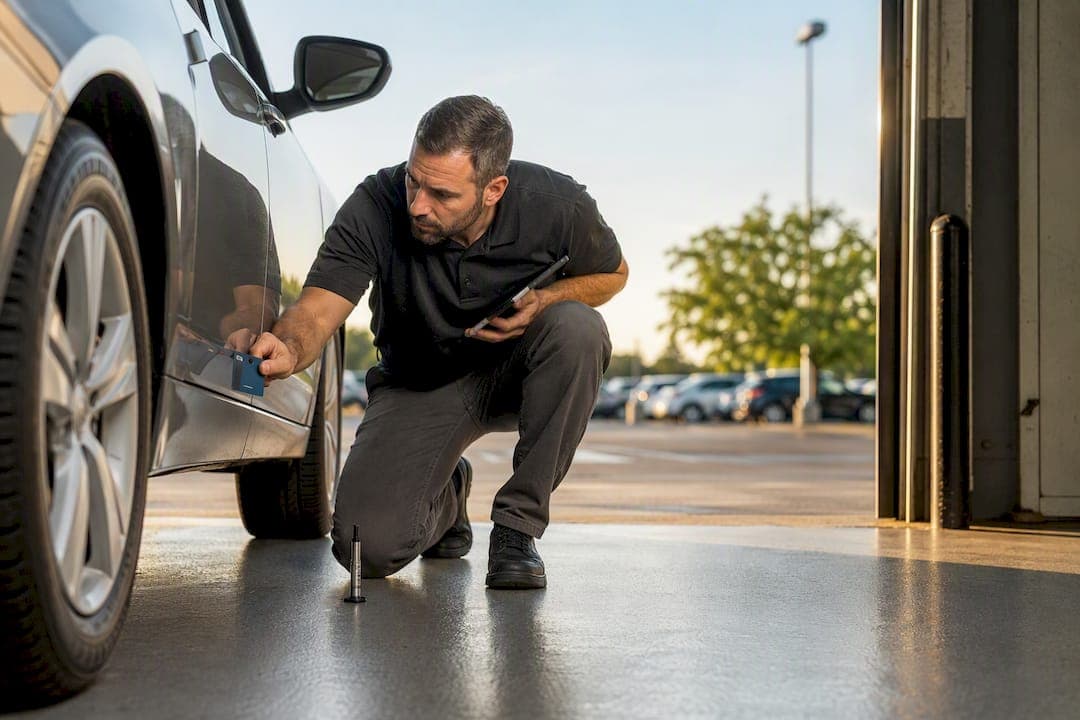
The fastest way to boost what a dealer offers is simple: know your car's realistic trade-in range, bring competing written offers, and hand over your maintenance records before the appraiser even opens the hood. Do those three things and you walk in with leverage instead of hope. Before you leave the driveway, run an online valuation and gather your title, VIN, and service history.
TL;DR:
- Comparing multiple online valuation tools and obtaining at least one written offer helps establish a realistic trade-in range and strengthens negotiation leverage.
- Preparing your vehicle with inexpensive cosmetic fixes and thorough documentation can significantly improve its perceived value to appraisers.
- Separating trade-in negotiations from the car purchase prevents dealers from manipulating the overall deal and allows for better leverage.
- Timing matters, as driving the car shortly before appraisal can influence mileage and condition, impacting the final offer.
- Avoid costly repairs that dealers won't fully credit, focusing instead on cheap fixes and record gathering to maximize your vehicle's appraisal.
Table of Contents
- Trade-In Prep Checklist: What to Do in the Final 1 to 14 Days
- How Do You Research Your Car's Trade-In Value?
- Prepare the Vehicle Without Overspending on Repairs
- Negotiation Tactics That Protect Your Trade-In Value
- Trade-In or Private Sale: Timing and Channel Tradeoffs
- What a Dealer Actually Sees During Your Trade-In
- Get a Written Trade-In Offer From Auto Vendors Inc
- Resources Worth Bookmarking Before You Trade In
- Sources
- FAQ
Trade-In Prep Checklist: What to Do in the Final 1 to 14 Days
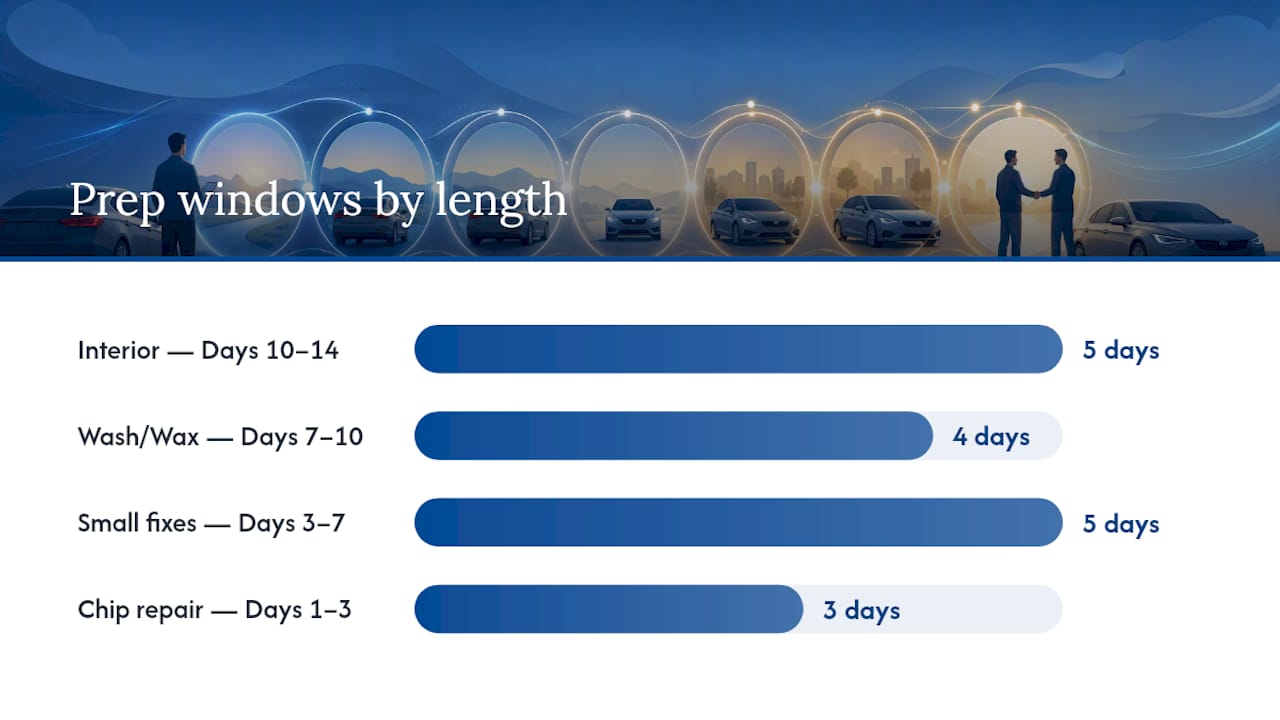
You don't need two weeks to prep a car for trade-in, but the order you tackle tasks in changes your outcome. Work from the outside in, and from cheap to expensive.
- Days 10 to 14: Vacuum, wipe down surfaces, and shampoo any stained upholstery. Budget 60 to 90 minutes for a thorough interior pass.
- Days 7 to 10: Wash and wax the exterior, clean the wheels, and get the windows streak free. A $15 bottle of wax beats a $400 paint job every time.
- Days 3 to 7: Replace burned out bulbs, check tire pressure, and top off fluids. These are five-dollar fixes that signal a well-kept car.
- Days 1 to 3: Get a small windshield chip repaired if it's smaller than a quarter. Skip anything involving bodywork or mechanical teardown.
- Anytime before appraisal: Pull together your title, loan payoff statement, service records, a spare key, and a few dated photos of the car's condition.
Small cosmetic fixes cost little and change how an appraiser perceives the whole vehicle.
Pro Tip: Take photos of your dashboard, tires, and interior right before you clean it up. If a dealer later claims damage you didn't see, you have a timestamped record to push back with.
How Do You Research Your Car's Trade-In Value?
Start with at least two independent valuation tools, not one. Kelley Blue Book and Edmunds give you fast online ranges, Consumer Reports offers a broader buying and selling perspective, and tools linked to Black Book data (the pricing source many dealers actually use internally) get you closer to what you'll hear across the negotiating table, according to MotorTrend.
The catch is honesty. Every one of these tools works on a "garbage in, garbage out" basis: mark your car as "excellent" when it has curb rash and worn tires, and the number you get will be fiction. Rate your car the way a stranger inspecting it in bright daylight would, not the way you remember it from 2019.
Once you have a realistic range, get it in writing. Services like CarMax and various online dealer evaluation tools will issue a written offer, though these typically expire within a week or two and get re-verified once the car is inspected in person, per Experian.
- Run your VIN through two or three valuation tools and compare the ranges.
- Check local listings for the same year, make, and model to gauge regional demand.
- Get one written offer from an online buyer as a floor to negotiate against.
That written offer is not just a backup plan. CarEdge notes that comparing multiple estimates and pitting them against each other commonly results in a stronger final number than accepting the first offer you hear.
Prepare the Vehicle Without Overspending on Repairs
Preparation raises your appraisal. Overpreparation wastes your money. The line between the two matters more than most sellers realize.
Start with what's visible and cheap:
- Interior detail. Clean carpets, wipe down the dash, and remove personal items. A quick professional detail runs $75 to $150 and often pays for itself in a stronger offer.
- Exterior wash and headlight restoration. Foggy headlights make a car look older than it is. A $20 restoration kit fixes this in under an hour.
- Engine bay wipe down. You don't need a full detail under the hood, just enough that it doesn't look neglected when the appraiser pops it open.
- Basic electronics check. Confirm the radio, air conditioning, power windows, and infotainment screen all work. A dead feature is an easy deduction point.
- Gather every paper trail. Service records, a Carfax or AutoCheck report you've pulled yourself, and old repair receipts all support a higher valuation.
If your records are incomplete, most dealerships and quick-service shops can print a history if you serviced there, and Carfax and AutoCheck fill remaining gaps for a small fee. Routine maintenance done anywhere still counts, though a shop like a quick-lube chain records different details than a dealership does, which is worth knowing when you're deciding where to get that last oil change before trade-in.
Where readers overspend is major repair work. A cracked bumper, a failing transmission, or worn brakes feel urgent to fix before trading in, but dealers recondition vehicles at wholesale labor rates far below what you'd pay at a shop, and they rarely credit you dollar for dollar on retail repairs, according to Consumer Reports. Spend on what a buyer notices in thirty seconds. Skip what only a mechanic would find.
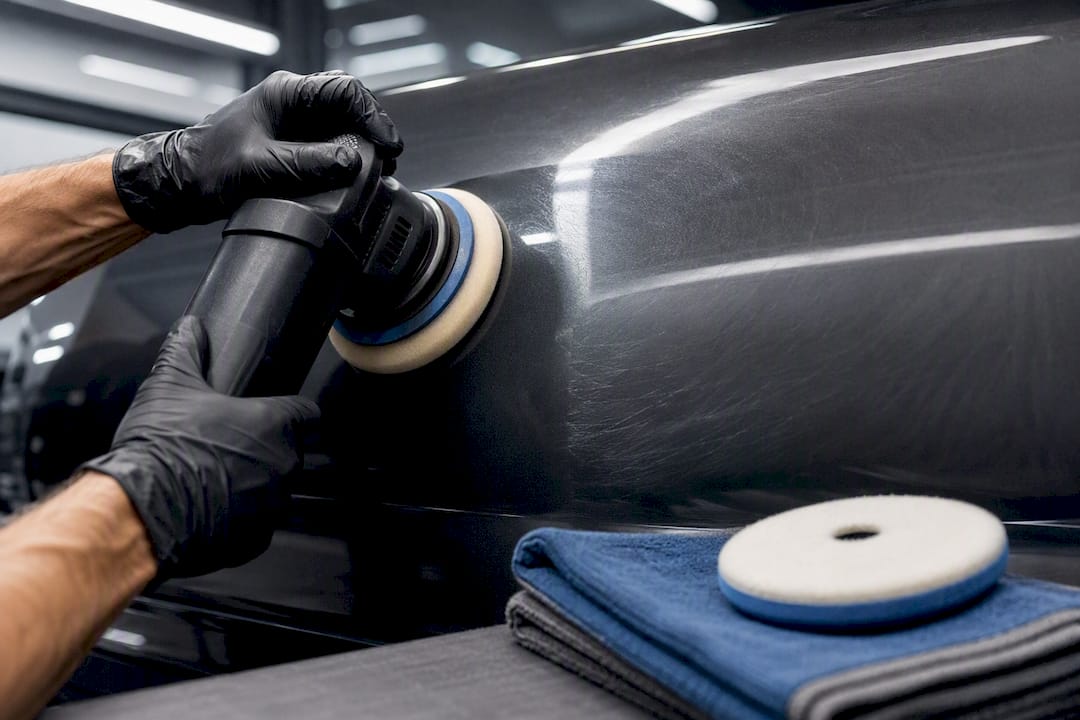
Pro Tip: If your paint has swirl marks or light oxidation, a paint correction service can restore shine for a fraction of a repaint's cost. It's one of the few repairs that actually returns more than it costs.
Negotiation Tactics That Protect Your Trade-In Value
Treat your trade-in as two separate deals happening in the same building. The price you're paying for the new or used car and the value you're getting for your trade should never blend into one number, because that's exactly how dealers create room to move numbers around without you noticing.
- Say clearly: "Let's agree on the price of the car I'm buying first. We'll talk trade-in value separately."
- If the appraiser points out a flaw, stay quiet. Don't explain, apologize, or offer more detail than asked.
- Ask directly: "Is that your best offer?" Dealers often have more room than the first number suggests.
- If the offer feels low, ask for a manager review before walking away.
- Bring your written offers from other buyers and lay them on the table once you have a number to compare against.
This restraint matters because dealers frequently run what amounts to a silent appraisal, using body language and offhand comments to justify a lower number. Staying neutral, and letting your written offers do the talking, keeps you from talking yourself into a worse deal.
Pro Tip: If a lienholder is still owed money on the car, request a payoff quote before you sit down. Confusion about what you owe versus what the car is worth is where negotiations quietly go sideways.
Know your walk-away point before you sit down. If every offer lands well below your researched range, and you have the time, selling privately or trying a different dealer beats accepting a number you know is light.
Trade-In or Private Sale: Timing and Channel Tradeoffs
Trading in at a dealership wins on speed and convenience, and depending on your state, you may only pay sales tax on the price difference between your trade and your new purchase, an advantage private sales don't offer, per Consumer Reports. Selling privately usually nets more money but costs you time, listing effort, and the hassle of meeting strangers.
- Trade-in: Faster, less effort, possible tax benefit, generally a lower total dollar amount.
- Private sale: Higher net proceeds, but you handle listings, showings, and paperwork yourself.
- Seasonal timing: SUVs and trucks often command stronger offers in specific months tied to regional demand, so a little research into your local market can shift your number, notes CarEdge.
- Offer expiration: Written offers are time sensitive. Extra mileage or a later appraisal date can lower the number, so use them quickly.
If your car has racked up miles on a recent road trip, that mileage bump can shrink your offer window fast, so timing your appraisal right after a long drive is worth planning around.
What a Dealer Actually Sees During Your Trade-In
Every trade-in gets weighed against reconditioning cost and resale path before a dealer names a number. If a car needs new tires, a detail, or bodywork to hit the lot floor, that cost comes straight out of the offer, and cars headed to auction get valued more conservatively than ones going straight to the showroom.
The gap between a rushed trade-in and a prepared one is often the difference between a car that gets bundled into a lowball package deal and one that gets a fair independent number. A seller who shows up with service records and two competing offers rarely gets the same treatment as one who shows up with nothing but keys.
At Auto Vendors Inc, we walk luxury and premium vehicle owners through exactly how appraisal actually works for higher-end trades, where condition and documentation carry even more weight than they do on a standard sedan.
— Allen
Get a Written Trade-In Offer From Auto Vendors Inc
If you'd rather skip the back-and-forth and get a straight answer on your car's value, Some dealers provide a personal, no-pressure valuation paired with hands-on help finding your next vehicle instead of just pushing whatever is on the lot.
Some services pair you with someone who will look at your trade honestly, factor in your maintenance records and payoff details, and give you a number you can act on the same day. If you're carrying a loan, we'll also help you sort out how negative equity affects your trade before you commit to anything. Browse our current inventory of sedans, SUVs, or the full selection of vehicles for sale, then reach out through Car Finder to get your trade-in valued and start the conversation on what comes next.
Resources Worth Bookmarking Before You Trade In
- Consumer Reports' trade-in value guide
- MotorTrend's trade-in advice
- Experian's trade-in value overview
- CarEdge's trade-in checklist
Sources
- How to get the most money for your trade-in - Consumer Reports
- How to Get the Most for Your Trade-In - MotorTrend
- How to maximize your car's trade-in value - Experian
- How to Negotiate Your Car’s Trade-In Value in 5 Easy Steps (Updated For 2026) - CarEdge
FAQ
How do I get the most value for my trade-in?
Get at least two written offers, bring full maintenance records, and negotiate your trade-in value separately from the price of the car you're buying.
What is the $3,000 rule for cars?
There's no single official rule in trade-in valuation, the value varies by vehicle and offer, so rely on your own multi-tool valuation range rather than a fixed figure.
How do I avoid getting a bad deal on my trade-in?
Never accept the first number, always separate your trade-in negotiation from your purchase negotiation, and use competing written offers as leverage before you agree to anything.
What are the most common trade-in mistakes?
The biggest mistakes are overestimating your car's condition, skipping written offers from other buyers, and spending money on major repairs a dealer won't fully reimburse.
Should I get my trade-in appraised before visiting a dealership?
Yes. Running your VIN through two or three valuation tools and requesting one online written offer beforehand, such as through Car Finder, gives you a realistic baseline to negotiate against in person.