
A turnkey car purchase is defined as acquiring a vehicle that is fully completed, configured, and ready for immediate use without any additional setup. The industry term for this model is "turnkey acquisition," and it applies equally to standard passenger cars, luxury vehicles, and specialized builds like commercial upfits or adventure rigs. Understanding what does turnkey car purchase mean matters because it changes how you budget, negotiate, and take delivery. This buying model consolidates needs assessment, vehicle search, negotiation, financing, and delivery into one coordinated process. The result is a faster, lower-risk path to ownership compared to the traditional dealership experience.
What does a turnkey car purchase include?
A turnkey car purchase is fully completed and ready to use without additional setup, replacing months of DIY coordination with a single managed process. That definition is the foundation of the entire model. Every step from finding the right vehicle to handing over the keys sits under one provider's responsibility.
The turnkey car buying process typically follows this sequence:
- Needs assessment. The provider interviews you about budget, preferred make and model, must-have features, and timeline.
- Nationwide inventory search. The service scans dealer networks and private listings to find vehicles that match your criteria.
- Negotiation. The provider negotiates price, trade-in value, and dealer fees on your behalf.
- Finance shopping. Multiple lenders are contacted to find the best rate available for your credit profile.
- Paperwork coordination. The provider prepares all documents and coordinates signing logistics.
- Delivery. The vehicle is delivered to your location or made available for pickup in drive-away condition.
Concierge buying services complete this entire process in 7–14 days, and some transactions close in as little as 48–72 hours. That speed is the clearest advantage over the traditional dealership experience, which can stretch across multiple weekends of visits, test drives, and back-and-forth negotiations.
Fees for turnkey concierge services typically run around a flat $1,000. That figure covers the full scope of services listed above. For buyers purchasing a $50,000 vehicle, a $1,000 advisory fee represents a fraction of the savings recovered through professional negotiation alone.

Pro Tip: Ask any turnkey provider upfront whether their fee is flat or percentage-based. Flat fees align the provider's incentive with yours. Percentage-based fees can quietly push the provider toward higher-priced vehicles.
One misconception buyers carry into the process is that turnkey means zero personal involvement. Buyers must personally sign legally binding contracts and DMV paperwork even in fully remote transactions. The provider handles everything else, but your signature on the final documents remains a legal requirement.
How does a turnkey vehicle differ from custom or DIY purchases?
A turnkey vehicle is pre-engineered and ready to use. A custom build or DIY purchase is assembled by the buyer, often across multiple vendors and timelines. The difference sounds simple, but the practical implications are significant.
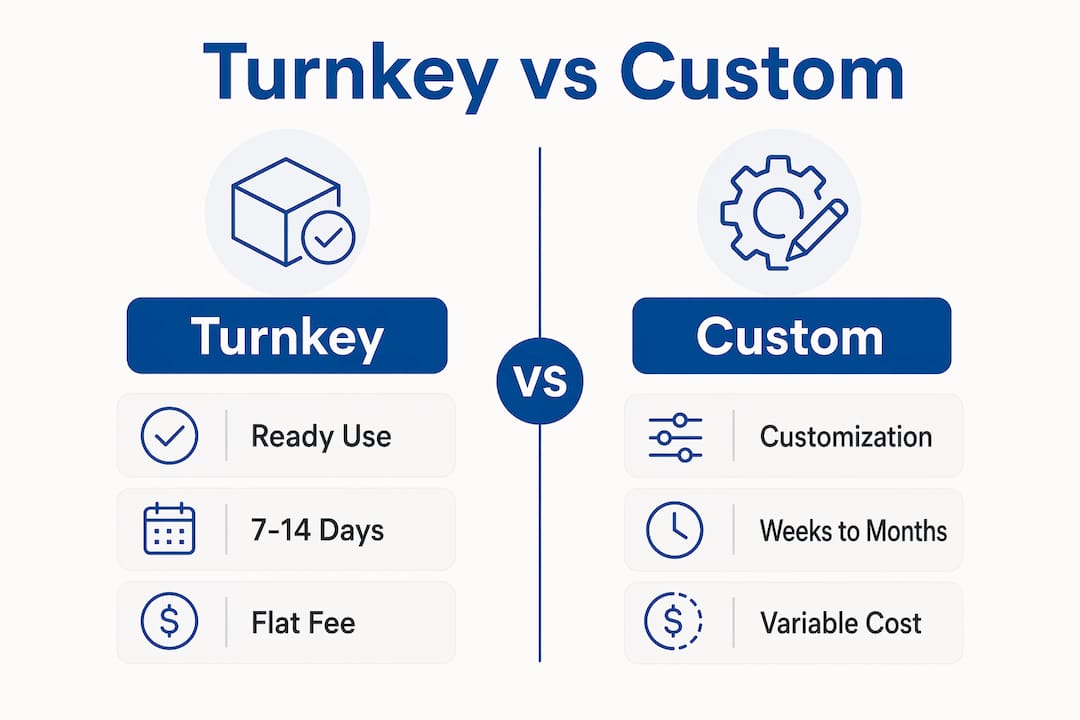
| Factor | Turnkey vehicle | Custom or DIY purchase |
|---|---|---|
| Time to ownership | Days to two weeks | Weeks to several months |
| Personalization | Limited to available configurations | High, buyer controls every spec |
| Warranty responsibility | Single provider covers the build | Multiple vendors, fragmented claims |
| Financing ease | Standard auto loans apply | May face lender hesitation |
| Risk of errors | Provider absorbs compatibility risk | Buyer absorbs all risk |
Custom builds give buyers control over every specification. That control comes at a cost. When a component fails in a DIY build, the buyer must determine which vendor is responsible. Turnkey ownership shifts engineering and compliance risk from the buyer to the provider, which prevents the finger-pointing that plagues multi-vendor builds. For commercial or fleet vehicles requiring safety certification, that single point of accountability is not a luxury. It is a requirement.
Specialized vehicle sectors illustrate this contrast clearly. A turnkey micro-camper, for example, arrives as a single-price, pre-engineered package with factory-backed certification. That certification matters because it enables standard financing and insurance approval, which a custom aftermarket build often cannot access.
Pro Tip: If you are considering a custom build because you want specific features, ask a turnkey provider whether those features exist in current inventory first. You may find a pre-configured vehicle that matches 90% of your wish list at a fraction of the wait time.
Turnkey products prioritize readiness over deep customization, which is the trade-off buyers accept. Buyers who demand bespoke interiors, unique color combinations, or performance modifications beyond factory specs will find the turnkey model limiting. For everyone else, the speed and simplicity outweigh the constraints.
What are the benefits and potential drawbacks of a turnkey car purchase?
The benefits of a turnkey car purchase are concrete and measurable. The drawbacks are real but apply to a specific type of buyer. Understanding both sides helps you decide whether this model fits your situation.
Key benefits:
- Speed. The entire buying process completes in days rather than weeks of self-directed research and dealership visits.
- Reduced buyer effort. You define your needs once. The provider handles every subsequent step.
- Financial transparency. Turnkey buying services act as fiduciaries for buyers, targeting the lowest verified out-the-door price rather than dealer commission-driven markups. Hidden fees and backend add-ons are identified and removed before you sign.
- Single warranty contact. One provider covers the full build, eliminating disputes between multiple vendors.
- Lower error risk. Pre-engineered vehicles eliminate component incompatibility, which is a common and expensive problem in DIY builds.
- Financing access. Factory certifications on turnkey builds support standard loan approval, which custom builds often cannot match.
Potential drawbacks:
- Limited personalization. Buyers trade customization options for speed and guaranteed compatibility. If a specific color, trim, or feature is not available in current inventory, you either wait or compromise.
- Service fees. The flat fee adds to your total cost. For buyers who enjoy negotiating and have time to research, the fee may feel unnecessary.
- Pre-made design decisions. The provider or manufacturer has already made engineering choices. Buyers who want to be involved in those decisions will find the turnkey model frustrating.
Turnkey buying delivers the most value for busy professionals, commercial fleet buyers, and anyone relocating who needs a vehicle quickly. It also suits buyers who recognize that their time has a dollar value and that professional negotiators consistently outperform self-directed buyers on final price.
What financing and insurance options are available for turnkey car purchases?
Turnkey vehicles qualify for standard auto financing in most cases. That is a significant advantage over custom or aftermarket builds, which lenders sometimes treat as modified collateral and decline to finance at standard rates.
| Financing factor | Turnkey vehicle | Custom or aftermarket build |
|---|---|---|
| Loan type | Standard auto loan | May require specialty lender |
| Insurance classification | Standard vehicle policy | May require agreed-value policy |
| Certification requirement | Factory or RVIA certified | Often uncertified |
| Lender confidence | High, due to standardized build | Variable, depends on modifications |
For specialized turnkey builds, factory certification plays a direct role in financing approval. Certifications enable standard RV financing and insurance for vehicles that would otherwise require specialty lenders with higher rates and stricter terms. This simplifies payment arrangements considerably compared to custom builds.
Turnkey concierge services add another layer of financing support. The provider contacts multiple lenders simultaneously and presents competing offers, which gives you negotiating leverage on interest rates. That process mirrors what a mortgage broker does for home loans. You receive the benefit of rate shopping without spending hours on the phone with individual banks.
The biggest misconception about turnkey is that it always costs more. For commercial buyers, the downtime savings and reduced rework from a pre-certified, ready-to-use vehicle frequently justify the service fee many times over. A fleet manager who avoids two weeks of vehicle downtime during a custom build process recovers far more than the cost of a turnkey service.
Insurance for turnkey vehicles follows standard auto policy structures. Because the vehicle arrives as a factory-configured unit, insurers classify it using established vehicle identification data. Custom builds with aftermarket components often require agreed-value policies, which carry higher premiums and require independent appraisals. Turnkey buyers avoid that complexity entirely.
Key Takeaways
A turnkey car purchase is the most efficient path to vehicle ownership for buyers who value speed, financial transparency, and single-provider accountability over deep personalization.
| Point | Details |
|---|---|
| Turnkey means ready to use | The vehicle is fully completed and delivered without any additional setup required. |
| Process takes days, not months | Concierge services complete needs assessment, search, negotiation, and delivery in 7–14 days. |
| Buyers must still sign documents | Personal signature on contracts and DMV paperwork remains legally required even in remote transactions. |
| Financing is simpler | Factory-certified turnkey vehicles qualify for standard auto loans that custom builds often cannot access. |
| Trade-off is personalization | Buyers accept pre-made design decisions in exchange for speed, compatibility, and warranty simplicity. |
What I've learned from watching buyers choose turnkey
The buyers who regret a turnkey purchase almost always made the same mistake. They chose it for the wrong reason. They picked turnkey because they were overwhelmed, not because they genuinely valued the speed and simplicity. That distinction matters more than most buying guides acknowledge.
The buyers who get the most out of a turnkey buying service are the ones who are honest about their priorities upfront. They know what they want, they trust a professional to find it, and they do not second-guess the process midway through. The buyers who struggle are the ones who want turnkey convenience but also want to renegotiate every decision the provider makes.
The overlooked detail in most turnkey discussions is the signing logistics. Buyers assume that a fully managed process means they never have to engage directly. Then they are surprised when they need to appear in person or arrange a notary for the final paperwork. That surprise is avoidable. Ask your provider exactly what your personal involvement will look like before the process starts.
My honest advice: if you are a luxury car buyer who wants a specific configuration that does not exist in current inventory, a turnkey service can still find it. But set a realistic timeline. The 48-hour close works for in-stock vehicles. Sourcing a specific trim or color combination takes longer. Know which situation you are in before you commit.
— Allen
How Autovendorsfl supports your turnkey car purchase
Autovendorsfl specializes in curating premium vehicles for buyers who want a complete, hands-on buying experience without the typical dealership friction.
The team at Autovendorsfl handles vehicle sourcing, pricing verification, and personalized guidance from the first conversation through delivery. Every buyer receives direct access to a specialist who represents their interests, not the seller's. For buyers seeking luxury models with specific standards for craftsmanship and quality, that level of representation makes a measurable difference. Visit Autovendorsfl to connect with a specialist and start your vehicle search with full professional support behind you.
FAQ
What does a turnkey car purchase mean?
A turnkey car purchase means the vehicle is delivered fully completed and ready to drive without any additional setup or coordination required from the buyer. The term covers both pre-configured vehicles and fully managed buying services that handle every step of the acquisition process.
How long does the turnkey car buying process take?
Most turnkey concierge services complete the full process in 7–14 days, with some transactions closing in as little as 48–72 hours for in-stock vehicles. Custom sourcing for specific configurations takes longer.
Are turnkey vehicles more expensive than buying traditionally?
Turnkey services typically charge a flat fee around $1,000, but professional negotiation on the vehicle price frequently offsets that cost. Commercial buyers often recover the fee many times over through reduced downtime and avoided rework.
Can I finance a turnkey vehicle with a standard auto loan?
Yes. Factory-certified turnkey vehicles qualify for standard auto loans and insurance policies in most cases. This is a clear advantage over custom or aftermarket builds, which lenders sometimes decline to finance at standard rates.
Do I still need to sign paperwork in a turnkey purchase?
Yes. Even in fully remote or concierge-managed transactions, buyers must personally sign legally binding contracts and DMV paperwork. The provider coordinates everything else, but your signature remains a legal requirement.