Dealership loyalty programs are structured reward initiatives that give repeat car buyers discounts, service credits, and priority perks in exchange for continued business. Understanding why dealership loyalty programs benefit buyers is the first step toward using them to reduce your total ownership costs. 58% of service customers want to join these programs, with maintenance discounts and tire rotation savings ranking as the top draws. That number reflects real demand, not marketing spin. Autovendorsfl works with buyers who want to get the most from every vehicle purchase, and loyalty programs are one of the clearest ways to do that.
Why dealership loyalty programs benefit buyers directly
The most tangible benefits of dealer loyalty programs fall into three categories: cost savings, service convenience, and experiential perks. Each one addresses a real pain point in vehicle ownership.
Cost savings are the most immediate draw. Routine maintenance is one of the largest ongoing expenses for any car owner. Loyalty programs reduce that burden through discounts on oil changes, tire rotations, and multi-point inspections. 76% of customers visit dealerships for oil changes, and 39% come in for tire service. Discounts on exactly those services hit where buyers feel the cost most.

Service convenience is the second major category. Priority scheduling and express service lanes consistently rank among the most valued perks beyond price savings. Buyers save time and avoid the frustration of waiting weeks for a service slot. For buyers with demanding schedules, that convenience is worth more than a $20 discount.
Experiential perks round out the picture. Higher-tier members often receive complimentary detailing, car washes, and loaner vehicles during longer service appointments. Loaner vehicle programs deliver outsized perceived value, particularly among luxury buyers, by removing the inconvenience of being without a car. These perks feel premium because they are.
- Discounts on oil changes and tire rotations
- Cash back and service credit on qualifying visits
- Free detailing or complimentary car washes
- Priority scheduling and express service access
- Loaner vehicles for higher-tier loyalty members
- Up to 3 complimentary oil changes per year at top-tier levels
Pro Tip: Align your enrollment choice with the services you already use. Programs work best when perks match your existing maintenance needs, so you capture value on every visit without changing your habits.
How do loyalty programs shape buyer behavior beyond discounts?
Loyalty programs reduce the "one-and-done" problem by building habits and micro-commitments that keep buyers returning, even when a competitor offers a lower price. This is not accidental. It is the result of deliberate behavioral design.
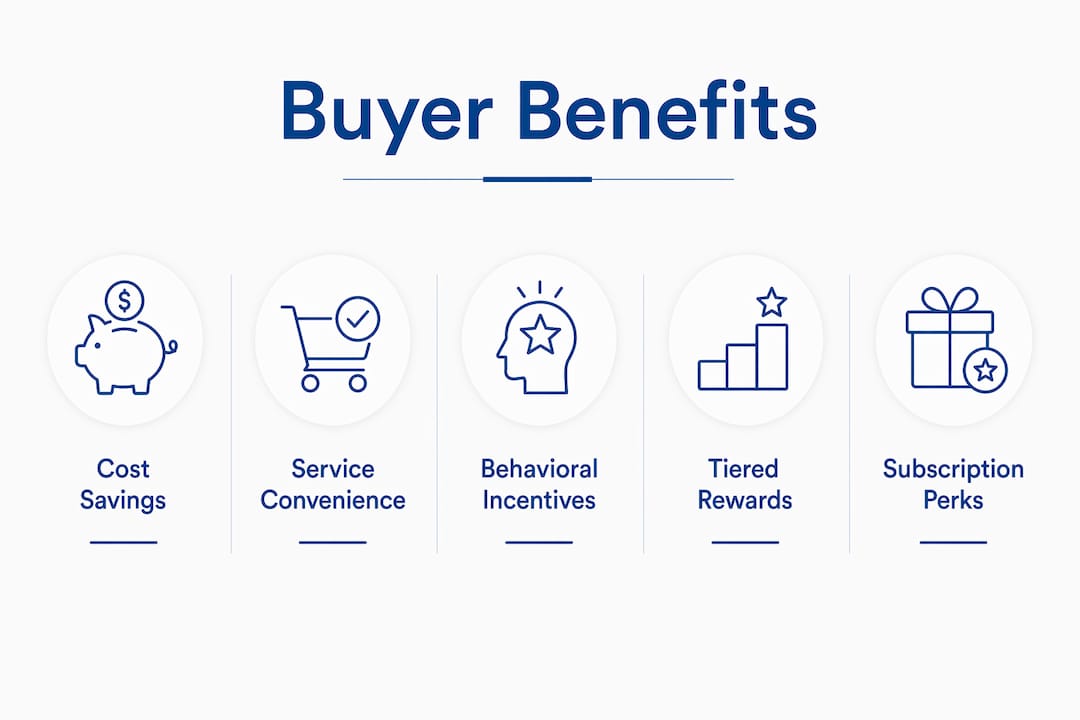
Every time a buyer earns points or completes a service visit, they build a small psychological investment in the dealership. Recognition and reward mechanisms create a sense of connection that price alone cannot replicate. Buyers feel seen, not just processed.
Behavioral economics explains the next layer. Customers tolerate a competitor's lower price because they do not want to lose the rewards they have already accumulated. This is loss aversion at work. The accrued points feel like money already earned, and walking away from them feels like a loss. That psychological pull keeps buyers engaged well beyond the initial transaction.
"Loyalty programs that reward future benefits more than immediate savings strongly motivate buyers to maintain consistent service visits." — VenueVision, behavioral insights on automotive loyalty
Redemption milestones deepen this effect. When a buyer is 200 points away from a free oil change, they are far more likely to schedule their next visit than a buyer with no program at all. The upcoming reward creates forward momentum. That momentum is the real engine behind long-term customer retention in automotive retail.
Loyalty program models compared: which one benefits buyers most?
Not all loyalty programs are built the same. The three most common models are points-based, tiered, and subscription programs. Each one offers a different mix of savings, convenience, and experiential value.
| Program Model | How it works | Best buyer advantage | Typical top perk |
|---|---|---|---|
| Points-based | Earn points per dollar spent on services | Flexible redemption on future visits | Cash back or service credit |
| Tiered (Silver/Gold/Platinum) | Advance levels by spending or visit frequency | Unlocks higher-value perks over time | Loaner vehicles, priority scheduling |
| Subscription | Pay a flat monthly or annual fee | Predictable costs, immediate full access | Unlimited oil changes, express lanes |
Tiered programs are particularly effective at motivating buyers because the next tier always feels within reach. A Silver member who is two visits away from Gold status has a concrete reason to return. The motivation comes from the upcoming reward as much as the current balance.
Subscription models suit buyers with high service frequency. If you bring your vehicle in four or more times a year, a flat-fee program often delivers better value than a points model. Points-based programs work best for buyers who want flexibility and do not want to commit to a fixed payment.
Pro Tip: Before enrolling, calculate your average annual service spend. Then compare it against the program's redemption rate. A curated dealership selection that offers a tiered program with loaner vehicles may deliver far more value than a basic points card at a high-volume shop.
Buyers with multiple vehicles should look for programs that allow points pooling across vehicles. Some dealerships offer household accounts, which accelerate tier advancement and maximize the value of every service visit across the fleet.
How to maximize your benefits from a dealership loyalty program
Getting the most from loyalty programs for car buyers requires a clear plan. Joining is the easy part. Extracting full value takes a bit more attention.
-
Match the program to your service habits. Review your last 12 months of service records. If you visit primarily for oil changes and tire rotations, prioritize programs that discount those services directly. Perks you never use are perks you never earn.
-
Use priority scheduling every time. Convenience perks like express lanes save real time. Book through the loyalty portal or app whenever possible. Many dealerships reserve dedicated slots for loyalty members that are not visible to the general public.
-
Track your points balance actively. Points that expire unused are money left on the table. Set a calendar reminder to check your balance quarterly. Most programs notify members near expiration, but proactive tracking prevents surprises.
-
Plan redemptions around larger services. Save accumulated credits for higher-cost visits like brake jobs or tire replacements. Applying a $75 credit to a $400 service feels far more impactful than using it on a $30 oil change.
-
Ask about referral bonuses. Many dealership programs reward buyers for referring friends or family. A single referral can add hundreds of points to your balance without any additional service spend.
-
Evaluate the program at renewal. If you own your vehicle for several years, your service needs will change. Reassess the program annually to confirm the perks still align with your actual usage. Evaluating personalized service quality at your dealership is part of that same review.
Buyers with long ownership horizons benefit most from tiered programs because they have time to reach the highest levels. If you plan to keep your vehicle for five or more years, the compounding value of top-tier perks adds up significantly.
Key takeaways
Dealership loyalty programs benefit buyers most when perks align with real service habits, behavioral incentives build lasting commitment, and tiered structures reward long-term ownership.
| Point | Details |
|---|---|
| Cost savings are immediate | Discounts on oil changes and tire rotations reduce the most frequent ownership expenses. |
| Convenience perks rank high | Priority scheduling and express lanes save time and reduce service friction for busy buyers. |
| Behavioral design drives retention | Points and milestones create forward momentum that keeps buyers engaged beyond price alone. |
| Tiered models reward loyalty | Silver/Gold/Platinum structures unlock loaner vehicles and premium perks for consistent buyers. |
| Active tracking maximizes value | Monitoring points balances and planning redemptions for larger services delivers the best return. |
Why I think most buyers underestimate these programs
I have spent years watching car buyers focus almost entirely on the purchase price while ignoring the ongoing cost of ownership. That is a costly blind spot. A $500 discount at signing feels significant. But three years of discounted maintenance, free oil changes, and priority scheduling can easily outpace that number.
What changed my view was seeing how well-designed tiered programs work on a psychological level. Buyers do not just stay for the savings. They stay because the dealership relationship starts to feel personal. A service advisor who knows your vehicle history, a loaner car waiting when you arrive, an express lane that gets you out in 45 minutes. Those experiences build trust in a way that a one-time price cut never does.
The behavioral economics piece is real and worth taking seriously. Buyers who have accumulated points are genuinely reluctant to start over elsewhere, even when a competitor's price looks attractive. That is not irrational. It reflects the real value of familiarity, accumulated service history, and earned rewards. Treating a loyalty program as part of your total vehicle ownership strategy, rather than a marketing gimmick, changes how you evaluate dealerships from the start.
My honest recommendation: ask about the loyalty program before you sign anything. The structure of that program tells you a great deal about how the dealership values long-term relationships versus one-time transactions.
— Allen
Loyalty benefits worth exploring at Autovendorsfl
Autovendorsfl specializes in connecting buyers with premium vehicles and the dealership relationships that support long-term ownership satisfaction.
For buyers who want personalized guidance on which loyalty programs deliver real value, Autovendorsfl offers hands-on assistance at every stage. The team understands that the right program depends on your vehicle, your service habits, and your ownership timeline. Whether you are buying your first luxury model or adding to an existing fleet, visit Autovendorsfl to get matched with dealership options that include meaningful loyalty benefits. The goal is not just a great vehicle. It is a great ownership experience from day one.
FAQ
What are the main benefits of dealer loyalty programs for buyers?
The main benefits include discounts on routine maintenance, priority scheduling, service credits, and loaner vehicles for higher-tier members. These perks reduce ownership costs and improve the overall service experience.
How do tiered loyalty programs work?
Tiered programs use levels such as Silver, Gold, and Platinum to unlock increasingly valuable perks as buyers spend more or visit more frequently. Customers are motivated by the next tier's rewards as much as their current points balance.
Why do buyers stay loyal even when competitors offer lower prices?
Behavioral economics shows that accrued rewards create loss aversion. Buyers avoid switching because leaving means forfeiting points and perks they have already earned, making the familiar dealership feel more valuable.
Are loyalty programs worth it for buyers who only visit once or twice a year?
Low-frequency buyers benefit most from points-based programs with no expiration, where credits accumulate slowly but apply to higher-cost services like brake work or tire replacements.
How can buyers get the most from a dealership loyalty program?
Match the program to your actual service habits, use priority scheduling on every visit, and save accumulated credits for larger service bills. Reviewing your points balance quarterly prevents expiration losses.