Pre-owned luxury vehicles deliver better financial value than new ones because new cars lose a significant portion of their value the moment they leave the dealership. This front-loaded depreciation is the core reason why pre-owned luxury beats new cost for budget-conscious buyers. Brands like BMW and Mercedes-Benz are among the fastest depreciators in the market, which works in your favor when you buy used. Add in Certified Pre-Owned (CPO) programs that reduce buyer risk, and the financial case for going pre-owned becomes hard to ignore. The 2026 market reinforces this logic with strong used vehicle supply and persistent affordability pressure on new car prices.
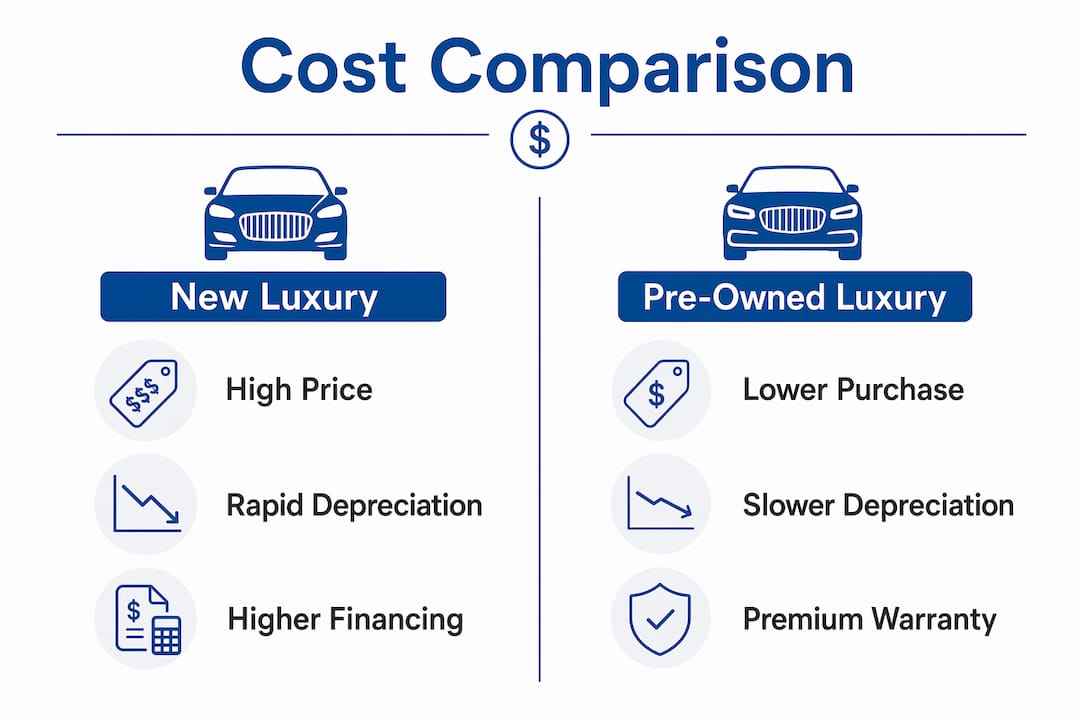
Why pre-owned luxury beats new cost: the depreciation factor
Depreciation is the single largest cost of owning any car, and luxury vehicles depreciate faster than most. New cars lose 20% or more of their value in the first year alone. That loss belongs to the original buyer, not you.
Luxury models compound this effect. Luxury vehicles lose an average of 48.1% of their value after five years. A BMW 5 Series or Mercedes-Benz E-Class that stickered at $65,000 new could be worth around $34,000 five years later. The buyer who purchased it new absorbed that $31,000 drop. You get the car at the lower price.

This is called front-loaded depreciation. The steepest losses happen in years one through three. After that, the value curve flattens. A pre-owned buyer skips the worst of it entirely and rides the flatter part of the curve during their ownership period.
Pro Tip: Target vehicles that are 2–4 years old. This age range captures the most depreciation already absorbed while leaving plenty of usable life and often some remaining factory warranty.
How depreciation affects your actual purchase price
The table below shows how depreciation reshapes the real cost of a luxury vehicle over time.
| Vehicle age | Approximate value retained | What it means for buyers |
|---|---|---|
| Brand new | 100% | You pay full price and absorb all early losses |
| 1 year old | ~80% | First-year drop already absorbed by original owner |
| 3 years old | ~65% | Sweet spot: significant savings, good remaining life |
| 5 years old | ~52% | Deep discount, but warranty and maintenance need scrutiny |
Buying at the three-year mark gives you a vehicle that still feels current, often with technology and features that match newer models, at a price that reflects someone else's loss.
How does total cost of ownership compare: new vs. pre-owned luxury?
Purchase price is only part of the equation. Total cost of ownership includes financing, insurance, taxes, registration fees, and maintenance. When you run the full numbers, pre-owned luxury wins by a wide margin.
A $49,000 new car carries a five-year total cost of around $57,000, while a comparable used car purchased at $25,000 runs about $32,000 over the same period. That is a difference of roughly $25,000. For most buyers, that gap represents a year or more of income.
Financing math plays a role here too. Used car APRs run about 4 percentage points higher than new car loan rates in 2026. That sounds like a disadvantage, but the lower principal on a used car loan more than offsets the rate difference in most scenarios. You pay more interest per dollar borrowed, but you borrow far fewer dollars.
Five cost categories where pre-owned wins
- Purchase price. A 3-year-old luxury vehicle typically costs $15,000–$30,000 less than its new equivalent, depending on the brand and trim.
- Sales tax. Most states calculate sales tax on the purchase price. A lower price means a lower tax bill at signing.
- Registration fees. Many states tie annual registration costs to vehicle value. Pre-owned buyers pay less every year.
- Insurance premiums. Comprehensive and collision coverage costs less on a lower-value vehicle. The savings compound annually.
- Financing principal. A smaller loan means lower monthly payments even when the interest rate is higher, and less total interest paid over the loan term.
Maintenance costs are the one area where new cars hold an edge. A new vehicle under factory warranty has zero out-of-pocket repair costs for covered items. Pre-owned buyers take on more maintenance risk, which is exactly why CPO programs exist.
Statistic callout: A pre-owned luxury buyer can realistically save $20,000 or more over five years compared to buying the same model new, even after accounting for higher used-car financing rates and additional maintenance costs.
You can also review how depreciation affects trade-in value when it comes time to sell or trade, since pre-owned buyers often exit the ownership cycle at a less steep loss than original buyers.
Are Certified Pre-Owned luxury cars worth the premium?
Certified Pre-Owned is the industry's standard term for manufacturer-backed used vehicles that pass a multi-point inspection and come with extended warranty coverage. CPO programs sit between buying new and buying a standard used car, and they address the biggest concern most buyers have: hidden problems.
CPO vehicles typically carry a $1,000–$3,000 premium over comparable non-certified used cars. In return, buyers receive extended powertrain warranties, roadside assistance, and in many cases a deductible structure similar to a new car warranty. For luxury brands with high repair costs, that coverage can pay for itself with a single major repair.
The value of a CPO program depends on what it actually covers. Not all CPO programs are equal. A BMW CPO warranty covers the powertrain and many electrical components for up to six years or 100,000 miles from the original sale date. A Mercedes-Benz CPO program offers similar depth. Weaker programs from other brands may cover far less.
Pro Tip: Before paying the CPO premium, read the full warranty terms and calculate the deductible against the repair costs typical for that brand. For high-repair-cost luxury brands, CPO coverage is often worth every dollar.
What to look for in a CPO program
- Powertrain coverage: Confirm it includes the engine, transmission, and drivetrain components.
- Electrical and technology coverage: Luxury vehicles carry expensive infotainment and driver-assistance systems. Check if these are included.
- Deductible amount: Lower deductibles mean less out-of-pocket cost per repair visit.
- Roadside assistance: Most strong CPO programs include 24-hour roadside coverage.
- Transferability: A transferable warranty adds resale value when you sell the vehicle.
CPO programs work best for buyers who want the financial benefits of pre-owned luxury without taking on full repair risk. They are especially valuable for first-time luxury buyers who are less familiar with the typical maintenance costs of premium brands.
What does the 2026 market look like for pre-owned luxury buyers?
The 2026 used vehicle market favors buyers in several ways. Supply is healthy, demand is strong but not frenzied, and affordability pressure on new cars continues to push buyers toward the pre-owned segment.
U.S. dealers held approximately 2.20 million used vehicles in january 2026, according to Cox Automotive. That level of supply gives buyers real negotiating room and a wide selection of makes, models, and trim levels.
Several factors shape the current market:
- Lease returns: A wave of vehicles leased during 2022 and 2023 are now returning to dealer lots as 2-to-3-year-old pre-owned options. These are often low-mileage, well-maintained vehicles in near-new condition.
- Affordability pressure: New vehicle prices remain elevated. Buyers who want a luxury experience but cannot absorb a $70,000 new car payment are moving to pre-owned in large numbers.
- Digital buying tools: Platforms that aggregate pre-owned inventory make it easier than ever to compare prices across dealers and regions, which keeps individual dealer pricing competitive.
- Market timing: Strong used vehicle demand in 2025 and 2026 reflects a broader consumer shift toward value, which validates the financial logic of buying pre-owned luxury during this period.
Understanding current digital car buying tools can help you move faster when the right vehicle appears in inventory, which matters in a competitive market.
Key Takeaways
Pre-owned luxury vehicles beat new car costs primarily because buyers avoid front-loaded depreciation, which can account for nearly half a vehicle's value over five years.
| Point | Details |
|---|---|
| Depreciation drives savings | Luxury cars lose an average of 48.1% of value after five years, and pre-owned buyers skip the steepest early losses. |
| Total cost gap is large | A comparable pre-owned luxury car can cost $20,000 or more less than new over a five-year ownership period. |
| Higher APR is manageable | Used car rates run about 4 points higher, but the lower loan principal typically offsets the rate difference. |
| CPO reduces risk | A $1,000–$3,000 CPO premium buys extended warranty coverage that can pay for itself with one major repair. |
| 2026 supply supports buyers | U.S. dealers held 2.20 million used vehicles in january 2026, giving buyers strong selection and negotiating leverage. |
Allen's take: what buyers consistently get wrong about pre-owned luxury
Most buyers think the discount on a pre-owned luxury car exists because the car is used. That framing misses the real story. The discount exists because someone else absorbed the steepest part of the depreciation curve. You are not buying a lesser car. You are buying the same car at the point where its value has stabilized.
The buyers I see make mistakes are the ones who focus entirely on the sticker price and ignore the warranty picture. A 4-year-old BMW 7 Series at $38,000 sounds like a great deal until you realize the factory warranty expired and you are now fully exposed to repair costs on one of the most expensive vehicles to maintain in its class. The math changes fast.
My advice is to align your purchase with the depreciation curve and the warranty timeline simultaneously. A 2-to-3-year-old CPO luxury vehicle from a brand like Mercedes-Benz or BMW hits the sweet spot: meaningful depreciation already absorbed, extended warranty still in place, and technology recent enough to feel current. That combination is where the real value lives.
Verifying service records and accident history before any purchase is non-negotiable. A clean history report does not guarantee a perfect car, but a spotty one tells you exactly what to avoid. Pair that with a pre-owned inspection checklist and you eliminate most of the risk that makes buyers nervous about going pre-owned in the first place.
The financial case for pre-owned luxury is strong. The execution just requires a little more diligence than buying new.
— Allen
Pre-owned luxury vehicles at Autovendorsfl
Autovendorsfl, based in Fort Lauderdale, specializes in curating a premium selection of pre-owned luxury vehicles that meet rigorous standards for condition, history, and value.

The team at Autovendorsfl provides hands-on assistance with vehicle selection, inspection guidance, and warranty evaluation so you can apply the financial principles in this article to a real purchase. Whether you are looking for a CPO-backed sedan or a low-mileage luxury SUV, the current inventory at Autovendorsfl reflects a commitment to quality that budget-conscious luxury buyers can trust. Reach out directly for personalized vehicle-finding assistance and expert advice on getting the most value from the pre-owned luxury market.
FAQ
How much do luxury cars depreciate in the first year?
New luxury cars typically lose 20% or more of their value in the first year. Brands like BMW and Mercedes-Benz often depreciate faster than the broader market average.
Is a Certified Pre-Owned luxury car worth the extra cost?
CPO vehicles carry a $1,000–$3,000 premium but include extended warranties and inspections that reduce repair risk. For high-cost luxury brands, the coverage frequently justifies the price.
What is the best age to buy a pre-owned luxury car?
A 2-to-4-year-old vehicle is the sweet spot. It has absorbed the steepest depreciation while retaining significant usable life and often some remaining warranty coverage.
Do higher used car loan rates cancel out the savings?
Used car APRs run about 4 percentage points higher than new car rates in 2026, but the lower purchase price reduces the loan principal enough that total financing costs remain lower overall.
How do I reduce risk when buying pre-owned luxury?
Verify the vehicle's service history, check accident records, and confirm warranty terms before purchase. CPO status from the manufacturer adds another layer of protection for buyers who want added peace of mind.