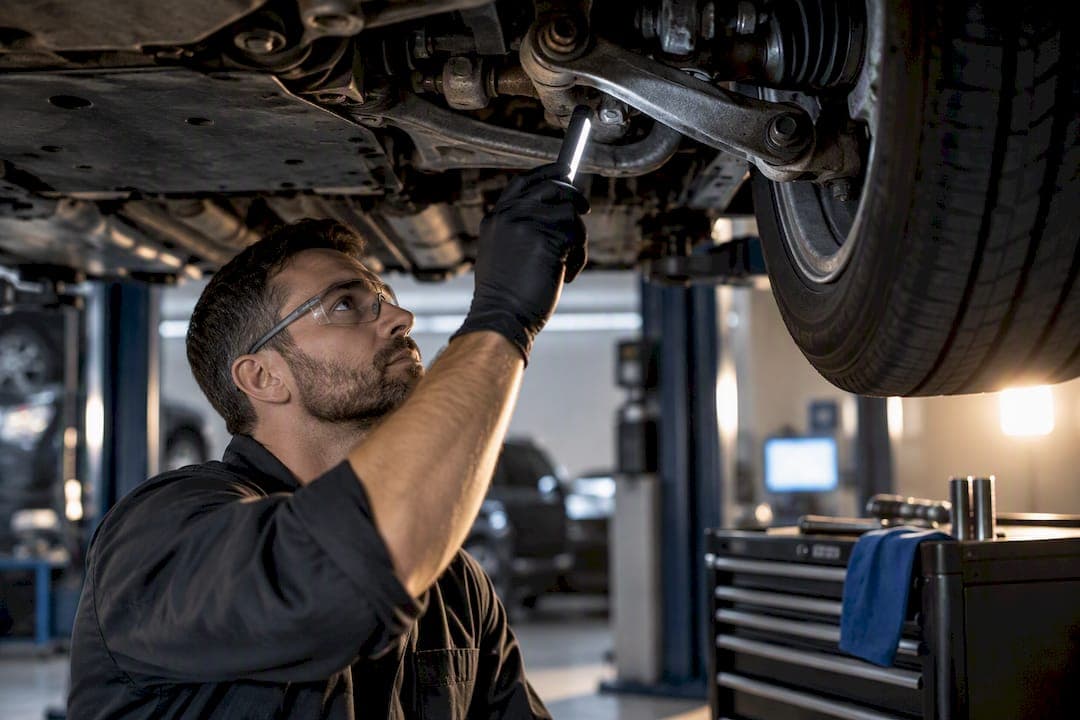
A high-mileage luxury car makes sense for a specific kind of buyer: someone on a budget who accepts real maintenance trade-offs, a driver who wants a well-equipped second car rather than a daily workhorse, or an enthusiast chasing a discontinued feature or engine that newer models dropped. The savings can be substantial, but they only hold up if you verify service history and pay for an independent inspection before you sign anything. Skip that step, and the "bargain" often turns into the most expensive car you've ever owned.
TL;DR:
- Cars with over 80,000 miles typically incur higher maintenance costs, especially for European luxury brands that have more expensive parts and specialized labor.
- Replacing major components and electronics on high-mileage luxury vehicles usually occurs between 60,000 and 100,000 miles, demanding increased annual reserves for repairs.
- Buyers should verify full service histories, inspect systems thoroughly, and confirm ADAS calibration before purchasing to avoid costly surprises.
- Certified pre-owned programs and dealer-vetted inventories significantly reduce the risk of hidden issues compared to private-party sales.
- Lexus and Toyota-based luxury models are the most reliable for reaching very high mileage, but all high-mileage cars need careful inspection and proper documentation.
Table of Contents
- Value Vs. Risk: What High-Mileage Luxury Cars Really Cost You
- How to Evaluate a High-Mileage Luxury Car Before You Buy
- The Parts That Break First on High-Mileage Luxury Cars
- Where to Find a High-Mileage Luxury Car Worth Buying
- How Auto Vendors Inc Approaches High-Mileage Luxury Inventory
- Let Auto Vendors Inc Find Your Next High-Mileage Luxury Car
- Sources
- FAQ
Value Vs. Risk: What High-Mileage Luxury Cars Really Cost You
The math on high mileage vs. age used cars almost always favors mileage as the bigger risk factor. A 6-year-old sedan with 90,000 miles has typically seen more wear on bushings, seals, and electronics than a 10-year-old car that spent its life on short commutes. Depreciation curves make this worse for buyers in a good way: flagship sedans and discontinued model lines often lose 60 to 70 percent of their sticker price by the time they cross the 70,000 to 100,000 mile mark, which is exactly why patient shoppers find genuine deals there.
Where the deal gets complicated is ownership cost. Insurance and parts pricing tend to run higher on prestige marques simply because replacement components cost more and require specialized labor. Consumer Reports found that domestic luxury brands like Buick and Lincoln often carry notably lower projected long-term ownership costs than many European luxury makes, a gap that widens as mileage climbs and components start failing in clusters rather than one at a time.
Before you commit to any listing, run this comparison:
- Add the asking price to a realistic 12-month repair reserve (typically $1,500 to $4,000 for luxury vehicles past 80,000 miles).
- Compare that total against a lower-mileage example of the same model.
- Factor in whether the car still carries any factory or extended warranty coverage.
Statistic to remember: Consumer Reports' brand-level data indicates that the gap between the cheapest and most expensive luxury brands to maintain over a decade can be significant, driven mainly by parts and labor rates rather than driving habits.
How to Evaluate a High-Mileage Luxury Car Before You Buy
Buying blind on a high-mileage luxury car is how affordable luxury cars turn into money pits. Work through this sequence at the viewing, in order, and don't skip steps because the car "feels fine" on a five-minute test drive.
- Demand full documentation. Ask for the complete service history, receipts for any electrical or ADAS repairs, the title and ownership history, and a VIN check for open recalls.
- Drive it with intent. Feel for delayed or rough transmission shifts, listen for unusual engine noise under load, and test every advanced driver assistance feature, not just cruise control.
- Check the suspension cold. Start the car after it's sat overnight and watch whether an air-suspension compressor cycles repeatedly before the ride height settles. Frequent cycling on a cold start is one of the most reliable early warnings of a failing system.
- Check for leaks and smells. Coolant, transmission fluid, and refrigerant leaks are common on cars that have covered heavy miles without consistent service.
- Confirm ADAS calibration. Any car with a documented ADAS-related repair needs proof of post-repair calibration, since an uncalibrated system can behave unpredictably and cost more to fix later.
Walk away if you find inconsistent service records, recurring electrical faults, a salvage or rebuilt title, or repeated ABS and airbag warning lights. Those aren't quirks. They're patterns.
Pro Tip: Before you finalize anything, get a specialist marque inspection and a written repair-cost estimate. Auto Vendors Inc's pre-owned luxury car inspection checklist walks through exactly what a qualified technician should check on an older luxury vehicle, item by item.

The Parts That Break First on High-Mileage Luxury Cars
Electronics fail before engines do, at least on most modern luxury vehicles. Infotainment modules, sensor arrays, and ADAS components accumulate small faults with age, and the What Car? Reliability Survey consistently flags non-engine electrics and infotainment glitches among the most common complaints across luxury models, alongside air-suspension issues on SUVs and larger sedans.
Beyond electronics, three systems tend to demand attention once a luxury car passes heavy mileage:
- Air suspension components, which wear gradually and often show ride-height drift before they fail outright.
- High-pressure fuel systems, particularly on turbocharged and direct-injection engines.
- Transmission and torque-converter components, which show symptoms like hesitation or harsh shifts well before outright failure.
Brand matters here more than most buyers expect. European luxury and exotic marques frequently cost more to maintain over time than domestic or Japanese luxury equivalents, largely because specialized parts and marque-certified labor rates run higher. Industry data on repair timing backs this up: major component replacement and service cost spikes on luxury vehicles tend to cluster in the 60,000 to 100,000 mile range, which is precisely the window where many high-mileage bargains sit. Budget accordingly. A realistic annual reserve for a luxury car past that threshold usually needs to be two to three times what you'd set aside for a mainstream sedan.
Where to Find a High-Mileage Luxury Car Worth Buying
Sourcing matters as much as inspection. Certified pre-owned programs and dealer-vetted inventory reduce risk significantly compared with unmanaged private-party purchases, mainly because they add a documented inspection and some form of limited warranty coverage on top of the sale.
Consider these routes, roughly in order of buyer protection:
- Certified pre-owned programs offer the strongest safety net, with inspection standards and limited warranties built in.
- Curated dealer inventory, where every vehicle has already passed a documented inspection, splits the difference between CPO pricing and private-party savings.
- A dealer's vehicle-finding service works well when you want a specific discontinued model or configuration and don't want to chase leads yourself.
- Private-party sales can be the cheapest route, but only if you run a VIN history check, pay for an independent inspection, confirm a clean title, and use an escrow or verified payment method.
If you're weighing a specific flagship, model-level guidance from iSeeCars shows Lexus and Toyota-based luxury models feature prominently among vehicles most likely to reach very high mileages, which makes them worth a closer look if long-term reliability outranks brand prestige on your priority list.
How Auto Vendors Inc Approaches High-Mileage Luxury Inventory
Every high-mileage luxury car deserves the assumption that something has been deferred, not the assumption that a clean exterior means a clean history. That's the starting point for how any serious dealer should evaluate inventory, and it's the standard reflected in Auto Vendors Inc's own pre-owned luxury car inspection checklist: full documentation review, a systems-level drive evaluation, and a hard look at the exact failure points covered above, from air suspension to ADAS calibration.
Not every high-mileage car belongs on a lot, though. When a vehicle's service gaps can't be verified or a specialist inspection turns up module-level faults, the more honest move is steering a buyer toward a lower-mileage alternative instead of forcing a sale. That distinction, knowing which high-mileage cars are worth the risk and which aren't, is what separates a curated inventory from a gamble.
— Allen
Let Auto Vendors Inc Find Your Next High-Mileage Luxury Car
Some luxury car dealers offer curated inventories paired with hands-on sourcing help, so you're not guessing whether a high-mileage listing is a deal or a liability. A Car Finder service can do the legwork of tracking down well-documented examples of specific makes and models, including discontinued trims that are hard to find on general marketplaces.

If you already know what you're looking for, browse current inventory of luxury sedans and SUVs directly. If you're chasing something specific, like a well-kept Mercedes-Benz S-Class or a Lexus GX 460 with verified service records, start with our Car Finder and tell us what you need. We'll help you separate the genuine high-mileage bargains from the ones that only look like bargains until the first repair bill arrives.
Sources
- The cost of car ownership — Consumer Reports
- Reliability Survey: Most reliable luxury cars — What Car?
- Most reliable luxury cars — iSeeCars
- What to consider when buying a used luxury car — HowToGeek
- Luxury Maintenance Predictor — NextGen Auto
FAQ
Which luxury cars last the longest at high mileage?
Reliability data consistently points to Lexus and Toyota-based luxury models as the most likely to reach very high mileages, largely due to simpler mechanical systems and lower long-term parts costs. Domestic luxury brands also tend to run cheaper to maintain over time than many European marques.
Are high-mileage luxury cars a good investment?
They can be, for buyers who accept higher maintenance risk in exchange for a lower purchase price and who complete an independent inspection first. The best candidates are budget-conscious buyers, secondary-car shoppers, and anyone hunting a specific discontinued trim rather than daily-driver reliability above all else.
What mileage is too high for a luxury car?
There's no fixed cutoff, but major component failures and service cost spikes on luxury vehicles tend to cluster between 60,000 and 100,000 miles. Past that range, budget for higher annual repair costs regardless of the specific number on the odometer.
Does Auto Vendors Inc offer help finding a specific high-mileage luxury model?
Yes. The Car Finder service helps buyers locate well-documented luxury vehicles, including discontinued or hard-to-find trims, and current pricing and available inventory are listed directly on the site.
What should I always ask for before buying a high-mileage luxury car?
Request the full service history, receipts for any electrical or ADAS-related repairs, a VIN check for recalls, and confirmation of clear title status. Combining a clean service history with a specialist inspection and warranty coverage offers far more protection than relying on any single check alone.