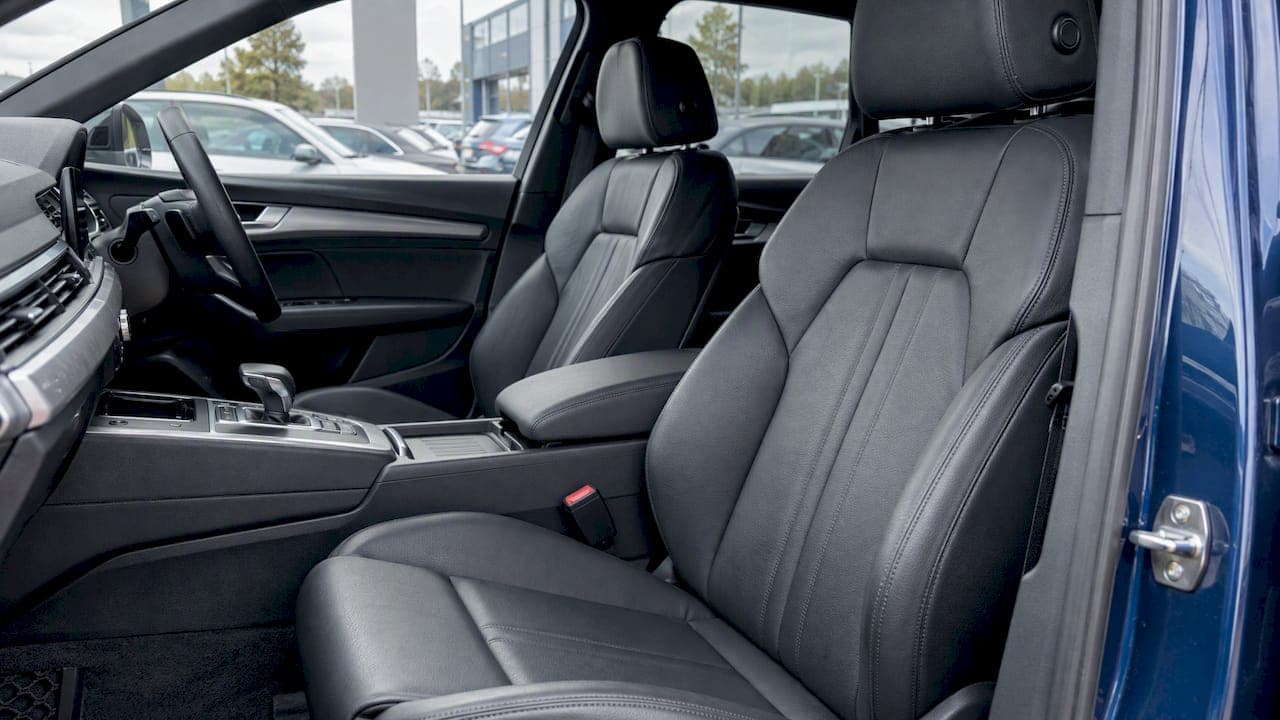
Nappa leather typically offers a smoother, more protected finish that suits sport-oriented trims, and Merino leather is often described as soft and breathable, while Nappa can offer a more protected finish. The best choice depends on the specific upholstery and care needs. The sections below explain why, and how to keep either looking sharp.
TL;DR:
- Nappa’s semi aniline finish adds a light pigment layer that resists stains better than unsealed leather, while Merino’s feel and protection vary by upholstery.
- Use gentle foam and suitable leather creams on sensitive Merino, and avoid products containing fats; renew Nappa’s protector about every two months.
- Sun exposure, dye transfer from jeans, body oils, sweat, and abrasive loading can fade, stain, or scuff either leather, with unsealed surfaces especially sensitive.
- Check the vehicle’s build sheet, upholstery finish, perforation, and ventilation features, because leather type and airflow can vary by model year and option package.
- For a used car, request service or detailing records and inspect seat condition, since documented care can reassure resale buyers regardless of leather type.
Table of Contents
- Nappa vs Merino leather at a glance
- Softness, grain and finish: what you actually feel and why
- Durability and wear patterns: what aging looks like in daily use
- Care and maintenance: step-by-step practical guidance for each leather
- Seating comfort in daily driving: breathability and temperature
- Which leather to pick for your BMW or Audi
- How we evaluate leather trim when curating vehicles
- FAQ
- Sources
Nappa vs Merino leather at a glance
Before getting into finishing techniques and maintenance schedules, here is how the two compare across the factors that matter most to BMW and Audi buyers.
- Softness and feel: Nappa is prized for a buttery-soft feel, while the feel of Merino depends on its finish and construction.
- Grain and finish: Nappa can be drum-dyed and finished as semi-aniline leather. Aniline leather is unsealed, while semi-aniline leather has a light pigment layer.
- Durability and wear: A semi-aniline finish can offer more protection than an unsealed surface, which is more sensitive.
- Care effort: Care needs depend on the leather's finish. Gentle cleaners and suitable leather creams are recommended for sensitive surfaces.
- Seating comfort: Nappa is prized for its soft feel and breathability; comfort varies with the leather and its finish.
Manufacturers sometimes market both as premium leather tiers without spelling out the coating differences, which is exactly where a side-by-side like this helps before you sign for a trim level.
Softness, grain and finish: what you actually feel and why
The feel of any automotive leather starts with how it is tanned and finished, not just the animal source. Classic Nappa is a drum-dyed, full-grain cow leather finished as a high-grade semi-aniline product, which gives it an elegant surface that resists stains better than fully uncoated hides. That finishing step is why Nappa in a BMW or Audi cabin often feels smooth and slightly cooler to the touch rather than deeply plush.
Nappa is prized for a buttery-soft feel, flexibility, fine grain, and breathability. It is usually dyed with water-soluble colorants, which preserves its natural texture but leaves the surface more open and less protected than a coated hide.
The real split comes down to aniline versus semi-aniline treatment. Care guidance describes unsealed aniline leather as soft and breathable but more sensitive, while semi-aniline leather has a light pigment layer that offers some additional protection.

Durability and wear patterns: what aging looks like in daily use
Nappa's fine grain and semi-aniline sealing give it a real advantage in daily resilience. Technical documentation for Classic Nappa describes it as durable and relatively low-maintenance, with stain resistance built into the finish rather than relying solely on aftercare. That makes it a practical choice for buyers who commute daily or share a car with family members.
An uncoated or lightly treated surface can be more sensitive and may need careful maintenance. A patina can look distinguished on a well-kept seat, but it also means the material shows its history more visibly than a sealed Nappa surface.
A few conditions accelerate wear on either leather:
- UV exposure from daily sun parking fades color and dries out natural oils.
- Dye transfer from jeans can tint light-colored leather, especially on unsealed surfaces.
- Body oils and sweat build up faster on uncoated Merino than on semi-aniline Nappa.
- Abrasive loading, like keys or bags dragged across the seat bolster, scuffs both materials over time.
Care and maintenance: step-by-step practical guidance for each leather
Caring for Nappa is comparatively straightforward. Its semi-aniline finish tolerates gentle cleaners without excessive risk, and care instructions recommend applying a protector after each cleaning, with a fresh protector treatment roughly every two months to maintain the surface's resistance to stains.
Merino needs a softer touch. General leather care guidance recommends gentle cleaning foam and suitable leather creams, and advises avoiding fat-containing products on sensitive surfaces.
A practical regimen for either leather looks like this, following detailed guidance on how Florida drivers can keep their cars looking new: A practical regimen for either leather looks like this.
- Wipe down seats regularly with a soft, slightly damp microfiber cloth to remove surface dust and oils.
- Clean as needed with a leather-safe foam cleaner, working in small sections.
- Follow the upholstery maker's care instructions for conditioning and protection.
- Consider professional treatment when needed or before reselling the vehicle.
Pro Tip: Always test a new cleaner or conditioner on a hidden section of the seat first, and let any protector fully dry before the car sits in direct sun.
Seating comfort in daily driving: breathability and temperature
Breathability separates these two leathers in everyday driving more than most buyers expect. Leather comfort and breathability depend on the material and its finish. Nappa is prized for its breathability, while unsealed aniline leather is also described as breathable.
Perforation and seat ventilation can affect airflow through either material, so check the specific vehicle's upholstery and seat features. If you are cross-shopping a family SUV, it is worth checking how seat perforation pairs with child seat installation points, since anchor hardware placement can vary with upholstery style.

Color choice may affect comfort in direct sun. Consider the vehicle's interior color and parking conditions when choosing upholstery.
Which leather to pick for your BMW or Audi
If you want a sportier look and a more protected finish, semi-aniline Nappa may suit your needs. Its care requirements depend on the specific upholstery.
If softness matters most, compare the specific Merino upholstery with other options and check its care instructions before deciding.
Resale value adds another layer. A well-documented maintenance history and seats in good condition may help reassure potential buyers, regardless of leather type. Consider the vehicle's condition and available care records when assessing resale value. When you are comparing trims on a used Audi A4 or a leather-equipped SUV, ask for any available service or detailing records before deciding.
How we evaluate leather trim when curating vehicles
When we assess a leather-trimmed vehicle for our lot, we look past the obvious shine and check what defines premium automotive grade before we approve it for sale. We inspect finish evenness across seat panels, stitching quality at seams and bolsters, any lingering odor that might signal past moisture damage, and documented service or detailing history when the seller provides it.
— Allen
FAQ
Which leather is considered a step above Nappa leather?
Merino leather is often viewed as a more premium, softer alternative to Nappa, prized for its plush feel and fine grain. The tradeoff is that its less coated surface typically requires more frequent, careful maintenance to preserve that softness.
Is Merino leather a good choice for daily driving?
Merino leather offers excellent softness and breathability, making it comfortable for long drives. It does ask for more consistent conditioning than coated leathers since its surface is less protected against oils and staining.
Is Nappa leather considered high quality in cars?
Yes, Nappa leather used in automotive interiors is typically a drum-dyed, full-grain product finished as semi-aniline, which gives it a durable, stain-resistant surface with an elegant finish. It balances comfort with lower day-to-day maintenance compared to uncoated leathers.
What type of leather do premium German automakers typically use?
Premium German brands commonly offer both Nappa and Merino leather depending on trim level, with Nappa appearing more often in sport-oriented packages and Merino reserved for top luxury trims. The exact material varies by model year and option package, so checking the build sheet is the most reliable way to confirm which leather a specific car has.
Sources
- technical characteristics and care instruction - CLASSIC NAPPA
- How to Clean Nappa Leather: The Ultimate Guide - Leather Insights
- Care tips for all types of leather: How to do it right!