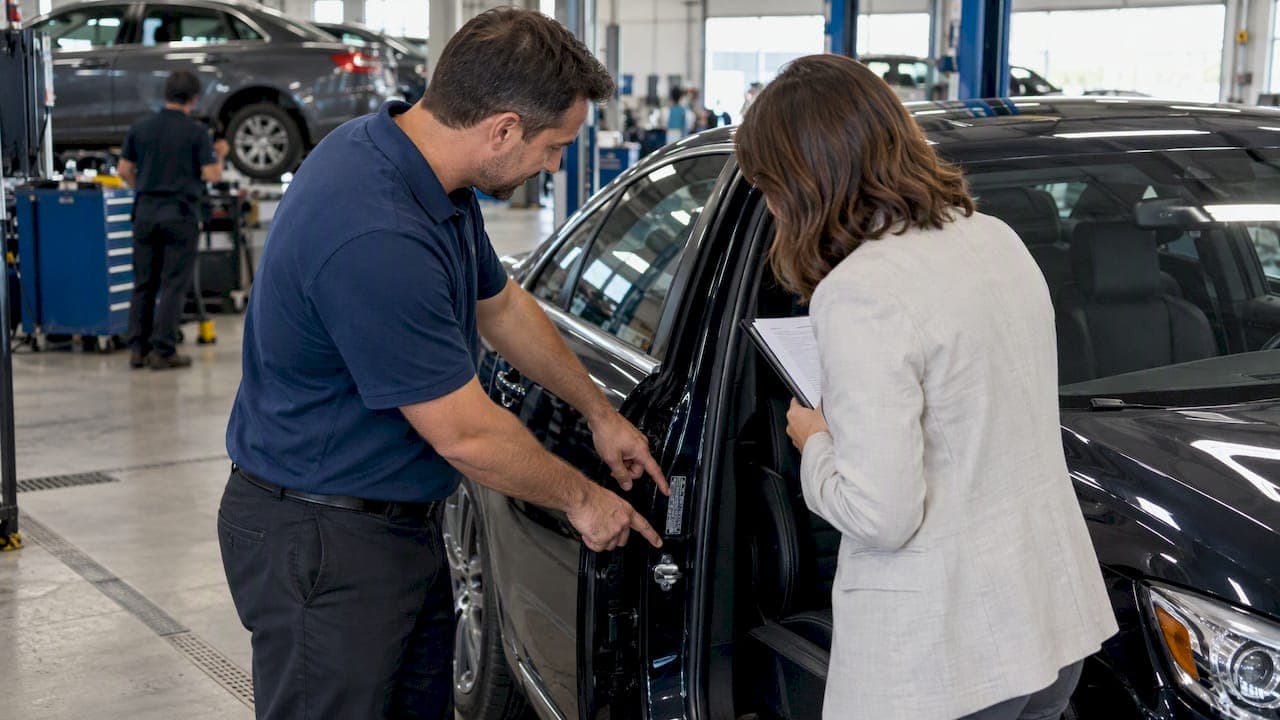
A proper service records review shows whether scheduled maintenance and major repairs match the car's VIN and mileage, but records alone are not a substitute for a VIN-based history check and an independent mechanical inspection. Treat dated invoices, dealer logs, and stamped booklets as one of three checks you need before buying. Your first move is simple: get the VIN and start the recall and history searches.
TL;DR:
- Ensuring service records include clear details like date, odometer reading, VIN, shop contact, and specific parts or work is crucial for verification.
- Running a VIN through NHTSA's recall database and checking title and odometer history with NMVTIS or NICB are essential before buying.
- Comparing service intervals with manufacturer schedules and checking for gaps or repeated repairs can reveal inconsistencies or unresolved issues.
- Red flags such as altered receipts, missing major services, or suspicious mileage patterns should prompt independent inspection and possible walk-away decisions.
- Confirming records with a physical inspection and keeping all documentation organized enhances confidence and supports negotiation.
Table of Contents
- What counts as service records and how to spot authentic documentation
- How to obtain records and run authoritative VIN and recall checks
- How to review service records: a step-by-step verification workflow
- Red flags, gaps, and what to do next
- A compact buyer's checklist to use at the lot
- Why records are one of three necessary checks
- How Auto Vendors Inc helps you verify a car before you buy
- Authoritative resources worth checking yourself
- Sources
- FAQ
What counts as service records and how to spot authentic documentation
Service records come in several forms, and not all of them carry equal weight. A dealer invoice printed from a computerized system tends to be more reliable than a handwritten receipt from an independent shop, mainly because it ties directly to the vehicle's VIN and the dealership's own database. A stamped service booklet, still common on many luxury models, offers a quick visual trail, though it is easier to fill in gaps or stamps without matching paperwork behind them.
When you look at any document, check for the details that actually let you verify the work:
- Date of service, which lets you track whether maintenance followed the recommended schedule.
- Odometer reading, so you can confirm the mileage progression makes sense over time.
- VIN or partial VIN, confirming the paperwork belongs to this specific car and not a similar one.
- Shop name and contact information, so you can call and confirm the work was actually performed.
- Parts or services listed, showing exactly what was done rather than a vague "serviced" line.
Dealer records tend to hold up best under scrutiny because they're generated and stored independently of the seller. Independent-shop guidance on documenting repair history also recommends that receipts include enough detail to support a warranty claim or resale, which is the same standard worth applying here.
How to obtain records and run authoritative VIN and recall checks
Before you can verify anything, you need the vehicle's 17-character VIN. It's usually visible at the lower-left corner of the windshield, and it also appears on the registration, insurance card, and most service paperwork.
Once you have it, work through these steps:
- Run an open-recall search at NHTSA's recall lookup using the VIN. Recently announced recalls may not show up immediately for every VIN, and campaigns older than 15 years may not appear at all, so don't treat a clean result as absolute.
- Check title and odometer status through NMVTIS-linked resources or NICB's free VIN check, which can flag salvage, theft, or odometer discrepancies that a seller may not mention.
- Order a paid vehicle-history report if you want additional accident or repair entries beyond the baseline title and salvage data. FTC guidance on used-car buying notes that NMVTIS-approved reports can supply title, insurance-loss, and salvage information, while other commercial reports may add more.
- Request service printouts directly from the dealer if the car was serviced there, since many dealership service departments can generate a computerized history on request.
- Ask a private seller for originals, not photos or summaries, and request permission to call the listed shop to confirm the work.
A recall search is not a one-time task. NHTSA's VIN lookup should be rechecked close to the purchase date, since new recalls can be issued at any time between your first search and the day you sign paperwork.
How to review service records: a step-by-step verification workflow
Once you have records in hand, the real work is reconciliation, not just collection. Start by lining up every dated mileage entry against the current odometer reading and whatever the vehicle-history report shows. Records on their own are evidence to weigh, not proof of anything, and the real value comes from how well they agree with the rest of the paper trail.
From there, work through a consistent sequence:
- Compare service intervals to the manufacturer's schedule, paying attention to whether major items like timing belts, transmission fluid, or coolant flushes happened on time.
- Watch for missing entries at major mileage markers, since a car with detailed oil-change records but no history of a 60,000-mile service has a real gap.
- Verify vendor credibility by calling listed shops directly when a receipt looks informal or incomplete.
- Flag repeated repairs to the same system, such as recurring transmission or electrical work, since that pattern often points to an unresolved problem rather than routine upkeep.
- Keep copies of everything, and get any outstanding repair promises from the seller in writing before you commit.
For luxury and high-mileage vehicles, continuity matters more than sheer volume of paperwork. A thin folder showing every scheduled major service completed on time can be more reassuring than a thick stack of oil-change receipts with nothing else behind them, a point Consumer Reports makes when discussing how to evaluate high-mileage cars.
Pro Tip: Ask the dealer or seller for a scanned copy of each receipt with the VIN and mileage visible, so you have a verifiable record rather than a typed summary.
A pre-owned luxury car inspection checklist can help you structure this review alongside a physical walk-around of the car itself.
Red flags, gaps, and what to do next
Not every gap in a service file is a dealbreaker, but some patterns should slow you down. A few signs are worth treating as serious warnings rather than minor inconveniences:
- Receipts that look altered or inconsistent in font, formatting, or shop branding compared to other documents from the same business.
- Missing entries around major-service intervals, especially on a car with otherwise detailed low-mileage records.
- Mileage that doesn't progress logically between consecutive receipts, which can indicate odometer tampering.
- Salvage, flood, or theft flags on a verified history report, regardless of how clean the service records look.
When you spot any of these, your options are straightforward. Ask for original documents rather than copies, and insist on an independent mechanical inspection with a written estimate before you finalize anything. FTC guidance on buying from a dealer recommends getting this inspection even when a car is sold as certified or with a warranty attached, and notes that if a dealer won't allow an inspection on their lot, a mobile inspection or a facility of your choosing is a reasonable alternative.
Use whatever the inspection turns up to negotiate, either by pricing expected repairs into your offer or by requiring the seller to complete specific fixes first. If a seller refuses any form of independent inspection, or the records and history report both raise red flags at once, walking away is the safer move.
A compact buyer's checklist to use at the lot
Keep this sequence handy whether you're standing on the lot or messaging a seller online:
- Get the VIN and run it through NHTSA's recall database.
- Run a free NMVTIS or NICB check for title, theft, and odometer flags.
- Request scanned receipts showing the VIN and mileage together.
- Reconcile every entry against the odometer and history report.
- Schedule an independent mechanical inspection before you sign anything.
- Ask the dealer for the Buyers Guide and any warranty or service-contract paperwork, and get all promises in writing.
| Step | What it confirms | Where to do it |
|---|---|---|
| VIN lookup | Open safety recalls | NHTSA.gov/recalls |
| Title/odometer check | Salvage, theft, mileage rollback | NMVTIS or NICB |
| Service records request | Maintenance continuity | Dealer or shop directly |
| Independent inspection | Current mechanical condition | Mechanic of your choice |
An inspection estimate can also become your best bargaining chip. A documented repair cost gives you a concrete number to bring back to the negotiating table, or a clear reason to pass.
Why records are one of three necessary checks
Organized service records are a genuinely strong positive signal, especially when they show continuity across major intervals rather than just oil changes. But they answer a narrower question than buyers often assume. A spotless folder of receipts says nothing about unreported accidents, title problems, or a mechanical issue the previous owner never had diagnosed. Pairing records with a VIN-based history report and an independent inspection covers the three gaps that any single check leaves open, which is why we built an inspection checklist and a guide to verifying vehicle-history reports as companion resources. Ask for VIN-stamped inspection reports whenever one is available, and keep every document organized in one file as you compare vehicles.
— Allen
How Auto Vendors Inc helps you verify a car before you buy
Finding a used or luxury vehicle with a documented history takes patience, and that's where personalized help makes the difference between guessing and knowing. There are car finder services available that narrow down inventory by make, model, bodystyle, and price while helping buyers confirm the paperwork behind a specific car before committing.
Working with a dealership can include practical support such as coordination for independent inspections, provision of service printouts showing VIN and mileage when available, and Buyers Guide along with warranty or service-contract documents upon request.
If you're comparing a sedan, SUV, or a specific luxury model, start with our Car Finder or browse current inventory on our cars for sale page to get hands-on help verifying a car's history before you buy.

Authoritative resources worth checking yourself
A few government and consumer-protection sources are worth bookmarking: NHTSA's recall database for open safety campaigns, FTC's used-car buying guidance for your legal protections, and NMVTIS-linked tools for title and salvage checks. Recheck recalls close to your purchase date and save a screenshot of each result.
Sources
- How to buy a used car: Consumer information
- NHTSA recalls
- Buying a used car from a dealer - Consumer Advice
FAQ
What documents count as valid service records?
Valid service records include dated dealer invoices, independent-shop receipts, stamped service booklets, and computerized dealer printouts, each ideally showing the VIN, odometer reading, and a description of the work performed. Records lacking these details are harder to verify and should prompt a follow-up call to the shop listed.
Can I trust a vehicle-history report instead of getting an inspection?
No. FTC guidance states that a vehicle-history report is not a substitute for an independent inspection, since reports can miss mechanical problems and incidents that were never reported or were paid for privately. Use a history report, service records, and an inspection together rather than relying on any single check.
How do I check for open recalls on a used car?
Enter the car's 17-character VIN into NHTSA's recall lookup tool to check for unrepaired safety recalls. Recheck the VIN again close to your purchase date, since newly announced recalls may not appear immediately in the database.
What should I do if a seller has no service records at all?
Missing records don't automatically disqualify a car, but they shift more weight onto the inspection and history report. Request an independent mechanical inspection with a written estimate, and use any findings to negotiate the price or decide whether to walk away, as recommended in FTC guidance for buying from a dealer.
Are dealer records more reliable than receipts from independent shops?
Dealer records generated through a computerized system are generally easier to verify since they're tied directly to the dealership's own database and the car's VIN. Independent-shop receipts can be just as valid, but it's worth calling the shop to confirm the work if the paperwork looks informal or incomplete.