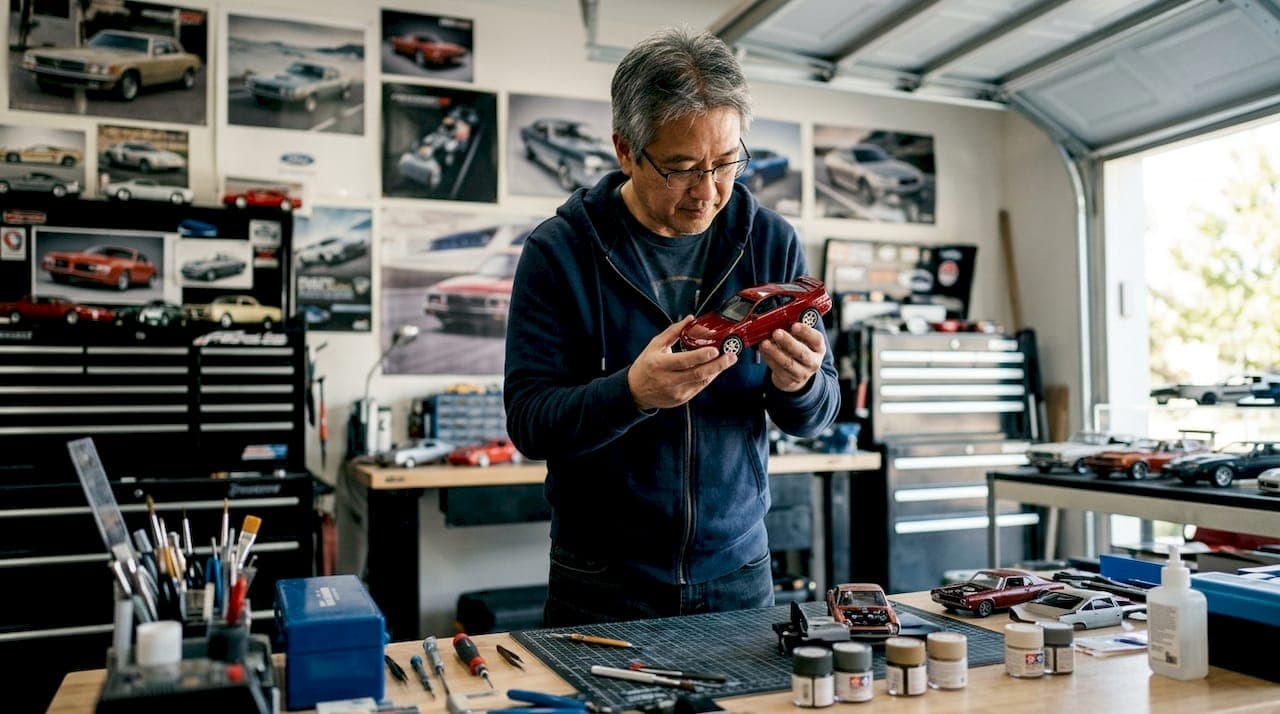
Unique foreign market car models are vehicles produced specifically for one country or region, offering designs, performance specs, or technology that never reach other markets through standard retail channels. The industry term for the most extreme examples is "homologation special," a car built to meet racing or regulatory rules in a specific territory. Models like the Denza Z9 GT, the Mitsubishi Pajero Evolution, and the Geely EX5 represent the full spectrum of this category, from affordable tech-packed EVs to six-figure hypercars. For collectors and enthusiasts, these vehicles represent something genuinely rare: a car your neighbor simply cannot walk into a dealership and buy.
What makes unique foreign market car models worth pursuing?
A foreign market exclusive earns its status through at least one of three factors: limited production, region-specific engineering, or regulatory compliance requirements that restrict global sale. Each factor shapes the car's collectibility differently, and understanding which applies to a specific model determines how hard it will be to own and maintain.
The most prized examples are homologation specials. Manufacturers build these in small numbers to satisfy motorsport governing bodies, then sell them to the public to meet minimum production thresholds. The result is a street car with genuine competition DNA, tuned for a market that may be thousands of miles from where you live.
Craftsmanship also drives exclusivity. The Bovensiepen Zagato is hand-assembled over 250 hours per car, producing 611 hp and 700 Nm of torque from a 3.0L inline six. That assembly time alone separates it from anything produced on a conventional line. True rarity today emerges when enthusiasts co-create one-off vehicles blending engineering precision with bespoke design.
Key traits that define collectible foreign market exclusives:
- Limited production runs below 3,000 units, often far fewer
- Homologation compliance built for motorsport or regional safety rules
- Market-specific engineering such as right-hand drive, unique powertrains, or local emissions tuning
- Bespoke craftsmanship with hand-built components or custom interiors
- Shared mass-market mechanicals that keep long-term maintenance realistic
Pro Tip: Before pursuing any foreign market exclusive, confirm whether the model uses shared mechanical components from a common platform. Cars built on widely available underpinnings are far easier to service a decade after purchase.
Top models worth adding to your list
The range of uncommon vehicle models abroad spans from attainable daily drivers to six-figure collector pieces. Each of the following represents a genuine opportunity for buyers willing to look beyond their local market.
1. Denza Z9 GT
The Denza Z9 GT is a premium grand tourer from BYD's luxury sub-brand, priced at €115,000 in Europe, which is more than three times its Chinese domestic price of approximately $39,300. That price gap reflects both import costs and the brand's positioning strategy for Western buyers. The Z9 GT delivers long-range EV performance in a body that competes visually with established European grand tourers. For buyers in North America or Europe, it represents a genuine alternative to mainstream luxury EVs, with a design language most people on the street will not recognize.
2. Denza Z supercar
The upcoming Denza Z pushes further into hypercar territory, delivering 1,582 bhp with a 0-62 mph time under 2.0 seconds. Those figures place it directly against established European hypercars, at a price point that has not yet been confirmed for Western markets. The Denza Z is a signal that Chinese performance engineering has moved well past the "budget alternative" label. Collectors who secure early examples will own a piece of automotive history from a brand most Western buyers are only beginning to recognize.
3. Mitsubishi Pajero Evolution
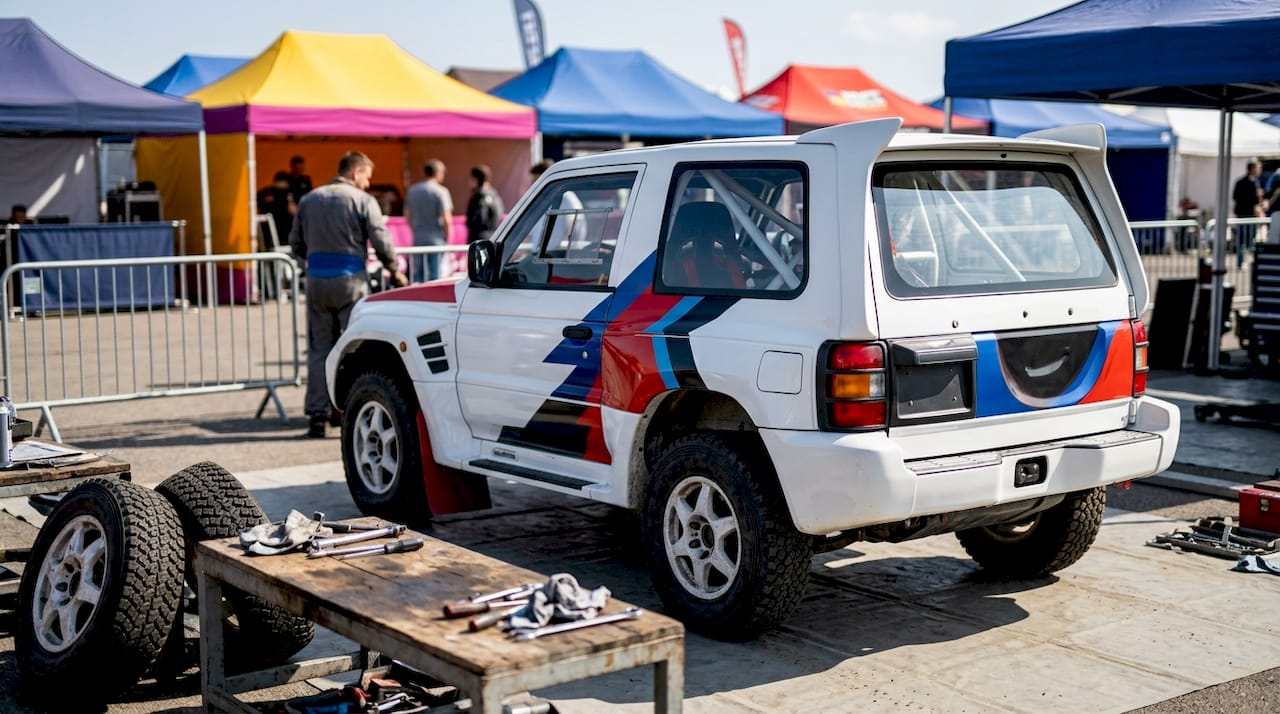
The 1997 Mitsubishi Pajero Evolution is one of the clearest examples of a homologation special in the SUV segment. Fewer than 3,000 units were built in total, with approximately 600 carrying the desirable five-speed manual transmission. That manual figure is the one collectors track obsessively, because it represents the purest driving experience the model offers. The Pajero Evolution was built to meet Dakar Rally regulations, so every road car carries genuine off-road competition engineering. Finding a clean example with original documentation is increasingly difficult, which is exactly what drives values upward.
4. Bovensiepen Zagato
The Bovensiepen Zagato pairs Bavarian engineering with Italian coachbuilding in a combination that has almost no parallel in current production. Each car is hand-assembled over 250 hours, producing 611 hp and 700 Nm of torque. Zagato's design house brings a visual identity that is immediately distinct from anything in standard production. The result is a car that functions as both a driver's machine and a rolling piece of design history. Production numbers are extremely limited, making each example a genuine one-of-a-kind collector piece.
5. Zenvo Aurora
The Zenvo Aurora is a Danish hypercar limited to 100 units worldwide, producing up to 1,850 bhp while deliberately preserving an analogue driving feel alongside modern EV technology. Zenvo has built a dedicated retailer network to support Aurora owners globally, which addresses one of the biggest concerns with exotic foreign market purchases. That support infrastructure is rare among low-volume manufacturers and significantly reduces the ownership risk. The Aurora's Singapore preview signals Zenvo's intent to reach Asian buyers directly, expanding its geographic footprint beyond Europe.
6. De Tomaso Longchamp
The De Tomaso Longchamp is a lesser-known automobile model that automotive historians consistently undervalue. Only 409 units were built between 1972 and 1989, using a Ford Cleveland 351 V8 and shared interior components from Ford's parts bin. That mechanical strategy is the Longchamp's secret advantage: exotic Italian styling on the outside, serviceable American mechanicals underneath. Parts availability for the drivetrain remains strong decades later, which is not something you can say about most Italian exotics of the same era. For buyers who want genuine rarity without the maintenance anxiety of a fully bespoke exotic, the Longchamp is a compelling case.
7. Geely EX5
The Geely EX5 sits at the opposite end of the price spectrum, starting at approximately $15,300 and offering features like massaging seats that most Western buyers associate with cars costing three times as much. It is sold in 35 countries, reflecting an aggressive regional rollout strategy that few Chinese brands have matched. The EX5 is not a collector's car, but it is a strong example of foreign car trends that Western buyers are missing entirely. For enthusiasts curious about the direction of global automotive design, it is one of the most instructive purchases available today.
Pro Tip: The Geely EX5's wide market availability makes it one of the easiest foreign market EVs to import legally. Always verify software update support in your specific country before purchase, since regional firmware gaps can limit features.
How regulations and regional strategies shape availability
Emerging brands use phased regional launches to manage regulatory compliance, not just marketing budgets. The Geely EX5's 35-country rollout is a deliberate strategy to build service infrastructure before entering more complex regulatory markets like the United States. That approach protects the brand but creates gaps for enthusiasts who want to import ahead of the official launch.
Homologation specials like the Pajero Evolution present a different set of challenges. Original export certificates and compliance documentation are required for legal registration in most Western countries. Without those documents, a car can be seized at the border or permanently barred from road use. Buyers who skip documentation verification to save time almost always pay a far higher price later.
EV-specific risks add another layer of complexity. Regional firmware and software support can expire or become unavailable when a manufacturer has not established a local service network. Before importing any foreign market EV, verify that over-the-air update support extends to your country.
Importing a rare foreign market car without verifying its documentation history is the single most expensive mistake a collector can make. The car's physical condition matters far less than its paper trail. A perfect example with missing export certificates is worth a fraction of a documented car in average condition.
The most practical path through these challenges is working with a specialist who understands both the source country's export process and your home country's import regulations. That expertise is not common, and it is worth paying for.
Choosing the right model for your collection
Matching a foreign market exclusive to your actual ownership situation requires honest answers to three questions: How rare do you need it to be? How far can you travel for service? And how long do you plan to keep it?
The table below maps buyer priorities to model categories.
| Buyer priority | Best model category | Key consideration |
|---|---|---|
| Maximum rarity | Homologation specials (Pajero Evo, Bovensiepen Zagato) | Documentation and parts sourcing are critical |
| Performance per dollar | Chinese performance EVs (Denza Z9 GT, Denza Z) | Software support must be verified by region |
| Long-term serviceability | Shared-platform exotics (De Tomaso Longchamp) | Mass-market mechanicals simplify maintenance |
| Entry-level exclusivity | Affordable foreign EVs (Geely EX5) | Wide availability reduces import complexity |
| Hypercar investment | Limited hypercars (Zenvo Aurora) | Retailer network coverage is non-negotiable |
Buyers who prioritize rare luxury inventory should focus on models with documented production numbers and verifiable chassis histories. Exclusivity without provenance is a liability, not an asset.
For buyers weighing cost against collectibility, pre-owned luxury often delivers better value than a new foreign market import, particularly when the domestic market equivalent carries a significant price premium.
Key Takeaways
The most collectible unique foreign market car models combine documented rarity, serviceable mechanicals, and verifiable import compliance records.
| Point | Details |
|---|---|
| Documentation is non-negotiable | Original export certificates determine legal registration and long-term resale value. |
| Shared mechanicals reduce risk | Models like the De Tomaso Longchamp use common parts, making long-term ownership practical. |
| Price gaps signal opportunity | The Denza Z9 GT costs over 3x more in Europe than China, reflecting real import and positioning costs. |
| Production numbers drive value | The Pajero Evolution's ~600 manual examples show how sub-variants create collector premiums. |
| EV software support is a hidden risk | Regional firmware gaps can limit features on imported EVs without a local service network. |
Why these cars still captivate me after years in the market
I have spent years watching collectors chase the obvious trophies: the Ferrari, the Porsche, the German luxury sedan. What consistently surprises me is how many of the most rewarding finds come from markets most buyers never look at.
The Mitsubishi Pajero Evolution is a perfect example. On paper, it is a mid-1990s Japanese SUV. In reality, it is a Dakar-bred machine with fewer than 600 manual examples in existence. The buyers who understood that a decade ago are sitting on significant gains today, not because they were lucky, but because they did their homework on a market most enthusiasts ignored.
The current wave of Chinese performance engineering is the same opportunity. The Denza Z's 1,582 bhp figure would have been headline news from any European manufacturer. Because it carries a Chinese badge, many Western collectors are still dismissing it. That dismissal is a window, and windows close.
My honest advice: buy the car that makes you uncomfortable to explain at a dinner party. The ones that require a story are almost always the ones worth owning.
— Allen
Rare vehicles, expert sourcing at Autovendorsfl
Autovendorsfl at Auto Vendors Inc in Fort Lauderdale specializes in curating premium vehicles for buyers who know exactly what they want and will not settle for what is simply available. The team's hands-on sourcing approach means you are not browsing a generic lot.
Whether you are drawn to the understated authority of a Mercedes-Benz S-Class or the bold American character of a Cadillac, Autovendorsfl brings the same standard of craftsmanship and personalized attention to every vehicle in inventory. The team builds lasting relationships with buyers, not just transactions. If you are ready to find a vehicle that reflects your standards, Autovendorsfl is the place to start that conversation.
FAQ
What are unique foreign market car models?
Unique foreign market car models are vehicles produced exclusively for specific countries or regions, featuring designs, powertrains, or technology not available through standard retail channels elsewhere. The most extreme examples are homologation specials, built to meet motorsport or regulatory requirements in a specific territory.
How do I legally import a foreign market car?
Legal import requires original export certificates from the source country, compliance documentation, and verification that the vehicle meets your home country's safety and emissions standards. Missing paperwork is the most common reason imports fail at customs.
Are Chinese foreign market cars worth buying in 2026?
Chinese foreign market cars like the Denza Z9 GT and Geely EX5 offer genuine performance and technology at prices well below European equivalents. The primary risk is software and firmware support, which buyers must verify before importing any EV outside its home market.
Why do homologation specials hold their value?
Homologation specials hold value because production numbers are fixed and documented. The Mitsubishi Pajero Evolution's approximately 600 manual examples cannot increase, so demand from collectors consistently outpaces supply over time.
What is the safest type of foreign market car to import?
Models built on shared mass-market platforms, like the De Tomaso Longchamp with its Ford V8 drivetrain, are the safest to import from a maintenance perspective. Common mechanical components mean parts remain available long after the exotic coachwork becomes a museum piece.