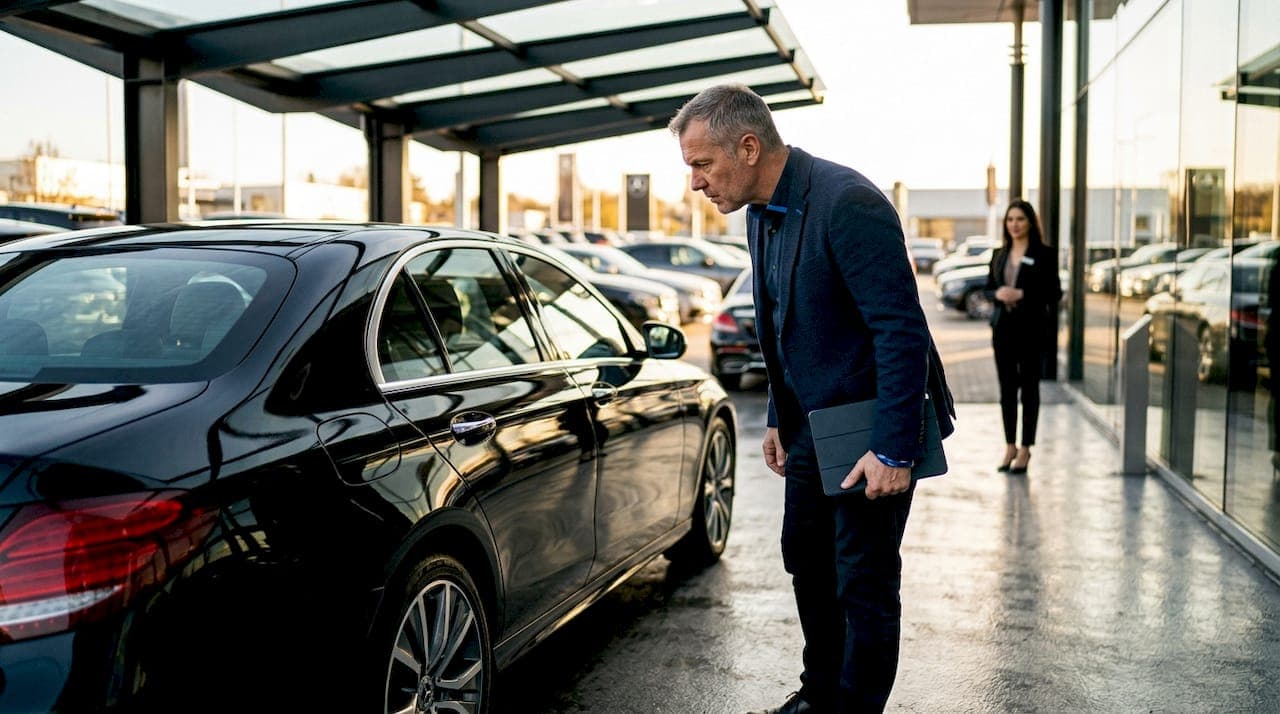
Luxury cars hold value because they combine brand reputation, mechanical reliability, limited production, and sustained buyer demand in ways that standard vehicles simply cannot match. The average new vehicle loses 41.8%–50% of its original value within five years. High-performing luxury models, by contrast, retain 60%–70% or more over that same period. That gap is not accidental. It reflects a set of structural advantages built into how luxury vehicles are designed, produced, and perceived in the used market. Understanding those advantages helps you make a smarter purchase decision from the start.
Why luxury cars hold value better than standard vehicles
Brand reputation is the single most powerful driver of luxury car resale value. Buyers in the used market pay a premium for names they trust, and that trust is built on years of consistent quality, low ownership costs, and strong ownership satisfaction scores. Lexus is the clearest example: the brand averages 61.6% value retention after five years, compared to BMW at 50.1% over the same period. That 11-point gap translates directly into thousands of dollars at trade-in or resale time.
Reliability also reduces the total cost of ownership, which keeps buyer demand high. When a used car carries a reputation for low repair frequency, more buyers compete for it. That competition supports the asking price. The Lexus RC F retains 72.6% of its value after five years, and the Lexus RC 300 reaches 73.8%. Those figures reflect a brand that has consistently delivered on its reliability promise.
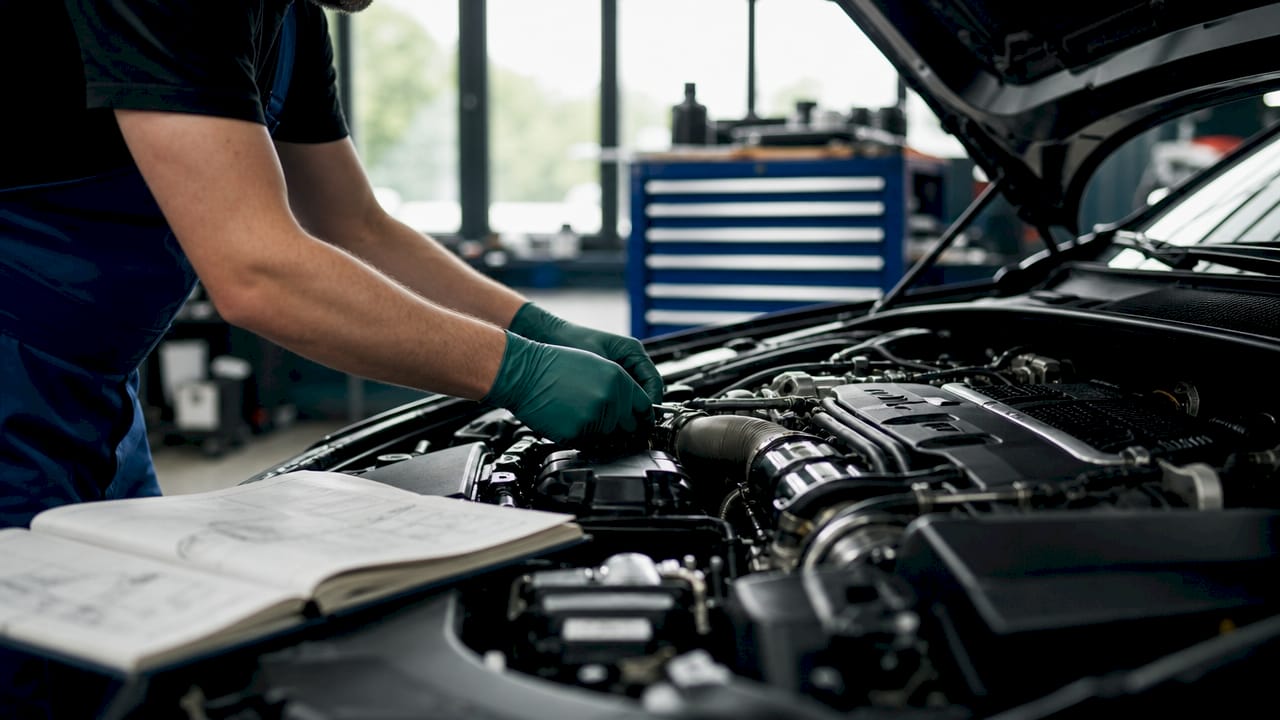
High maintenance costs work in the opposite direction. Oversupply and expensive repairs can sharply reduce resale values even for prestigious brands. This is why two vehicles from the same price tier can depreciate at very different rates. Brand prestige alone does not protect value. Reliability and reasonable ownership costs do.
Key brand-level factors that drive high resale value:
- Consistent quality control across model years, which reduces buyer uncertainty in the used market
- Lower average repair frequency, which keeps total ownership costs predictable
- Strong owner loyalty, which sustains demand for certified pre-owned inventory
- Stable model design cycles, which prevent rapid visual obsolescence
Pro Tip: Before buying any luxury vehicle, check its five-year retention rate by brand. A 10-point difference in retention can mean $8,000–$12,000 more at resale on a $60,000 vehicle.
How scarcity and production volume affect resale prices
Limited production is one of the most underappreciated forces in luxury car value retention. When a manufacturer produces fewer units of a model, the used market supply stays thin. Thin supply with steady demand produces price stability or outright appreciation. Limited-run Ferraris and collector models can actually appreciate in value a few years after purchase. That behavior is the opposite of what buyers expect from a depreciating asset.
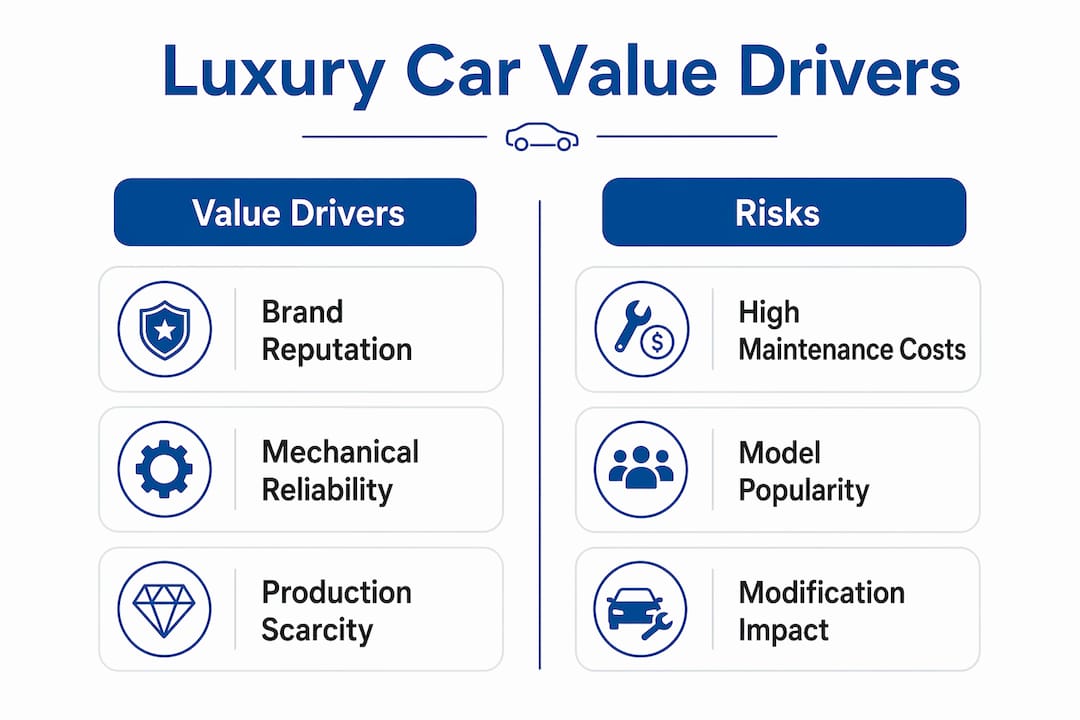
The distinction between mass-produced luxury and ultra-limited editions matters here. A luxury sedan produced in high volumes follows a more conventional depreciation curve. An ultra-limited edition from the same brand, produced in hundreds rather than thousands of units, behaves more like a collectible. Ultra-luxury vehicles are increasingly treated as alternative assets within investment portfolios, with value rules that differ sharply from typical depreciation scenarios.
Four dynamics explain how scarcity drives value in the used luxury market:
- Low used inventory forces buyers to compete, which supports or raises asking prices
- Collector demand from enthusiasts who missed the original sale window creates a secondary premium
- Brand-controlled supply through limited production announcements signals exclusivity before a car even reaches the road
- Originality requirements mean that unmodified, well-documented examples command the highest prices
"The rarest luxury vehicles do not depreciate. They appreciate. Scarcity converts a car from a transportation asset into a store of value."
Condition and originality are non-negotiable in this segment. A limited-edition vehicle with modified components or incomplete service records loses its collector premium almost entirely. The financial logic of scarcity only holds when the car is preserved exactly as delivered.
Why body style and model demand shape depreciation rates
Body style affects luxury car depreciation in ways that most buyers overlook. The current production environment favors SUVs heavily. Automakers have shifted manufacturing capacity toward high-volume crossovers and SUVs to meet consumer demand. That shift has created an unintended consequence: luxury sedans have become relatively scarce in the new car market, and their secondary market prices have stabilized as a result.
Sedans now often retain value better than luxury SUVs in certain segments, precisely because fewer new sedans are being built. Supply restriction through production decisions creates the same scarcity effect seen in limited-edition models. Buyers who want a specific luxury sedan in the used market find fewer options, which keeps prices firm.
Versatility also plays a role. Vehicles that serve multiple use cases, such as a luxury SUV that functions as both a daily driver and a family hauler, tend to attract a broader pool of used buyers. A wider buyer pool means faster sales and stronger pricing. Models with narrow appeal, whether due to body style, powertrain, or feature set, face softer demand and faster price erosion.
| Body style | Value retention driver | Key risk factor |
|---|---|---|
| Luxury sedan | Production scarcity from SUV shift | Perceived as less practical by some buyers |
| Luxury SUV | Broad buyer appeal and utility | High new supply can soften used prices |
| Ultra-limited coupe | Collector demand and rarity | Condition and originality must be perfect |
| Performance variant | Enthusiast demand and brand cachet | High mileage examples depreciate sharply |
Practical tips for buyers who want to maximize resale value
The 3–5 year age window is the most financially efficient entry point for used luxury car buyers. Vehicles in this range have absorbed the steepest portion of their initial depreciation, typically 40%–50% of original value, while still offering a near-new ownership experience. Buying at this stage means you pay significantly less than the original buyer while retaining most of the remaining value. It is the depreciation sweet spot that experienced buyers target deliberately.
Maintenance records are the second most important factor after brand selection. Resale value depends heavily on documented service history, condition retention, and the absence of deferred repairs. A luxury vehicle with a complete dealer service record commands a measurably higher price than an identical model with gaps in its history. Keep every receipt, every inspection report, and every service record from day one.
Pro Tip: Use a pre-owned inspection checklist before purchasing any used luxury vehicle. A thorough inspection protects your investment and gives you negotiating leverage on price.
Additional steps to protect long-term resale value:
- Choose popular colors and configurations. Unusual color combinations reduce the buyer pool at resale time.
- Avoid excessive modifications. Aftermarket changes reduce value in most segments, especially in the collector tier.
- Service at authorized dealers. Dealer stamps in the service book carry more weight with future buyers than independent shop records.
- Monitor mileage relative to age. High mileage for the model year accelerates depreciation regardless of brand.
How luxury cars compare to non-luxury vehicles in depreciation
The financial gap between luxury and non-luxury depreciation is substantial. The average vehicle retains 44.7% of its value after five years. Lexus, the top-performing luxury brand in recent resale studies, retains 61.6% over the same period. That 16.9-point difference means a buyer who paid $60,000 for a Lexus recovers roughly $10,000 more at resale than a buyer who paid the same price for an average vehicle.
Non-luxury vehicles depreciate faster for several structural reasons. They are produced in higher volumes, which keeps used market supply abundant. They carry less brand-driven demand in the secondary market. Repair costs relative to vehicle value are often higher on a percentage basis, which discourages buyers from paying premium used prices. The combination of high supply and lower perceived quality creates a faster price decline.
Total cost of ownership shifts the comparison further in favor of luxury vehicles. When you factor in the higher resale recovery, the net cost of owning a well-chosen luxury car over five years can be competitive with, or even lower than, owning a non-luxury vehicle that depreciates faster. The purchase price is only one part of the equation. Resale recovery is the other.
Key Takeaways
Luxury cars retain value because brand reputation, reliability, production scarcity, and sustained buyer demand work together to slow depreciation well below the market average.
| Point | Details |
|---|---|
| Brand reliability drives resale | Lexus retains 61.6% of value after five years, compared to the market average of 44.7%. |
| Scarcity creates appreciation | Limited-production models can appreciate in value, behaving more like collectibles than depreciating assets. |
| Body style affects retention | Luxury sedans now often outperform SUVs in value retention due to production shifts favoring SUVs. |
| Buy at 3–5 years for best value | This window captures post-depreciation savings while preserving most of the remaining resale value. |
| Documentation protects your investment | Complete service records and original condition are the two strongest non-brand factors in resale pricing. |
What I've learned about luxury car value after years in this market
The buyers who get the best outcomes are not the ones who spend the most. They are the ones who understand what actually drives resale value before they sign anything. I have seen buyers walk away from a prestigious badge because the maintenance costs were quietly eroding their investment, and I have seen others buy a less glamorous luxury model that held its value far better over five years.
The most overlooked factor is documentation. Buyers consistently underestimate how much a complete service history is worth at resale time. A well-maintained vehicle with every dealer stamp in the book can command a premium that more than covers the cost of those services. That is not a small detail. It is a financial strategy.
I also think the sedan versus SUV story is one of the most interesting shifts in the current market. Production economics have accidentally made certain luxury sedans scarce, and scarcity is doing exactly what it always does. It holds prices up. If you are looking at a luxury sedan right now and wondering whether the market has moved on, the resale data says otherwise.
The buyers who treat a luxury car purchase as a long-term financial decision, not just a lifestyle choice, consistently come out ahead. Resale value is not a bonus. It is part of the total cost calculation from day one.
— Allen
Autovendorsfl's expertise in luxury vehicle value
Choosing the right luxury vehicle is easier when you have a team that understands how value retention actually works in practice. Autovendorsfl specializes in curating premium vehicles in Fort Lauderdale, with deep expertise in the factors that separate a strong long-term investment from a costly mistake.
Whether you are trading in a current vehicle or searching for your next luxury car, Autovendorsfl's personalized approach covers trade-in appraisal with full attention to brand, condition, and market demand. The team's hands-on vehicle finding assistance means you get access to models with proven retention records, not just popular names. Visit Autovendorsfl to connect with a specialist who can match you with a vehicle built to hold its value.
FAQ
Why do luxury cars depreciate less than regular cars?
Luxury cars depreciate less because they combine strong brand demand, lower relative supply in the used market, and higher buyer loyalty. Brands like Lexus retain over 61% of their value after five years, compared to the 44.7% average for standard vehicles.
Do luxury cars ever appreciate in value?
Yes. Limited-production models from brands with strong collector followings can appreciate after purchase. Ferraris and other ultra-limited editions behave more like alternative assets than standard depreciating vehicles when condition and originality are maintained.
What is the best age to buy a used luxury car for value retention?
The 3–5 year age range is the most financially efficient window. Vehicles in this range have absorbed the steepest initial depreciation while still offering a near-new experience and strong remaining resale value.
Which luxury brands hold their value best?
Lexus consistently leads luxury resale rankings, with a five-year average retention rate of 61.6% and individual models like the RC 300 reaching 73.8%. Brand reliability and low ownership costs are the primary reasons.
Does body style affect luxury car resale value?
Body style has a measurable impact. Luxury sedans currently outperform many SUVs in value retention because production has shifted heavily toward SUVs, creating relative sedan scarcity that supports used market prices.