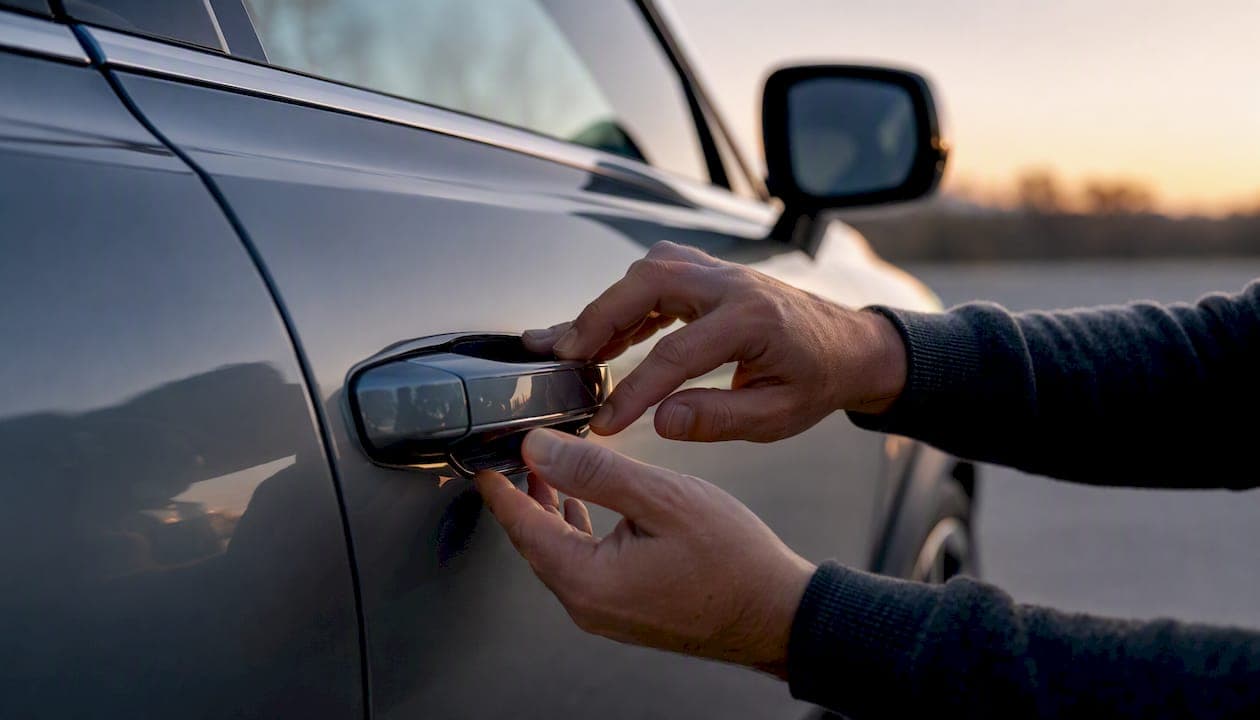
An undervalued premium used vehicle is a well-priced, high-quality car showing a measurable gap between its asking price and local market comps, a clean title, and documented service history. Spotting one takes research, not luck. According to Consumer Reports, targeted seller questions combined with a vehicle-history report and a thorough inspection substantially reduce the risk of buying a problematic car.
When to pursue the car yourself vs. use a personalized finder:
- DIY is reasonable when the listing price is clearly below three or more local comps, the VIN history is clean, service records are complete, and you have time to schedule an independent inspection.
- Call a personalized finder when the provenance is complex, deferred maintenance risk is high, specialist components need diagnostic testing, or your schedule won't allow a proper on-site inspection.
- Walk away immediately when the seller resists a pre-purchase inspection (PPI), the title shows a salvage or flood brand, or the VIN history shows odometer discrepancies.
Key Takeaways
Spotting a well-priced premium used vehicle requires a clean VIN history, documented service records, and a specialist PPI before any offer is made.
| Point | Details |
|---|---|
| Run the VIN check first | Carfax or equivalent catches title brands, odometer issues, and accident records before you invest time in a visit. |
| Budget for the PPI | Luxury specialist inspections run $300–$1,000 and routinely prevent far larger post-purchase repair bills. |
| Set a post-purchase reserve | Plan $1,000–$3,000 for deferred maintenance and consumables unless the PPI clears all major systems. |
| Walk away on hard red flags | Salvage title, frame repairs, flood damage, or a seller who refuses a PPI are non-negotiable reasons to pass. |
| Autovendorsfl handles the full process | From search brief through delivery, Autovendorsfl coordinates vetting, specialist inspection, and negotiation for premium buyers. |
Table of Contents
- What signals tell you a luxury used car is undervalued?
- How to research a listing before you visit or assign a finder
- What to check during the on-site inspection and test drive
- When should you order a pre-purchase inspection?
- How to set a target offer and negotiate effectively
- How a personalized vehicle-finding service works for you
- What does the full sourcing timeline and budget look like?
- Why the concierge path makes sense for most premium buyers
- Autovendorsfl finds and vets premium vehicles for you
- Sources
What signals tell you a luxury used car is undervalued?
Knowing how to spot undervalued collector vehicles means filtering dozens of listings down to the two or three worth your time. These eight signals do that quickly:
- Price gap vs. market comps: The asking price sits noticeably below three or more comparable local listings after adjusting for mileage and options.
- Clean title and VIN history: No salvage, flood, or odometer brands on a Carfax or equivalent vehicle-history report.
- Consistent service records: Receipts or dealer stamps covering major intervals, with no unexplained gaps longer than 18 months.
- Age and mileage sweet spot: Many premium models depreciate steeply in years three through five, creating the best price-to-condition ratio before deferred maintenance accumulates.
- Desirable factory options: Original packages (sport packages, premium audio, adaptive suspension) that add resale value but aren't always priced in by private sellers. A limited-edition or factory-option vehicle can carry meaningful value that a generic listing price ignores.
- Condition signals: Matching tire brands and even wear, consistent paint color across panels, no uneven panel gaps suggesting prior bodywork.
- Reasonable ownership chain: Two or fewer owners in five or more years; no open recalls per NHTSA.
- Manageable ownership costs: Insurance, likely consumables, and any flagged deferred maintenance don't erase the price advantage.
Loosening inventory in premium segments during 2026 has created genuine buying windows, but disciplined vetting still separates a real deal from a costly mistake.
Pro Tip: Run the NHTSA recall lookup before you visit. An open recall on a safety-critical system (brakes, airbags, steering) is a negotiating point or a reason to pass, depending on whether the seller will complete it before transfer.
How to research a listing before you visit or assign a finder
Remote research protects your time. Complete these steps before scheduling anything in person:
- Run a VIN check on Carfax or an equivalent vehicle-history service. Flag any title brands, accident records, or odometer discrepancies immediately.
- Check NHTSA for open recalls and confirm completion status on the manufacturer's owner portal.
- Build three to five local comps using multiple price guides and marketplace searches. Calculate a realistic target offer with a negotiating margin built in.
- Send a standardized seller questionnaire by email or text: annual mileage, number of owners, reason for sale, garage or outdoor storage, and whether all service was performed at a dealer or independent shop. Consumer Reports identifies service records and history reports as key steps to lower long-term ownership risk.
- Request high-resolution photos of the engine bay, undercarriage, each wheel, VIN plate, service receipts, and the dashboard powered on. A short video of a cold start and idle reveals a lot that photos can't.
- Flag specialist-system concerns early. Air suspension, hybrid high-voltage systems, and advanced electronics warrant a specialist PPI rather than a general mechanic. Identify these before you commit to an inspection trip.
What to check during the on-site inspection and test drive
A physical inspection is where listings become real. Work through this checklist methodically:
- Exterior: Measure panel gaps at each door, hood, and trunk. Inconsistent gaps signal prior bodywork. A paint thickness gauge catches hidden repairs that fresh paint conceals. Check for rust at wheel arches, door sills, and the undercarriage. Confirm all four tires are the same brand and show even wear.
- Interior: Smell for mildew or smoke before you look at anything else. Check seat bolster wear against the odometer reading. Confirm all keys and fobs are present, every switch and screen functions, and sunroof drains are clear.
- Engine bay and fluids: Pull the oil dipstick. Dark, gritty oil or a milky texture suggests neglect or a head gasket issue. Check coolant clarity, battery terminals for corrosion, and hose connections for cracks or weeping.
- Undercarriage: Look for uneven ride height (a sign of failing air springs), fluid leaks at the differential or transmission, and any evidence of frame or subframe repair.
- Test drive sequence: Start cold and listen for the first 60 seconds. Drive through all gear ranges and note any hesitation or clunk. Test brakes at moderate speed for pull or vibration. Check steering for play at highway speed.
A 66-point inspection checklist that includes VIN verification and OBD-II scanning catches issues a visual walk-around misses and creates a documented record for negotiation. Photograph every concern and capture short video of anything that moves or makes noise.
When should you order a pre-purchase inspection?
Order a PPI on any premium vehicle where the purchase price, specialist components, or incomplete service history creates meaningful financial risk. The inspection guide at Autovendorsfl's blog explains why specialist PPIs prevent costly ownership outcomes that general inspections routinely miss.
What to look for in an inspector:
- Brand-specific diagnostic experience (not just general OBD-II scanning)
- Capability to test air suspension, hybrid high-voltage systems, and advanced driver-assistance modules
- Written report with photos and itemized repair-cost estimates
Prioritized checklist to give your mechanic:
- Compression or leakdown test on the engine
- Air suspension ride-height and leak test
- Transmission fluid condition and diagnostic scan for fault codes
- Full electrical module scan for stored faults
- Body structural inspection and paint-thickness readings at every panel
Pro Tip: If buying from a dealer, request a short hold in writing while the PPI is completed. A seller who refuses a reasonable inspection window is telling you something important.
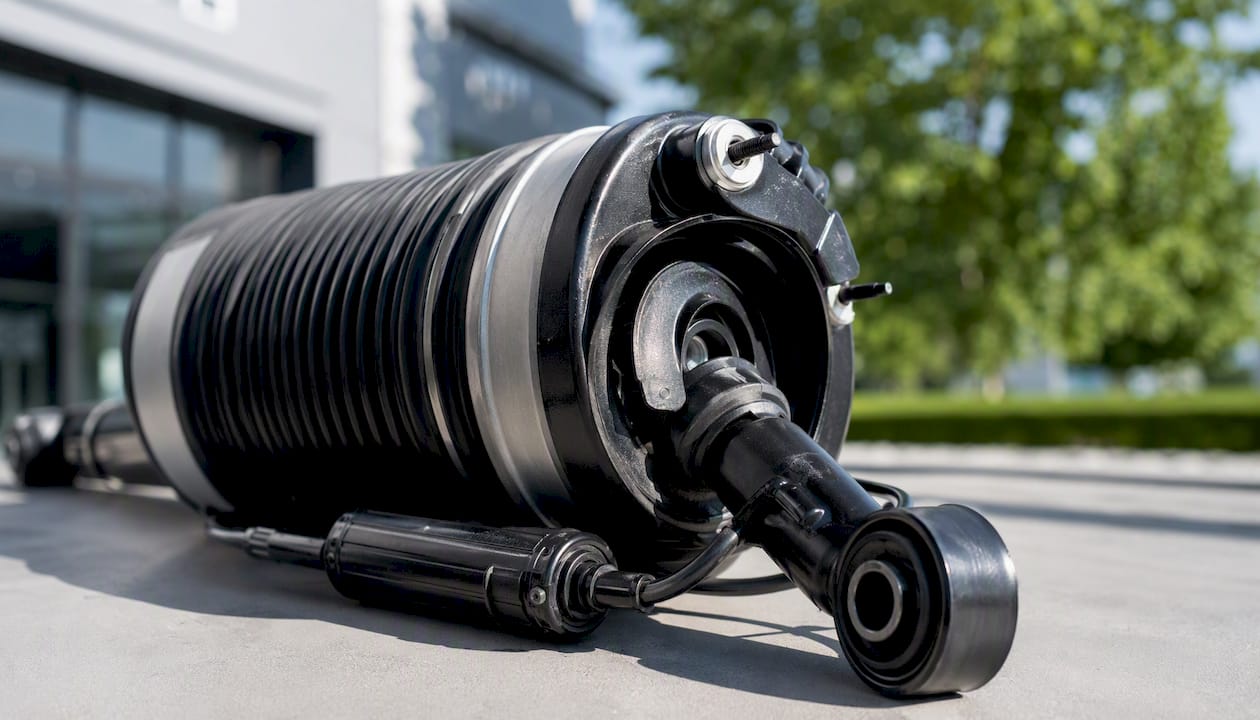
Specialist components — air suspension struts, carbon-ceramic brakes, adaptive headlights — can cost thousands per corner to replace. Luxury specialist PPIs cost more than standard inspections but routinely save buyers from five-figure surprises.
How to set a target offer and negotiate effectively
Valuation is arithmetic, not guesswork. Follow these steps:
- Gather three to five comps adjusted for mileage, region, and factory options.
- Add the PPI repair estimate to the asking price. That total is your true cost baseline.
- Set a target offer with a 5–8% safety margin below your baseline.
- Lead with the summary repair cost in negotiation, not a line-by-line breakdown. Hand the seller the written PPI report and let the numbers speak.
- Decide your walk-away triggers in advance: salvage title, structural or frame repairs, flood damage, or a VIN history that contradicts the seller's account.
Conditional offer options:
- Repair escrow: Seller completes agreed repairs before transfer, or funds are held in escrow until completion.
- Price reduction: Buyer accepts the car as-is at a price that reflects documented repair costs.
Missing service records reduce value and increase risk. Pre-owned luxury evaluation guides consistently note that gaps in documentation give buyers legitimate grounds to negotiate downward. Think in five-year ownership windows: a lower purchase price that triggers higher maintenance often costs more over time than a slightly higher, well-documented example.
How a personalized vehicle-finding service works for you
A concierge finder handles the process end to end. Here's the typical workflow:
- Search brief: You define budget, model preferences, must-have options, and timeline.
- Remote vetting: The finder runs VIN and history checks, builds comps, and sends a standardized seller questionnaire.
- On-site inspection or PPI: A vetted technician inspects the vehicle and delivers a written report.
- Negotiation: The finder presents the PPI findings and negotiates on your behalf.
- Transfer and delivery: Documentation is verified, and the vehicle is delivered or made ready for pickup.
What to ask any finder before you engage:
- What is their sourcing network reach and typical inventory access?
- What inspection standards do they apply, and can they share a sample mechanic report?
- How is their fee structured, and what does it cover?
Autovendorsfl brings local market access, brand expertise, relationships with vetted technicians, and delegated negotiation to each search. For buyers with time constraints, complex provenance questions, or high-risk specialist systems to evaluate, that combination reduces both transaction risk and elapsed time.
What does the full sourcing timeline and budget look like?
Planning ahead prevents surprises. Here's a realistic picture:
- Remote research: 1–3 days for VIN checks, comps, and seller questionnaire responses.
- On-site inspection and PPI: 1–7 days depending on scheduling and inspector availability.
- Negotiation and paperwork: 1–7 days.
- Transfer and delivery: 3–14 days.
Budget line items to plan for:
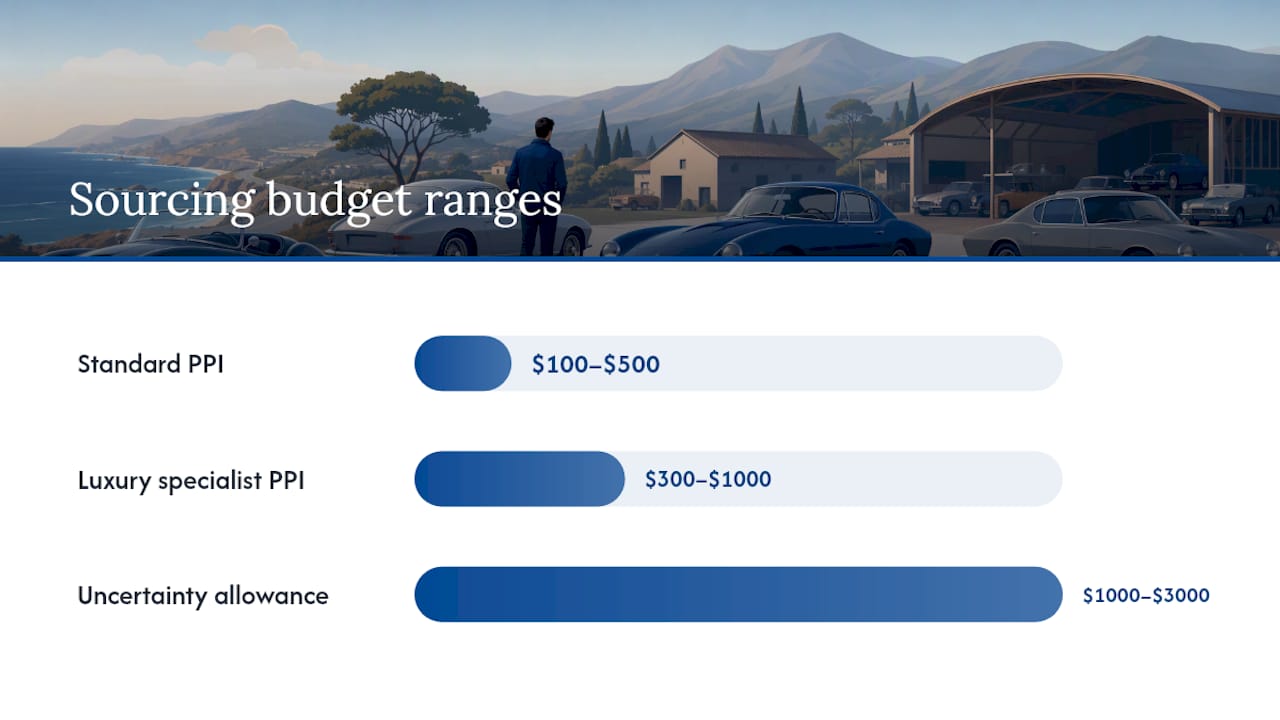
- Standard PPI: $100–$500
- Luxury specialist PPI: $300–$1,000
- Post-purchase uncertainty allowance for deferred maintenance and consumables: $1,000–$3,000 for most premium models unless the PPI clears all major systems
- Transport or delivery fees if the vehicle is sourced remotely
Specialist luxury components carry outsized replacement costs, so the uncertainty allowance is not optional padding. It's a financial buffer that protects the value of the deal you negotiated.
Expedited sourcing (priority search, pre-purchase hold coordination, dealer liaison) may carry additional fees. Confirm scope before you start.
Why the concierge path makes sense for most premium buyers
The DIY approach works when a buyer has time, technical confidence, and a reliable independent mechanic on call. Most buyers shopping for a premium used vehicle have one of those three, not all three.
Brand expertise changes the risk profile meaningfully. A finder who has evaluated dozens of examples of a specific model knows which fault codes are cosmetic and which predict a $6,000 repair. That pattern recognition is hard to replicate from a checklist alone. Vehicle-history reports, written PPI reports, and documented service records are the decision anchors that make the process defensible, not just intuitive. The FTC Buyers Guide, required at licensed dealerships, adds another layer of disclosure that private transactions simply don't provide.
The concierge path isn't about handing over control. It's about applying the right expertise at each step so that the final decision, which is always yours, is made on solid ground.
Autovendorsfl finds and vets premium vehicles for you
Autovendorsfl's personalized vehicle-finding service covers the full process: search brief, VIN and history vetting, specialist PPI coordination, negotiation, and delivery. Before you reach out, prepare your budget range, preferred makes and models, non-negotiable features, and your timeline.
The initial consultation is where the search brief gets built. Autovendorsfl's team uses local market access and established technician relationships to source well-priced premium vehicles that match your criteria, not just whatever is sitting on a lot. Once a candidate clears vetting and inspection, you review the written report and decide. Start your vehicle search inquiry today and expect a response that outlines next steps, sourcing scope, and what the service covers.
Sources
Use these resources to run the checks described throughout this guide:
- How to inspect a used car
- What to consider before taking that 'good deal' on a used luxury car
- Used Car Inspection Checklist | Dr. Vin
- Buying a Used Luxury Car — What Dealers Won't Tell… | CarCheckerVIN