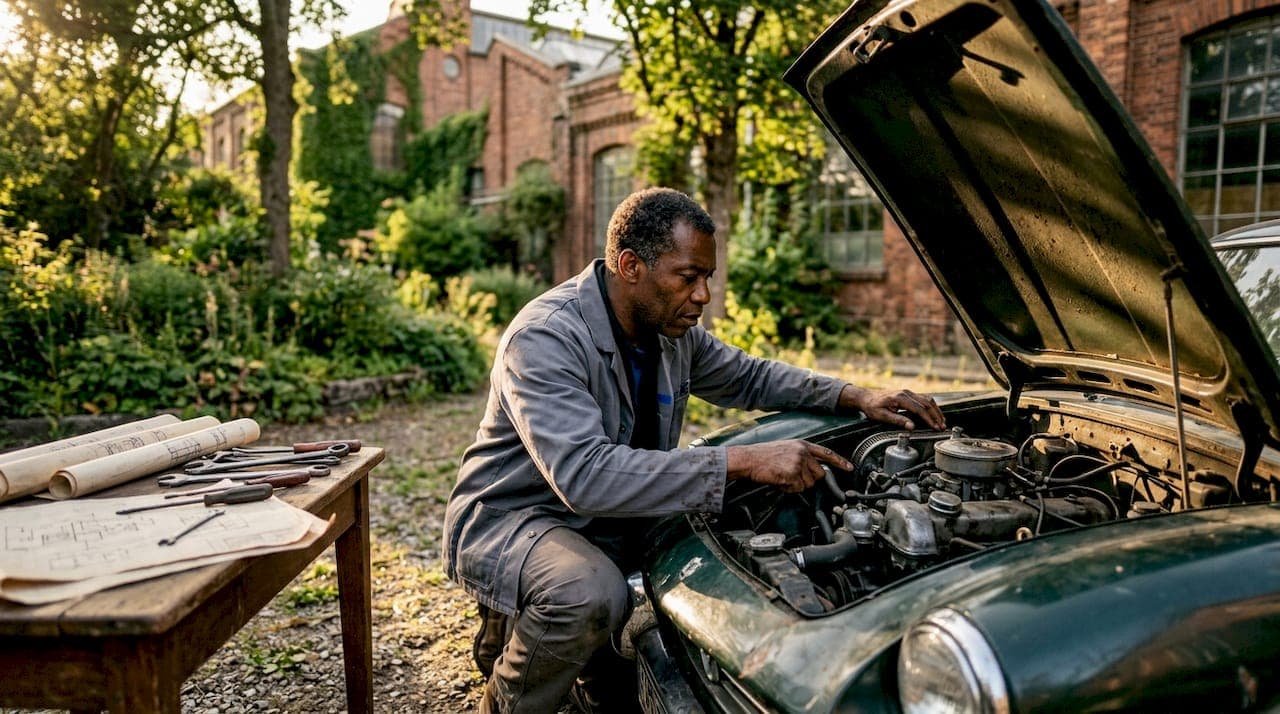
Factory test cars are defined as purpose-built development vehicles that manufacturers create to validate engineering, safety, and performance before production begins. These vehicles were never meant for public sale, yet the rare survivors have become some of the most sought-after collectibles in the automotive world. Understanding why factory test cars become collectible requires looking at three converging forces: extreme rarity, verified provenance, and the irreplaceable stories these cars carry. Collectors who grasp these forces gain a real advantage when evaluating or acquiring a prototype vehicle.
Why factory test cars become collectible: rarity and survival
Factory test cars are rare because most of them are destroyed. Manufacturers routinely crush prototypes at the end of their testing lifecycle to prevent liability exposure and protect proprietary engineering. A 2004 Ford GT prototype survived only because of complex negotiation, making it an extraordinary exception to standard manufacturer policy. That survival alone elevated its status before anyone even examined its mechanical history.
The vehicles that do survive often carry legal VINs obtained through regulatory exceptions, which is itself a rare achievement. Production vehicles roll off assembly lines by the thousands. A factory test car, by contrast, may exist as a single unit or one of a handful. That numerical reality is the foundation of collectibility.
Several factors separate test cars from production models in ways collectors find significant:
- Non-standard internal components: Test cars frequently use prototype engines, transmissions, and suspension setups that never reached the showroom floor.
- Unique serial numbers: A 1966 Porsche 911 S prototype carries engine number 900 054, drawn from a batch of just 100 prototype engines built for internal testing.
- Accumulated development mileage: The Bugatti Veyron pre-series 2.1 prototype logged 70,800 km during active testing before restoration. That mileage represents real engineering history, not wear.
- Regulatory exceptions for titling: Surviving test cars with clean titles required manufacturer approval and government compliance, adding another layer of documented legitimacy.
Pro Tip: When evaluating a claimed test car, request the VIN decode and cross-reference it against the manufacturer's internal prototype numbering conventions. A genuine test VIN often falls outside the standard production sequence.
How does documentation drive the value of factory test cars?
Provenance is the single most powerful value driver for collectible test vehicles. A factory memo, a shipping invoice to a proving ground, or an original build sheet can outweigh cosmetic condition in determining what a car is worth. The collector market now prioritizes documentation authenticity alongside craftsmanship, making factory certification nearly as valuable as the car itself.
Expert John Lloyd, cited in collector research, frames this clearly:
"Institutional authentication transfers the risk of verification from the buyer to the seller. When a manufacturer's heritage department confirms a car's prototype status, the buyer is purchasing a verified artifact, not a claim."
The practical implication is significant. A test car with incomplete paperwork may sell at a fraction of the value of an identical car with a full factory paper trail. Collectors who understand luxury car valuation recognize that documentation functions like title insurance. It does not just confirm what you have. It protects what you paid.
The documentation hierarchy for test cars works in this order:
- Manufacturer heritage department certification: The gold standard. Written confirmation from the brand's own archivists that the car served as a development prototype.
- Factory build sheets and internal memos: Original paperwork generated during the car's testing program, including engineering sign-offs and test results.
- Shipping and logistics records: Invoices or manifests showing the car traveled to specific proving grounds or test facilities.
- Sequential numbering evidence: Records confirming the car's position within a numbered prototype batch, such as "2 of 2" or "unit 054 of 100."
- Photographic and film records: Factory photos or test footage showing the specific vehicle in active development use.
Each layer of documentation reduces buyer risk and increases market demand. Restoration quality cannot replace lost history. A pre-owned luxury car inspection that skips documentation review is incomplete for any prototype vehicle.
What are the most iconic factory test cars and why do collectors want them?

Three test cars illustrate the full range of factors that create collectible significance. Each one combines rarity, documentation, and a story that connects directly to automotive history.

| Vehicle | Test Role | Key Distinguishing Feature | Collectible Factor |
|---|---|---|---|
| Bugatti Veyron pre-series 2.1 prototype | High-speed development and record runs | 70,800 km of documented test mileage, factory restored | Direct link to Veyron speed record program |
| 1966 Porsche 911 S F-Modell prototype | Early 911 engineering validation, racing team use | Engine number 900 054 from a 100-unit prototype batch | Prototype serial number within an exclusive engineering series |
| 1972 Ford Mustang hardtop 351 CJ | Firestone high-speed tire testing | Documented as "2 of 2" sequential test units | Verifiable factory role in tire development program |
The Bugatti Veyron prototype is a case study in how test mileage becomes an asset rather than a liability. Most collectors treat high mileage as a negative. For a prototype, those kilometers represent the car's entire reason for existing. Bugatti restored the vehicle and documented its history, which transformed accumulated wear into verified engineering heritage.
The 1966 Porsche 911 S prototype carries weight for a different reason. Its engine number places it within a batch of just 100 prototype units, a fact confirmed by Elferspot. The car also saw use by a racing team, adding a competitive history that production 911s of the same era cannot claim. That combination of prototype engineering and racing provenance makes it exceptional even within the already narrow category of collectible test vehicles.
The 1972 Ford Mustang hardtop used for Firestone tire testing represents a different kind of significance. Its value comes not from performance heritage but from industrial documentation. Being one of two sequential test units used in a specific tire development program gives it a traceable, verifiable role in automotive supply chain history.
Why do collectors value test cars beyond their scarcity?
Scarcity is a multiplier, not the primary value engine. Woodside Credit's analysis of collector vehicle markets confirms that pre-existing demand for a model must exist before rarity can amplify value. A rare car nobody wanted in production will not become desirable simply because few examples survive.
What test cars add beyond scarcity is a specific kind of story. Collectors buy the narrative of a vehicle that shaped what eventually reached the public. That narrative has several components:
- Direct engineering influence: A test car that validated a suspension geometry or engine calibration contributed to every production car that followed. Collectors own the source, not the copy.
- Non-standard driving experience: Prototype engines and transmissions often behave differently from production counterparts. That difference is not a flaw. It is a feature for collectors who want to experience a car as engineers did.
- Racing and development team connection: Test cars used by factory racing programs carry the credibility of professional motorsport without requiring a competition history in the traditional sense.
- Irreproducibility: No restorer can recreate a genuine factory test car. Replicas exist, but the authentication process for a real prototype is specific enough that fakes rarely survive expert scrutiny.
The emotional dimension of collecting prototype cars is real and measurable in market outcomes. Collectors consistently pay premiums for vehicles with strong model desirability combined with documented prototype status. The story must be credible, the model must be desirable, and the documentation must be verifiable. When all three align, the value of a factory test car can far exceed comparable production examples.
Key Takeaways
Factory test cars become collectible because rarity, verified provenance, and model desirability must all align for a prototype vehicle to command serious collector value.
| Point | Details |
|---|---|
| Survival is the first filter | Most test cars are destroyed; survivors with legal VINs are extraordinary exceptions that command immediate collector interest. |
| Documentation outweighs condition | Factory memos, build sheets, and heritage department certification drive value more than cosmetic restoration quality. |
| Serial numbers matter | Prototype-specific engine and transmission numbers place a car within a verifiable engineering history that production models cannot replicate. |
| Scarcity amplifies existing demand | Rarity multiplies value only when strong collector demand for the model already exists. |
| Stories are the real asset | Collectors pay for the narrative of a car that shaped production history, not just for the physical object. |
What I've learned about buying factory test cars
Collecting prototype cars is one of the few areas where the paper trail genuinely matters more than the car itself. I have seen collectors walk away from visually stunning vehicles because the documentation did not hold up under scrutiny. That discipline is correct. A test car without verifiable provenance is just an unusual used car with a complicated maintenance future.
The maintenance reality deserves more attention than it gets. Non-standard parts with internal engineering serial numbers cannot be sourced through normal channels. Collectors who buy prototype vehicles without a clear parts strategy often find themselves with a car they cannot drive. That is a real cost that does not show up in the purchase price.
My honest view on modern test cars is cautious optimism. Electric vehicle development programs are generating test mules right now that will never see public sale. Some of those vehicles will survive. The ones with documented roles in battery management system validation or autonomous driving calibration could become significant collectibles in 20 years. The collectors who start building relationships with manufacturer heritage departments today will have an advantage when those vehicles eventually surface.
The single most important piece of advice for anyone entering this market: treat documentation review as non-negotiable. A thorough vehicle inspection is the starting point, not the finish line. The paper trail is where the real authentication happens.
— Allen
Rare vehicles worth knowing about at Autovendorsfl
Collectors who understand what makes a vehicle historically significant tend to approach every acquisition with the same discipline: verify the history, assess the condition, and confirm the provenance before committing.
Autovendorsfl brings that same standard to its inventory of premium and rare vehicles in Fort Lauderdale. The team specializes in sourcing quality vehicles with documented histories, offering personalized assistance for collectors who want more than a standard dealership experience. For collectors with an eye on luxury vehicles that hold long-term value, the Cadillac inventory at Autovendorsfl represents a strong starting point. Autovendorsfl's hands-on approach means collectors get direct access to vehicle histories and expert guidance on every acquisition.
FAQ
What makes a factory test car different from a prototype?
A factory test car is a vehicle built to validate specific engineering or performance targets during development. A prototype is a broader term that includes concept vehicles and design studies that may never have been tested on public roads or proving grounds.
Why are most factory test cars destroyed?
Manufacturers destroy test cars to prevent liability exposure and protect proprietary engineering designs. Surviving test cars require complex negotiation and regulatory compliance to receive legal titles, making them rare exceptions.
Does high mileage hurt the value of a factory test car?
High mileage on a factory test car typically increases its value rather than reducing it. Development mileage represents the car's documented engineering role, and a verified high-mileage test history is a provenance asset.
How do collectors verify a factory test car is genuine?
Verification requires manufacturer heritage department certification, original build sheets, and confirmation that internal serial numbers match prototype batch records. A thorough inspection process combined with factory documentation review is the standard authentication method.
Can modern electric vehicle test cars become collectible?
Modern EV test mules with documented roles in battery or autonomous system development have strong collectible potential. The key factors remain the same: verifiable provenance, model desirability, and survival outside the manufacturer's standard destruction policy.