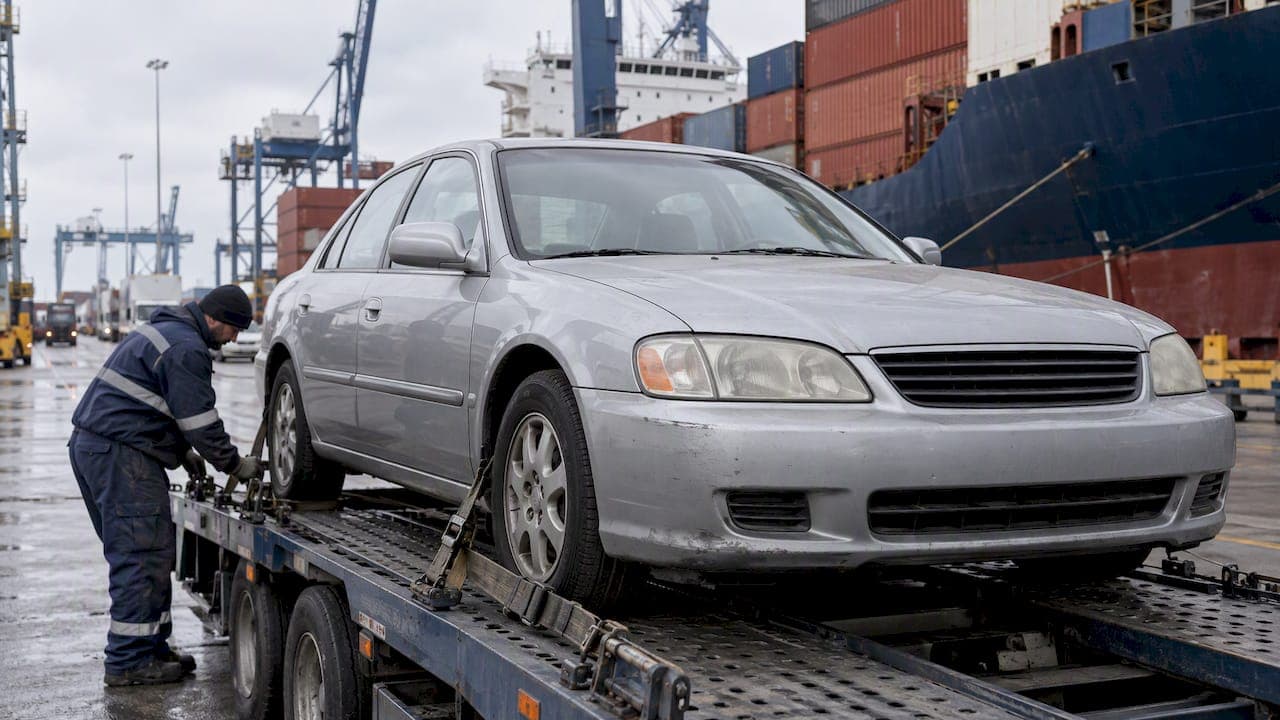
The 25-year import rule lets you bring a foreign-market car into the United States without making it meet U.S. safety standards, as long as it is at least 25 years old when it arrives. NHTSA's Importation and Certification FAQs put it plainly: the exemption comes from the Imported Vehicle Safety Compliance Act of 1988, which exempts vehicles that age from the Federal Motor Vehicle Safety Standards (FMVSS). The rule is real and useful, but it is narrower than the internet makes it sound. The age is counted by month, emissions have their own clock, customs wants paperwork, and your state has the final say on registration.
TL;DR
- A car must be at least 25 years old at the time of import to skip FMVSS compliance, and NHTSA counts from the manufacture month, not just the model year.
- EPA runs a separate test: 21 years old and in original, unmodified configuration (Form 3520-1, code E).
- You still file paperwork at the port, and you need proof of the car's age if the original label is missing.
- Federal eligibility does not guarantee you can register the car. States such as California apply their own emissions rules.
- Younger cars generally require a Registered Importer and a bond, which rarely makes sense for ordinary vehicles.
Table of Contents
- What the rule actually says
- How the 25 years are counted
- The EPA has its own clock
- Documents customs will ask for
- Tariffs: what the rule does and doesn't do
- State registration is the real finish line
- What if the car is under 25?
- A step-by-step check before you buy abroad
- Our view: is importing worth it?
- Looking for a specific car closer to home?
- FAQ
- Sources
What the rule actually says
In 1988 Congress amended the National Traffic and Motor Vehicle Safety Act with the Imported Vehicle Safety Compliance Act. Road & Track's history of the rule describes it as the law that exempts non-conforming foreign motor vehicles once they reach a certain age. NHTSA notes the act was signed on October 31, 1988.
Two practical points follow.
- The rule is an exemption, not a license to do anything. It removes the need to modify a car to meet FMVSS. It does not remove the need to declare the car at the border.
- The rule was built with collector vehicles in mind. CarBuzz frames it as a line between everyday vehicles held to modern standards and heritage machinery, and it notes that the process stays complex and document-heavy even for eligible cars.
How the 25 years are counted
This is where most buyers get caught. The clock starts at the manufacturing month and year, not the model year and not simply the calendar year. Allied CHB's eligibility page says to use the month and year on the manufacturer's label or the first registration, and that the DOT rule counts from that date.
The practical example for this month: a car built in October 2001 reaches 25 years in October 2026. One built in December 2001 is not eligible until December 2026, even though it is a 2001 build. A car built in January 2002 has to wait until January 2027.

The car has to be 25 at entry, not at purchase and not when it leaves the foreign port. If you buy a car in Japan or Germany that turns 25 in three months, plan shipping so it arrives after the birthday, or it could be refused.
The EPA has its own clock
Safety is only half of it. Emissions are governed by the EPA, and its age test is different. On EPA Form 3520-1, vehicles that are 21 years old or older may be exempt under code E, provided they are in their original, unmodified configuration. The age is figured by subtracting the calendar year of manufacture from the year of import.
Two details matter:
- Calendar year, not month. The EPA uses years, while NHTSA uses the manufacture month. A car can clear the EPA test well before it clears NHTSA's.
- Original configuration. The form says vehicles with replacement engines are generally not eligible unless the replacement is an equivalent or newer EPA-certified engine. A swapped or heavily modified car can lose the emissions exemption even if it is old enough.
The practical effect is that NHTSA's 25-year line is usually the binding one for age. The EPA condition on originality is the one that trips up modified cars.
Documents customs will ask for
At the port, the paperwork is the product. Beyond the title or foreign registration and the bill of sale, expect two declarations:
- HS-7, the DOT declaration, where you state the basis for entry. For a car 25 or more years old, that is the age exemption. NHTSA publishes the form, and its first item asks for the date of manufacture.
- EPA Form 3520-1, with the code that matches your car. The EPA form is submitted to U.S. Customs and Border Protection for each vehicle.
If the original sticker is missing or unreadable, be ready to prove the build date. The EPA form notes that Customs may require proof of age. Useful evidence includes an original sales invoice, registration documents from at least 25 years ago, or a statement from a recognized vehicle historical society. Customs can reject an import at the port without verifiable proof.
If you collect rare cars and want a tidy record from day one, our collector's checklist for documenting a rare vehicle acquisition covers what to keep and why.
Tariffs: what the rule does and doesn't do
People often ask whether a 25-year-old car also escapes tariffs. The answer depends on the tariff. For the Section 232 auto duties that took effect on auto parts on May 3, 2025, CBP's FAQ says used passenger vehicles and trucks are exempt if they were manufactured at least 25 years before the year of entry. Note that CBP counts by calendar year here.
That is one program. Ordinary customs duty, brokerage fees, port charges and other measures are separate, and trade rules change often. Check the current CBP guidance, or ask a licensed customs broker, before you commit to a purchase.
State registration is the real finish line
Clearing customs is not the same as driving legally. The federal exemption covers FMVSS and EPA entry requirements. Your state decides whether it will title and register the car.
As the overview of grey import vehicles points out, states such as California have independent emissions testing requirements that can make it hard to register an imported car whatever its federal status. Some states have also taken recent, non-binding steps against particular imported classes, such as Kei trucks. Rules vary, so call your DMV before you buy, not after the container arrives.
Inspection rules also differ by state. Even a car that is mechanically sound can stall on small items such as glass condition. For a sense of what inspectors look at, this guide on whether a cracked windshield passes a car inspection in Oregon is a useful example of how one state treats it. Your state's rules may differ.
Our own guide to used car paperwork and the red flags that cause DMV delays walks through the title side of the process.
What if the car is under 25?
A younger non-conforming car can still come in, but it is a different path. NHTSA's FAQs describe the need for a Registered Importer to manage compliance modifications, plus a bond equal to 150 percent of the vehicle's declared value to make sure the work is completed within 120 days of entry. For most vehicles that cost does not pencil out. It tends to be reserved for high-value, rare models.
There is also the Show or Display exemption, which people sometimes treat as a back door for a daily driver. It is not. NHTSA's application form is for vehicles of historical or technological significance, and NHTSA's FAQs describe a 2,500-mile annual limit along with record-keeping and insurance requirements until the car reaches its 25th birthday. Treat it as a museum-and-events tool.
If a car was built to U.S. standards and carries the original manufacturer's certification label, you are in another category altogether, and NHTSA says no approval is needed in that case.
A step-by-step check before you buy abroad
- Confirm the build month. Read the manufacturer's label and compare it with the registration history.
- Count 25 years to the month. Choose a ship date so the car arrives after the anniversary.
- Check originality. Replacement engines and emissions modifications can cost you the EPA exemption.
- Gather proof of age. Invoice, old registration papers or a historical society letter.
- Ask your state DMV. Confirm titling, emissions and inspection requirements for imported cars.
- Line up a customs broker and shipper. Get the HS-7 and EPA Form 3520-1 prepared before arrival.
- Budget for the full landed cost. Purchase price, shipping, port fees, brokerage, duties where they apply, and any work needed to pass your state's inspection.
If you are comparing models worth the effort, our 2026 guide to unique foreign-market car models and our piece on importing a unique foreign model vehicle in Fort Lauderdale give more context. For moving a car once you own it, see how to avoid dealer markups on U.S. car shipping.
Our view: is importing worth it?
We work with buyers who want something specific, and we hear the import question often. Here is how we think about it.
The rule is a good deal when the car is genuinely hard to find here, the paperwork is clean and the car is unmodified. It is a poor deal when the appeal is mostly the novelty of owning something "forbidden." Shipping, brokerage, state compliance work and the time spent waiting add up, and the car you land is a 25-year-old machine whose parts and service you will have to source yourself.

Before a buyer commits overseas, we suggest asking two questions. Could a comparable car be found domestically, with a U.S. title, a verifiable service history and an inspection you can do in person? And if the answer is no, is the buyer prepared for the documentation work? That second question is where most plans fall apart.
When the answer to the first is yes, a personalized search is often faster and less risky than a container. Our three-step custom vehicle search verifies VINs before you spend money, and our guide to checking service records and pre-owned luxury inspection checklist apply to any older car, imported or not.
— Allen
Looking for a specific car closer to home?
If you would rather skip customs and start with a car you can see, we can help. Auto Vendors Inc in Fort Lauderdale sells used and luxury vehicles and offers a personalized Car Finder service for buyers who want a particular make, model or specification. You can also browse current used inventory, or go straight to SUVs or sedans. Trade-in valuation and financing options are available as well.
FAQ
Why are Japanese cars often tied to the 25-year rule?
The rule applies to any foreign-market car, not only Japanese ones. Japanese models come up often because many were never sold new in the U.S. and have only recently become old enough to import. The age requirement is the same whatever the country of origin.
Can you import a car that is not 25 years old?
Yes, but it is harder. A non-conforming car generally needs a Registered Importer and a bond of 150 percent of its declared value, according to NHTSA. The cost usually makes sense only for rare, high-value vehicles. A car built to U.S. standards and labeled by its original manufacturer does not need NHTSA approval.
Are 25-year-old cars exempt from tariffs?
Only from certain ones. CBP says used passenger vehicles and trucks manufactured at least 25 years before the year of entry are exempt from Section 232 duties. Other duties and fees may still apply, so confirm with a customs broker.
Does the 25-year rule mean I can register the car in any state?
No. The rule covers federal safety standards, and the EPA has its own 21-year test. States set their own titling, emissions and inspection requirements, and California is a well-known example of a state with independent emissions rules. Check with your DMV first.
Sources
- NHTSA: Importation and Certification FAQs
- EPA Form 3520-1 (August 2024)
- NHTSA HS-7 declaration form
- NHTSA: Show and Display application
- CBP: Section 232 Additional FAQs, Autos and Auto Parts
- Allied CHB: Vehicle Import Eligibility Checker
- Road & Track: How a Ferrari-Obsessed Bureaucrat Gave America the 25-Year Rule
- CarBuzz: 25-Year Import Rule, Everything You Need To Know
- Wikipedia: Grey import vehicle