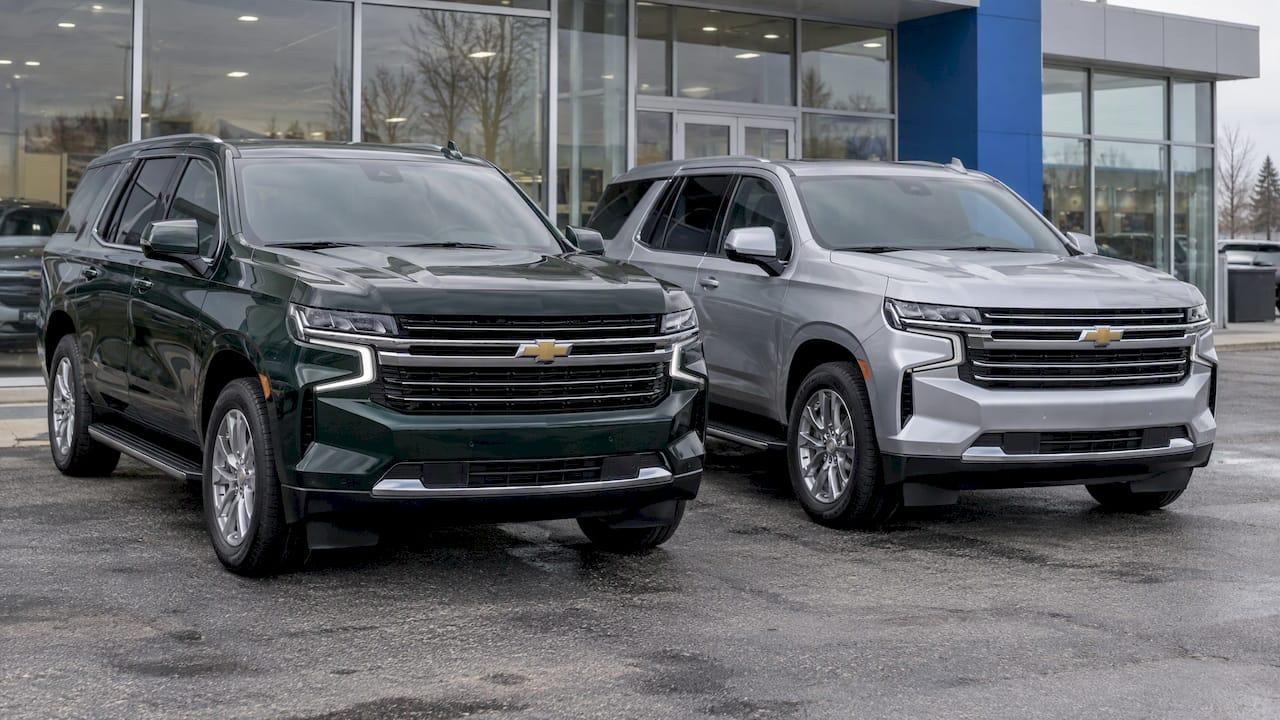
A gas SUV is the right choice for most drivers: it costs less up front, is simpler to maintain and suits short trips and daily commuting. A diesel SUV makes sense when you tow often, cover high mileage or spend long stretches on the highway. The gap in fuel economy is real, but diesel fuel costs more per gallon, so the savings are smaller than the mileage numbers suggest. Below is how the two compare on efficiency, price, upkeep and lifespan, and how to decide.
TL;DR
- Fuel economy: diesel SUVs average about 16% better combined MPG in EPA data, but diesel fuel costs more per gallon, so the dollar savings are modest.
- Purchase price: the diesel option typically adds thousands to the sticker, and studies disagree on whether that is earned back.
- Maintenance: gas engines are simpler. Diesels add emissions equipment such as a particulate filter and exhaust fluid that reward steady, longer drives.
- Best fit: diesel for towing, high annual mileage and highway driving; gas for commuting, short trips and the lowest entry price.
- Used market: diesel SUVs are a small slice of what is available, so a gas SUV is usually the easier and broader search.
Table of Contents
- How the two engines differ in daily driving
- Fuel economy: what the EPA numbers show
- What each SUV costs to buy and to own
- Maintenance and repair: simpler versus specialized
- Lifespan: does a diesel really last longer?
- Who should choose which
- The used-market reality
- Our perspective
- Find the right SUV with Auto Vendors
- Frequently asked questions
- Sources
How the two engines differ in daily driving
A gas engine ignites a fuel and air mixture with a spark plug. A diesel engine compresses air until it is hot enough to ignite the fuel on its own. That one difference explains most of what you feel from the driver's seat.
According to the AA's petrol versus diesel guide, gasoline engines are quieter and smoother, especially at low speeds, while diesels deliver strong low-speed pulling power and are often noisier. In an SUV that means two different personalities:
- Gas: quiet at a stoplight, smooth in town, willing to rev when you merge. Most luxury buyers who value a hushed cabin will notice this first.
- Diesel: a wave of torque at low rpm, which is what makes a heavy SUV feel relaxed when it is loaded, climbing or pulling a trailer.
If towing is part of your decision, our guide to luxury SUV towing capacity explains how to verify a rating before you rely on it. Whatever the engine, the rating on the specific vehicle matters more than the badge.
Fuel economy: what the EPA numbers show
Diesel's best-known advantage is mileage. A True Driving Cost analysis of EPA FuelEconomy.gov data for model years 2015 to 2026 found diesel standard SUVs averaging 23.2 combined MPG against 20.0 for gasoline, a 16% advantage.
The clearest real-world pairing comes from the same model with two engines. The EPA's diesel listings for 2023 to 2024 show the two-wheel-drive Chevrolet Tahoe with the 3.0L Duramax diesel at 24 MPG combined (21 city, 28 highway), and the four-wheel-drive version at 22 combined. Car and Driver's Suburban review lists the rear-wheel-drive 3.0L diesel at 23 MPG combined, against 17 for the 5.3L gasoline V-8 and 16 for the 6.2L V-8.
That is a large gap in a big, heavy SUV. In a smaller, lighter SUV with an efficient gas engine, the gap tends to be narrower, so the more you drive a large vehicle, the more diesel's efficiency counts.
Why a better MPG does not always mean lower fuel bills
Diesel usually costs more per gallon. The True Driving Cost analysis notes that in 2025 diesel cost 18% more per gallon, slightly more than the 16% MPG advantage for full-size SUVs. CarBuzz ran the numbers for a highway trip in its Tahoe Duramax report: at national average prices of $4.079 per gallon for regular and $5.348 for diesel, a 600-mile highway trip costs roughly $123 in the diesel and $122 in the 5.3L V-8. Essentially a tie.
What you do get from diesel on that trip is range. The same report puts the diesel Tahoe at 624 miles from its 24-gallon tank, versus 480 miles for the gas V-8. If you hate fuel stops, that matters even when the dollars are equal.

What each SUV costs to buy and to own
The sticker price is where diesel starts behind. MyCarCalc's diesel versus gas calculator says a diesel SUV option adds $3,000 to $6,000 to the price. In its worked example, a $6,000 premium with fuel savings of 1.2 cents per mile would take 500,000 miles to break even. That is an illustration, not a forecast, but it shows the arithmetic you should run with your own numbers.
Larger studies point in different directions, partly because they are from different eras and fuel prices:
| Study | Finding | Conditions |
|---|---|---|
| Vincentric 2018 U.S. Diesel Analysis | Average diesel price premium of $7,130 and ownership costs $2,130 higher than gasoline counterparts; 9 of 22 diesel SUVs and crossovers (41%) were cost-effective | Five years of ownership at 15,000 miles a year |
| University of Michigan study (2015) | Diesel total cost of ownership often $2,000 to $7,000 lower over three to five years, with stronger resale value | Earlier fuel-price conditions; the researcher cautioned that a widening diesel price premium could erode the edge |
The honest reading: diesel can pay off, but only in the right conditions. Those conditions are high mileage, a long ownership period, and a diesel price that does not run far above gasoline. If your driving does not meet them, the lower entry price of a gas SUV usually keeps more money in your pocket.
For a badge-by-badge view of luxury SUVs and how running costs differ between brands, see the Range Rover vs Mercedes comparison.
A simple way to run your own numbers
- Take the price difference between the diesel and gas version of the exact SUV you are considering.
- Estimate your annual miles and divide by each version's combined MPG to get gallons used.
- Multiply gallons by current local prices for regular and diesel.
- Divide the price difference by your yearly fuel savings (if any) to see how many years it takes to break even.
- Compare that figure with how long you actually keep vehicles.
If step 4 gives you a number longer than your ownership, the gas SUV wins on cost.
Maintenance and repair: simpler versus specialized
Maintenance is where most readers expect a verdict, and the picture is clear in kind if not in exact dollars. According to AutoZone's engine guide, gas engines are simpler and cheaper to maintain, while diesels add diesel particulate filters, exhaust-fluid systems, fuel-water separators and high-pressure injection systems that make repairs more expensive.
In practical terms, owning a diesel well looks like this:
- Keep the exhaust fluid topped up. Modern diesels use it to meet emissions standards.
- Drive it long enough to get hot. The particulate filter cleans itself when the engine reaches operating temperature, which is why highway miles suit a diesel better than a string of short hops.
- Follow the schedule for fuel filters and water separation. Diesel fuel systems are less forgiving of contamination.
- Use a technician who works on diesels. Not every shop does.
A gas SUV asks for the familiar routine: oil, filters, spark plugs, fluids, tires and brakes. Any competent shop can handle it, which keeps both cost and downtime predictable.
Whichever you choose, the vehicle's own history matters as much as its engine type. Our look at Audi Q7 reliability shows how a luxury SUV's repair costs can be mapped by mileage, and the same approach works for any used SUV. If the SUV has air suspension, monthly tank drains and other maintenance are worth knowing before you buy.
Lifespan: does a diesel really last longer?
Diesel's reputation for longevity is well earned. AutoZone's guide says diesel engines commonly reach 300,000 miles in good shape, while well-maintained gas engines typically reach 200,000 to 250,000 miles. Heavier internal construction and lower operating rpm are the usual reasons.
Two caveats put that in perspective. First, the engine is only one part of an SUV. Transmissions, suspension, electronics and the emissions system all age too, and they are often what decides when a vehicle is retired. Second, a longevity edge only helps if you keep the vehicle long enough to use it. If you typically trade up after four or five years, 300,000-mile potential is not something you will cash in.
The practical conclusion is that maintenance history beats engine type. A gas SUV with complete service records is a better bet than a diesel with gaps in its history, and the reverse is also true.
Who should choose which
The AA's guidance is that the best choice depends on driving habits: diesel often suits towing and long journeys, while gasoline suits shorter, urban trips. Here is how that plays out.
| Your situation | Better fit |
|---|---|
| Commuting in town, school runs, errands | Gas |
| Frequent towing of a boat, trailer or camper | Diesel, if the rated capacity and torque suit the load |
| 20,000+ miles a year, mostly highway | Diesel |
| Keeping a vehicle fewer than five years | Gas |
| Lowest purchase price | Gas |
| Longest range between fill-ups | Diesel |
| Quietest, smoothest cabin | Gas |
| Wide choice of makes, models and trims | Gas |
Families shopping for a three-row SUV usually land on gas, because the choice of models is wide and the daily use is short trips. Our guide to pre-owned family SUVs covers what to weigh beyond the engine.
The used-market reality
There is a practical wrinkle for buyers of pre-owned SUVs. In 2023, MotorBiscuit reported that only one automaker was building a diesel SUV for the U.S. market, with General Motors offering the 3.0L Duramax in its full-size SUVs. That means the used diesel SUV pool is small compared with the gas pool, and you may have to compromise on trim, color or mileage to find one.
That is a strong argument for letting a dealer search for you. Whatever engine you settle on, the process we recommend is the same: define the use, set a budget, then compare specific vehicles on condition and history rather than on the engine alone. Our four-step guide to buying a first luxury SUV in Fort Lauderdale walks through it, and the test drive checklist helps you judge noise, ride and power in person. Ride quality in particular varies widely between models, as our piece on ride comfort in luxury SUVs explains.
Our perspective
We talk with buyers every week who start this search by asking which engine is better, and we usually steer the conversation toward a different question: how will you actually use the SUV?
For most of the people we meet, the answer is a mix of commuting, errands, family trips and the occasional long drive. For that pattern, a well-chosen gas SUV gives you the quiet cabin, broad model choice and straightforward ownership that make a luxury vehicle enjoyable day to day.
What we focus on is the vehicle in front of you: its condition, its history, its fit with your budget and your life. We curate a premium selection of pre-owned vehicles with that in mind, and when what you want is not on the lot, our personalized vehicle finding service goes looking for it. Tell us your must-haves, whether that is towing capability, third-row space or a particular make, and we will help you narrow the field.
Run the cost math, take a long test drive, and choose the SUV you will be glad to walk out to every morning.
Allen
Find the right SUV with Auto Vendors
If you are weighing engines, the fastest way to get clarity is to compare real vehicles side by side. Browse our SUVs for sale in Fort Lauderdale, or let our Car Finder search for the make, model and features you want. We also offer trade-in valuation and financing options, so you can handle the whole purchase in one place.

Want to see more than SUVs? The full used inventory covers sedans, coupes, pickups and minivans too.
Frequently asked questions
Which is better, a gas or diesel SUV?
Neither wins everywhere. Gas is better for commuting, short trips, lower purchase price and simpler maintenance. Diesel is better for frequent towing, high annual mileage and long highway runs. Match the engine to your typical week, not your best-case weekend.
Is 300,000 miles on a diesel bad?
Not necessarily. Diesel engines commonly reach 300,000 miles in good shape, according to AutoZone's engine guide, so the number alone is not a red flag. What matters more is documented maintenance, the condition of the emissions equipment and how the vehicle was used. Have a qualified technician inspect any high-mileage SUV before you buy.
Is a diesel SUV cheaper to run?
Often less at the pump per mile, but not always. A 16% MPG advantage is offset by diesel fuel that has recently cost around 18% more per gallon, and the purchase premium can take years to recover. Run the break-even math with the exact vehicle and current local prices before deciding.
Why is diesel fuel priced higher than gasoline?
It varies by market and year. In recent figures, diesel has been priced above regular gasoline, for example $5.348 versus $4.079 per gallon in the national averages CarBuzz cited in 2026. Because the gap moves, check current prices near you rather than relying on an old comparison.
Sources
- Petrol vs Diesel Cars: Pros and Cons, AA Cars
- Diesel vs Gasoline: Fuel Cost Comparison, True Driving Cost
- Fuel Economy of New Diesel Vehicles, FuelEconomy.gov
- Chevrolet Suburban Review, Car and Driver
- Chevrolet Tahoe Duramax diesel road trip, CarBuzz
- Diesel vs Gas Cost Calculator, MyCarCalc
- 2018 U.S. Diesel Analysis, Vincentric
- Want to save money? Buy a diesel vehicle, University of Michigan
- Choosing Diesel vs. Gas Engines, AutoZone
- Only 1 Automaker Builds a Diesel SUV, MotorBiscuit
- Range Rover vs Mercedes comparison