
Exotic car provenance is defined as the documented ownership history, supporting paperwork, and originality clues that form a vehicle's verifiable story and directly determine its market value. For collectors, provenance in luxury cars is not a bonus feature. It is a foundational asset component that separates a sound investment from a costly mistake. Understanding what is exotic car provenance means recognizing that a car's past is as important as its present condition. Cars with verified, continuous documentation command measurably higher premiums than those with gaps in history. That gap in price reflects the gap in confidence a buyer can place in the vehicle.
What is exotic car provenance, and why does it matter?
Exotic car provenance is the combination of a vehicle's ownership history, supporting documentation, and originality clues that form the definitive story impacting market value. The industry term collectors and appraisers use is "provenance," drawn directly from the art world, where it describes the chain of custody for a valuable object. In the collector car market, the concept carries the same weight. Provenance is fundamental to automotive assets, not merely a romantic extra. Documentation answers the authenticity and specification questions that matter most to serious collectors.
A car without provenance is like a painting without attribution. You may love how it looks, but you cannot confirm what you actually own. For exotic vehicles, that uncertainty translates directly into reduced liquidity, lower auction results, and greater difficulty securing specialty insurance. Provenance also guides restoration decisions. A collector who knows a car left the factory in a specific color with a specific engine option can restore it correctly rather than guessing. That accuracy preserves both historical integrity and resale value.
The importance of car provenance has grown sharply as the collector market has matured. Buyers at major auction houses now expect a provenance file as standard. Dealers who specialize in exotic vehicles treat documentation as a primary selling point, not an afterthought. Autovendorsfl applies this same standard when curating its inventory, treating vehicle pedigree as a core factor in every acquisition decision.
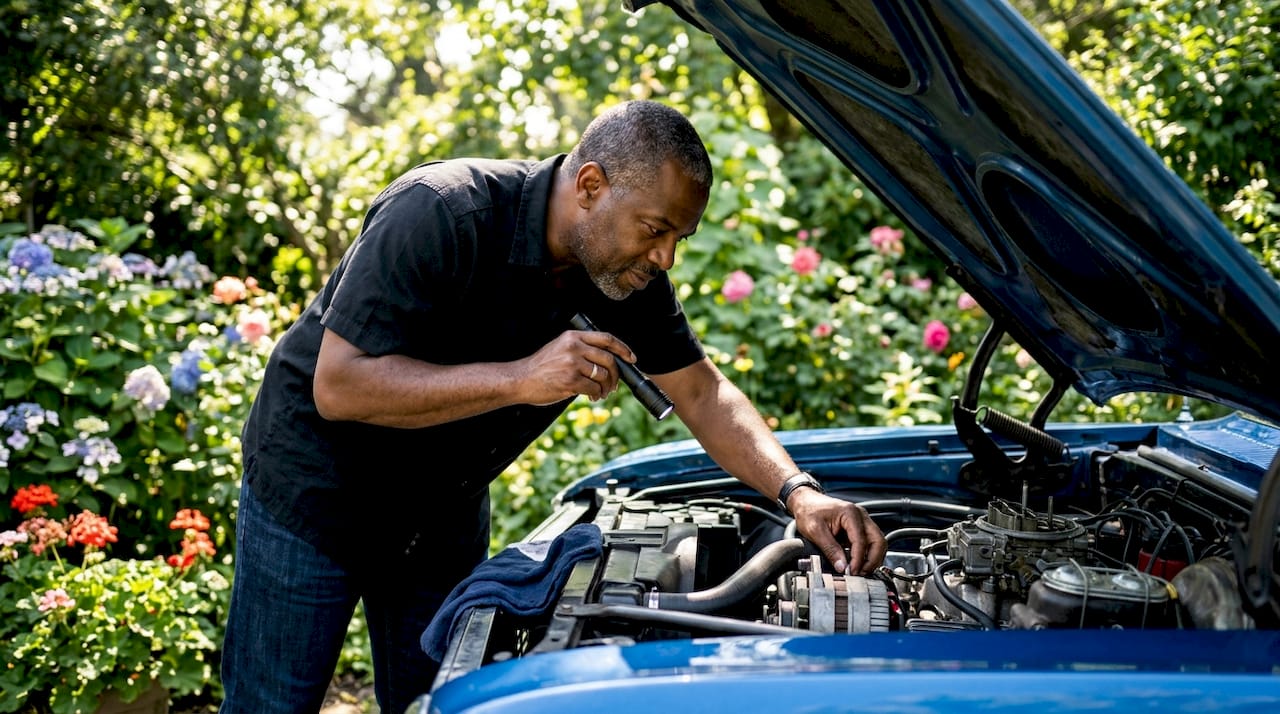
What documents and evidence constitute strong exotic car provenance?
Strong exotic vehicle documentation starts with the factory build sheet. This document, produced at the time of manufacture, confirms the original specifications including engine code, transmission, paint color, and option packages. It is the baseline against which every subsequent claim about the car is measured. Original titles and registration certificates then establish the legal ownership chain from the first buyer forward.
Beyond the factory record, a complete provenance file includes:
- Service records and specialist invoices confirming maintenance history, parts used, and the shops that performed the work
- Ownership chain documentation such as bills of sale, registration renewals, and correspondence linking each owner to the next
- Evidence of cultural, racing, or historical significance including period photographs, magazine features, event programs, and scrutineering records for competition vehicles
- Original keys, owner's manuals, and period accessories that confirm the car has not been stripped or substituted over time
- Matching numbers confirmation verifying that the engine, chassis, and major components carry the numbers stamped at the factory
Matching numbers directly influence liquidity and resale value. Honest disclosure of replaced parts is always preferred over vague or unverifiable claims. A car with a documented engine replacement and a clear explanation holds more credibility than one with an unexplained discrepancy.
Race and competition vehicles require scrutineering records, event programs, and entry lists because shells and parts are frequently swapped during active competition. For these cars, identity is often fragmented, and detailed historical artifacts become the primary tools for verification.
Pro Tip: Request a complete copy of the provenance file before any inspection visit. Reviewing documents in advance lets you identify gaps and prepare targeted questions for the seller.
How to verify exotic car provenance before purchase
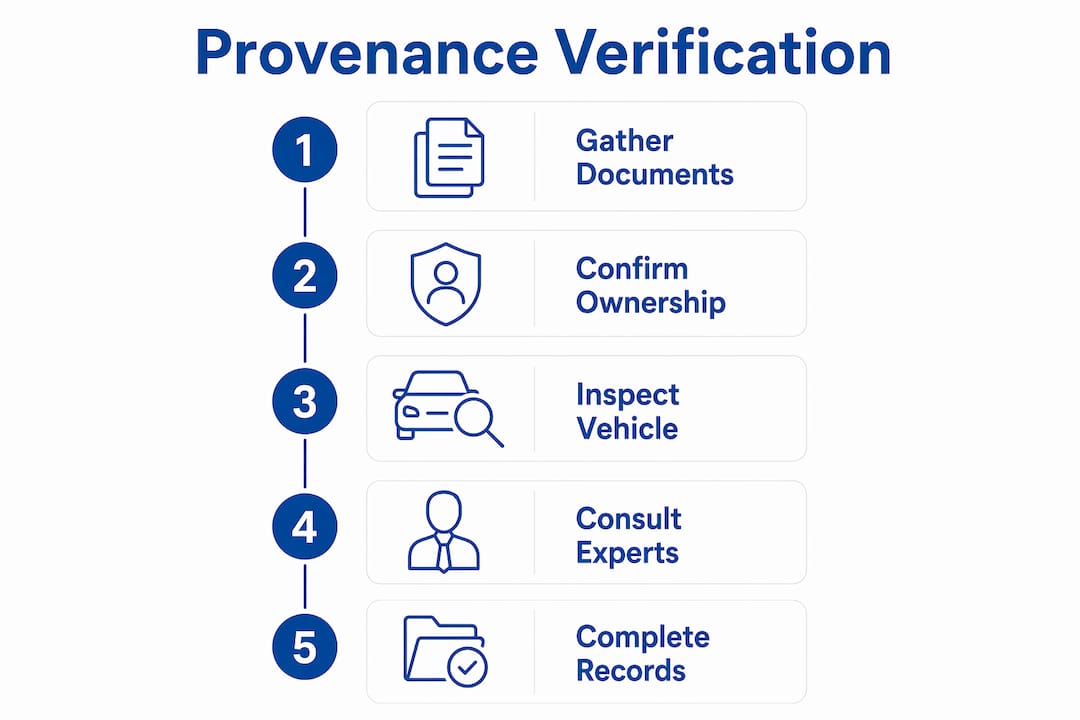
Verification is a multi-step process, and each step catches a different category of fraud or error. Skipping any step creates a blind spot that a dishonest seller can exploit. Follow this sequence before committing to any exotic car purchase.
- Run a VIN history check. Use the Vehicle Identification Number to pull title history, reported accidents, odometer readings, and state registration records. This establishes a baseline and flags obvious inconsistencies.
- Conduct a license plate lookup. Cross-referencing plate records with VIN data can reveal ownership gaps or states where the car was registered that do not match the seller's account.
- Consult marque-specific registries and clubs. Marque clubs hold private VIN records and institutional knowledge that commercial databases cannot match. They can confirm whether a car is a genuine limited edition or a modified standard model.
- Engage a specialized independent inspector. A professional with marque-specific expertise can physically verify matching numbers, assess panel gaps for evidence of accident repair, and evaluate whether the interior and mechanical components match the claimed specification.
- Cross-reference all documents. Compare service records against odometer readings. Check that ownership dates align across titles, registration documents, and any bills of sale. Contradictions between documents are the clearest signal of fraud or error.
Multi-source verification is the recommended standard for uncovering contradictions and preventing fraud. No single database or inspection covers every risk. The combination of digital records, club knowledge, and physical inspection creates a verification net that is genuinely difficult to deceive.
Pro Tip: Ask the seller for contact details for the previous owner. A brief conversation with someone who drove the car regularly can surface details no document will ever show.
Common challenges and pitfalls in provenance assessment
Provenance inflation is the most widespread problem in the exotic car market today. Financial incentives lead sellers to inflate histories through selective storytelling, emphasizing minor celebrity associations, or presenting creative documentation as definitive proof. A car once parked next to a famous driver at a charity event is not the same as a car that driver owned and raced. Collectors must distinguish between genuine historical significance and marketing narrative.
Title washing is a more deliberate form of fraud. It involves moving a vehicle across state lines to obtain a clean title that erases a prior salvage or flood designation. Cross-referencing the VIN with records from multiple states is the most reliable way to detect this practice. A single-state title check is not sufficient for any exotic car with an unclear history.
Provenance gaps are not automatically disqualifying, but they require explanation. A car that spent 15 years in a private collection with no service records may have a legitimate story. A car with a 3-year gap and no explanation at all is a different matter entirely. The burden of proof always rests with the seller, not the buyer.
Distinguishing restored condition from original condition also affects provenance value significantly. A car restored to factory specification using correct parts and documented methods retains strong provenance. A car repainted in a non-original color or fitted with aftermarket components loses provenance credibility, even if the mechanical history is complete. Collectors who inspect pre-owned luxury vehicles with a trained eye catch these distinctions before they become expensive surprises.
How does provenance affect exotic car value and ownership experience?
Strong provenance commands a measurable price premium at auction and in private sales. Cars with clear provenance achieve higher auction prices and sell more easily than comparable cars with incomplete histories. The difference is not cosmetic. It reflects the reduced risk a buyer accepts when documentation is complete and consistent.
| Provenance quality | Effect on value | Effect on ownership |
|---|---|---|
| Complete, continuous documentation | Highest market premiums | Guides restoration, supports insurance claims |
| Partial documentation with explained gaps | Moderate premium | Requires additional verification investment |
| Significant gaps or inconsistencies | Discount to market | Limits show eligibility and resale options |
| Suspected or confirmed fraud | Severe discount or unsaleable | Legal and financial liability for buyer |
Provenance also shapes the ownership experience beyond the transaction. A collector who knows the full history of a car connects with it differently than one who owns a mystery. Show eligibility at prestigious concours events often requires documented provenance. Specialty insurers use provenance files to establish agreed value policies, which protect collectors against total loss at replacement cost rather than depreciated market value.
Provenance guides maintenance decisions in practical terms as well. Knowing which fluids, parts, and procedures were used in previous service allows the current owner to maintain continuity. That continuity preserves the car's originality rating, which directly affects future resale. Understanding why luxury cars hold value starts with understanding how provenance protects that value over time.
Pro Tip: Start building your own provenance file the day you take ownership. Photograph every service receipt, record every specialist contact, and keep the originals in a dedicated binder. Future buyers will pay for that discipline.
Key Takeaways
Exotic car provenance is the single most important factor separating a sound collector investment from an expensive, unverifiable risk, and documentation is the only reliable proof.
| Point | Details |
|---|---|
| Provenance defines value | Documented ownership history and matching numbers command the highest market premiums. |
| Complete files are non-negotiable | Factory build sheets, service records, and ownership chains form the minimum standard for serious collectors. |
| Verification requires multiple sources | VIN checks, marque club records, and independent inspections together catch what any single source misses. |
| Provenance inflation is real | Sellers inflate histories through selective storytelling; cross-check every claim against official state and club records. |
| Start documenting on day one | Building a provenance file from the moment of purchase protects your investment and future resale value. |
Provenance is the purchase, not the paperwork
Collectors often treat provenance as something to review after falling in love with a car. That instinct gets expensive. After years of watching exotic car transactions play out, the pattern is clear: the buyers who get hurt are the ones who trusted the story before they verified the documents.
The collector market has shifted. A decade ago, a compelling narrative and a clean visual inspection were enough for many buyers. That era is over. Financial incentives have made provenance inflation a growth industry, and the gap between a well-documented car and a vaguely documented one has never been wider in dollar terms. Buyers who treat provenance checks with the same rigor they apply to mechanical inspections protect themselves. Those who skip the paperwork because the car looks right pay for that shortcut eventually.
My strongest recommendation is this: never let aesthetics lead the due diligence process. A beautiful car with a thin provenance file is a liability dressed as an asset. The documentation is not the boring part of the purchase. It is the purchase. Everything else is just the car.
— Allen
Verified provenance starts with the right inventory source
Collectors who understand provenance know that the search for a well-documented exotic begins before the inspection, with the source itself.
Autovendorsfl curates a premium selection of luxury and exotic vehicles in Fort Lauderdale, applying a hands-on acquisition process that prioritizes documentation, originality, and authenticity. Every vehicle in the inventory reflects a commitment to the standards serious collectors expect. Whether you are searching for a specific make or exploring available inventory across categories, Autovendorsfl's team provides personalized guidance backed by deep market expertise. Collectors who want a trusted partner in the search for rare luxury models with verified histories will find that Autovendorsfl treats provenance as a standard, not an exception.
FAQ
What is exotic car provenance in simple terms?
Exotic car provenance is the complete, verifiable history of a vehicle, including its ownership chain, factory documentation, and originality evidence. It is the paper trail that proves a car is what the seller claims it to be.
Which documents are most important for provenance in luxury cars?
The factory build sheet, original title, and continuous service records form the core of any strong provenance file. Matching numbers confirmation and evidence of historical significance add further credibility.
How do I verify car provenance before buying?
Run a VIN history check, consult the relevant marque club or registry, and hire an independent specialist inspector. Cross-referencing all three sources catches inconsistencies that any single check would miss.
What is provenance inflation, and how do I spot it?
Provenance inflation is the practice of overstating a car's historical significance through selective storytelling or minor celebrity associations. Spot it by demanding primary documentation rather than accepting narrative claims, and cross-check all details against official state and club records.
Does provenance affect exotic car insurance?
Strong provenance directly supports agreed value insurance policies, which pay replacement cost rather than depreciated market value in a total loss. Specialty insurers require documented provenance to establish and defend that agreed value.