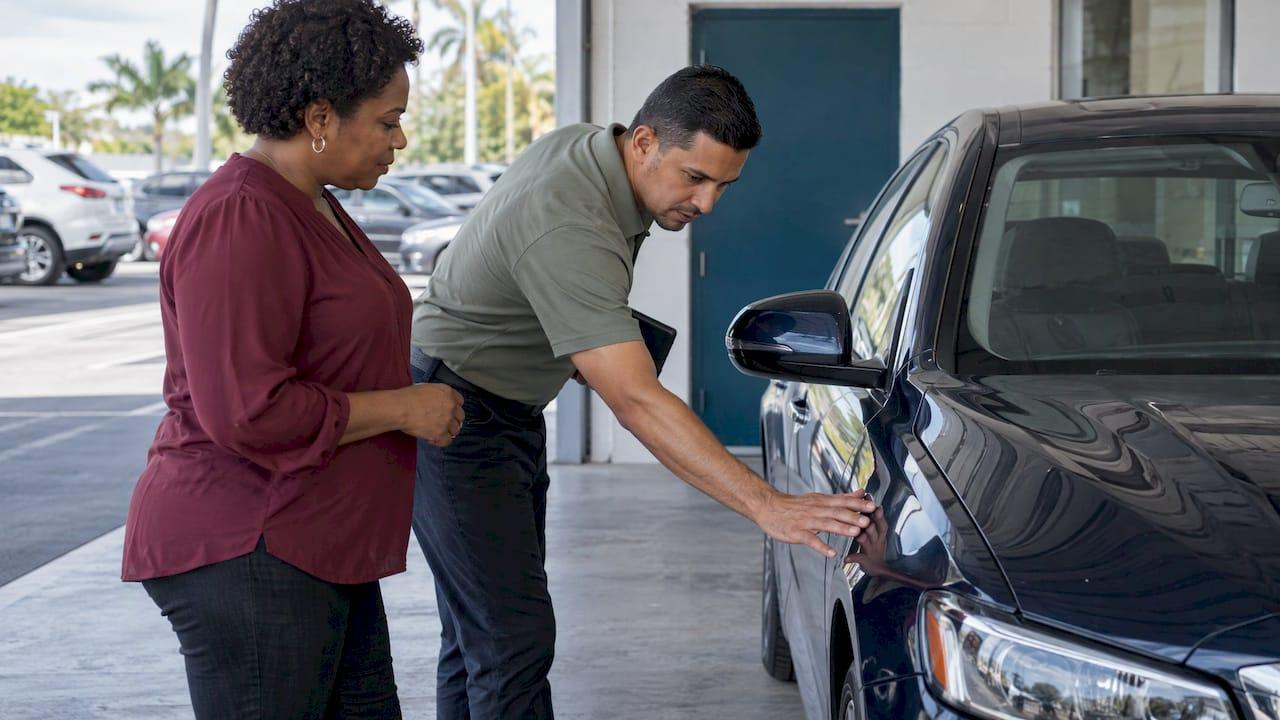
If you are replacing your car with another one, a trade-in is usually the simpler path: the value of your old car is settled inside the purchase, on the same paperwork, and in many states it also lowers the sales tax on your next vehicle. Consignment can bring a higher sale price, but you hand your car to a dealer, wait for a buyer and get paid only after the sale closes. Below is how each one works, what each leaves you with, and how to decide.
TL;DR
- A trade-in turns your current car into credit toward the next one, in one transaction at the dealership where you buy.
- Consignment means the dealer sells your car for you and pays you from the proceeds, minus commission and fees, once a buyer is found.
- In many states, a trade-in lowers the taxable price of your next car. A private or consignment sale does not give you that credit.
- If you consign, get a written agreement and never sign over the title.
- If you owe money on the car, ask for a payoff figure first. It decides which route works.
Table of Contents
- What each route actually is
- How the money works
- Speed, effort and risk
- The sales tax advantage
- If you still owe money on the car
- What to check before you sign a consignment agreement
- How to decide
- Put your trade-in to work at Auto Vendors
- FAQ
- Sources
What each route actually is
The two terms are often mixed up, but the cars take very different journeys.
A trade-in happens at the dealership where you buy or lease your next vehicle. An employee test-drives and appraises your car and makes an offer. If you accept, you sign over the title, and the money generally goes toward the new car rather than into your pocket. Your old car leaves with the dealer the day you take delivery of the new one.
Consignment means a dealer takes possession of your car to sell it and pays you from the proceeds. The California DMV defines it in exactly those terms and requires a written agreement signed by both parties. You still own the car while it sits on the lot, and nothing is paid until a buyer completes the purchase.
That difference in who holds the money, and when, drives everything else in this comparison.
How the money works
Trade-in: a credit, not a check
With a trade-in, the offer reduces what you owe on the next car. You see one number on the purchase agreement instead of two transactions. The offer is built around what the dealer expects to get for your car at resale or at wholesale auction, minus the cost of preparing it. That is why the figure is typically lower than what a retail buyer would pay, and why the dealer can give you a firm answer immediately.
Two habits protect your number:
- Settle the price of the car you are buying first. Consumer Reports advises locking in the new-car price before negotiating the trade-in, because the two figures can be shifted against each other.
- Skip big repairs before the appraisal. Dealers factor reconditioning into their offers, so a repair you pay for rarely returns its full cost.
Our own guide to preparing for a trade-in appraisal walks through what to gather and when.
Consignment: a higher price, with deductions
On consignment the dealer lists your car at a retail price, and you and the dealer agree on the minimum you will receive. The Washington State Attorney General's office publishes a worked example of a consignment sale: with a $5,000 agreed minimum, a 10% commission ($500) and a $50 fee, a car that the dealer sells for $7,000 leaves the owner with $4,450 and the dealer with $2,550.
The lesson is not the exact numbers. It is that the figure on the window is not the figure you receive. Commission, fees and any costs the agreement charges back to you all come off first. Ask for the net amount in writing before you hand over keys.
Speed, effort and risk
A trade-in is done in the visit where you buy. The only work is gathering the title or payoff information, keys and records.
Consignment is slower and has more moving parts. The car must be dropped off with its documents, photographed, marketed, shown, negotiated, financed by the buyer and transferred at the DMV before you are paid. For a reader who is also trying to buy a car, that means driving the old one in the meantime, or owning two cars for a while, with the registration and insurance questions that come with it.
There is also the matter of who carries the risk while the car waits. The Washington guidance says to ask who is responsible for insurance, who pays off any lien, how long the dealer has to find a buyer, who pays for repairs and which expenses, such as storage, advertising, detailing or transport, reduce your payment. If you are comparing how dealer stock is protected, dealer stock insurance cover is the policy type that covers inventory on a lot.
| Trade-in | Consignment | |
|---|---|---|
| Who sells your car | The dealer, after you accept the offer | The dealer, on your behalf |
| When you know your number | At the appraisal | After the car sells |
| How you are paid | Credit toward your next car | Payout after the sale |
| Costs to you | Reconditioning is built into the offer | Commission, fees and chargebacks in the agreement |
| Sales-tax credit on next car | Available in many states | Not part of a consignment |
| Time and effort | One visit | Weeks of waiting, with your car unavailable |
The sales tax advantage
This is the part many owners miss. In many states you pay sales tax only on the difference between the new car's price and your trade-in allowance. Consumer Reports notes this is a benefit private sellers cannot access.
Here is a simple illustration. Say you buy a $40,000 vehicle and your trade-in is worth $15,000, in a state that taxes only the difference and at a 7% rate. You are taxed on $25,000, which is $1,750, instead of $2,800 on the full price. The $1,050 you save is real money that a separate sale of your old car would not produce. Your state's rate and rules will change the figure, so use this as a method rather than a promise.
Rules differ by state. Indiana's Department of Revenue, for instance, limits the deduction to like-kind exchanges, meaning vehicle for vehicle in a single transaction, with the traded car owned and titled in the customer's name. Some states, California among them, do not give the credit at all. Our state-by-state trade-in tax guide explains how to check the rule where you live.

If you still owe money on the car
Most buyers in the luxury and family-SUV market finance their vehicles, so this matters.
- Positive equity means the car is worth more than you owe. The dealer pays off the loan and the remainder counts as your credit.
- Negative equity means you owe more than the car is worth. The shortfall is typically added to the new loan, which can raise the amount borrowed, the term or the monthly payment.
Consumer Reports notes that many dealers can pay off your loan as part of the deal, get the title and handle the paperwork. That is a real convenience, and it works inside a trade-in because the loan payoff and the new purchase share one set of documents.
With consignment, a lien complicates things: the agreement has to say who pays it off and when, and the Washington guide lists any payoff due among the terms the contract must contain. Before either route, request a payoff figure from your lender. Our guides on getting a 10-day payoff before trading a liened car and on negative equity in a trade cover the numbers to ask for.
What to check before you sign a consignment agreement
If you decide consignment suits you, treat the contract as the whole deal. The Washington guidance says the agreement must include:
- the names of the parties,
- where the title is held, with a clear-title guarantee,
- any payoff due,
- the agreed price,
- the date and duration,
- a description of the vehicle with make, model, VIN and plate,
- signatures from both sides.
It also warns in capitals not to sign over the title. In California, the DMV says the dealer must pay the agreed amount within 20 days after the sale, and failure can lead to suspension or revocation of the dealer's license.
Beyond the legal minimum, ask in writing:
- What is the commission or flat fee, and which costs are charged back?
- Who approves price reductions, and by how much?
- What happens if you pull the car early?
- Who insures the car on the lot and during test drives?
- How soon after the buyer pays do you receive your money?
Then compare the written net amount, not the asking price, with a trade-in offer. Sellers who go straight to consignment through used car marketplace listings also benefit from meeting buyers in person before closing, but the same written terms apply.
How to decide
Use your situation, not the headline price, to choose.
Choose a trade-in when you are buying from a dealer anyway, you want the old car gone the day the new one arrives, you live in a state that gives the tax credit, or you are a busy professional who would rather not run a sale on the side.

Consider consignment when you are not in a hurry, you do not need the money for a down payment, your car is in demand, and you are willing to read and negotiate a contract. Be realistic about the time: patience is what captures the retail premium, and sales commonly take weeks.
Families replacing a minivan or SUV before a school year, and first-time luxury buyers counting every dollar of a down payment, tend to value the certainty of a trade-in figure. Enthusiasts with a rare model may weigh the longer route. In every case, your own paperwork decides: your payoff figure, your state's tax rule and the written net on offer.
Our view
When someone comes to us replacing a car with a better one, the question underneath is usually not "how do I squeeze out the last dollar" but "how do I get into the right vehicle without a second project." A trade-in answers that. The value of your current car is settled alongside the purchase, in the same conversation about financing and the next vehicle.
We work this way on purpose. Our trade-in valuation and financing options sit inside the buying process, and our Car Finder service helps you locate the luxury model, SUV or unique find you actually want. You do not have to spread a decision across two sellers, two contracts and two timelines.
Our advice is to get a number from us early, know your payoff, and let the tax rules in your state work in your favor. That is a clearer path than waiting weeks for a stranger to buy your old car.
Allen
Put your trade-in to work at Auto Vendors
If your next car is a luxury sedan, a family SUV or a particular model you have been hunting, we can value your trade and look at financing as part of the same purchase. Start with our Car Finder if you want help locating the right vehicle, or browse used cars for sale in Fort Lauderdale, including SUVs and sedans.

When you are ready to close, our guides on dealer title transfer and temp tag timing and used car paperwork show what to expect at the desk.
FAQ
Is consignment the same as trading in my car?
No. A trade-in is a sale of your car to the dealer, paid as credit toward your next vehicle. Consignment means the dealer sells your car to someone else and pays you from the proceeds after the sale, less commission and fees.
Do dealerships pay off a trade-in loan?
Many do. Consumer Reports says dealers can pay off the loan as part of the overall deal, get the title and handle the paperwork. If you owe more than the car is worth, the shortfall is usually added to the new loan, so ask for your payoff figure first.
Does a trade-in really lower sales tax?
In many states it does, because only the difference between the new car's price and your trade-in allowance is taxed. Some states, including California, do not give the credit, and others limit it, so check your own state's rule before you plan around it.
Should I sign over my title on consignment?
No. The Washington State Attorney General's guidance says in capitals not to sign over the title. The agreement should state where the title is held, and the dealer should pay you the agreed amount after the sale.
Sources
- How Does Trading In a Car Work? | U.S. News
- Consigning a car | Washington State Attorney General
- Consignments (VC §266) | California DMV
- How to Get More Money for Your Used Car | Consumer Reports
- How to Get the Most Money for Your Trade-In | Consumer Reports
- Sales of Motor Vehicles and Trailers | Indiana Department of Revenue
- Auto Loan Calculator: Car Payment With State Trade-In Tax
- Seguro de stock para concesionarios
- Vender mi coche en Canarias gratis