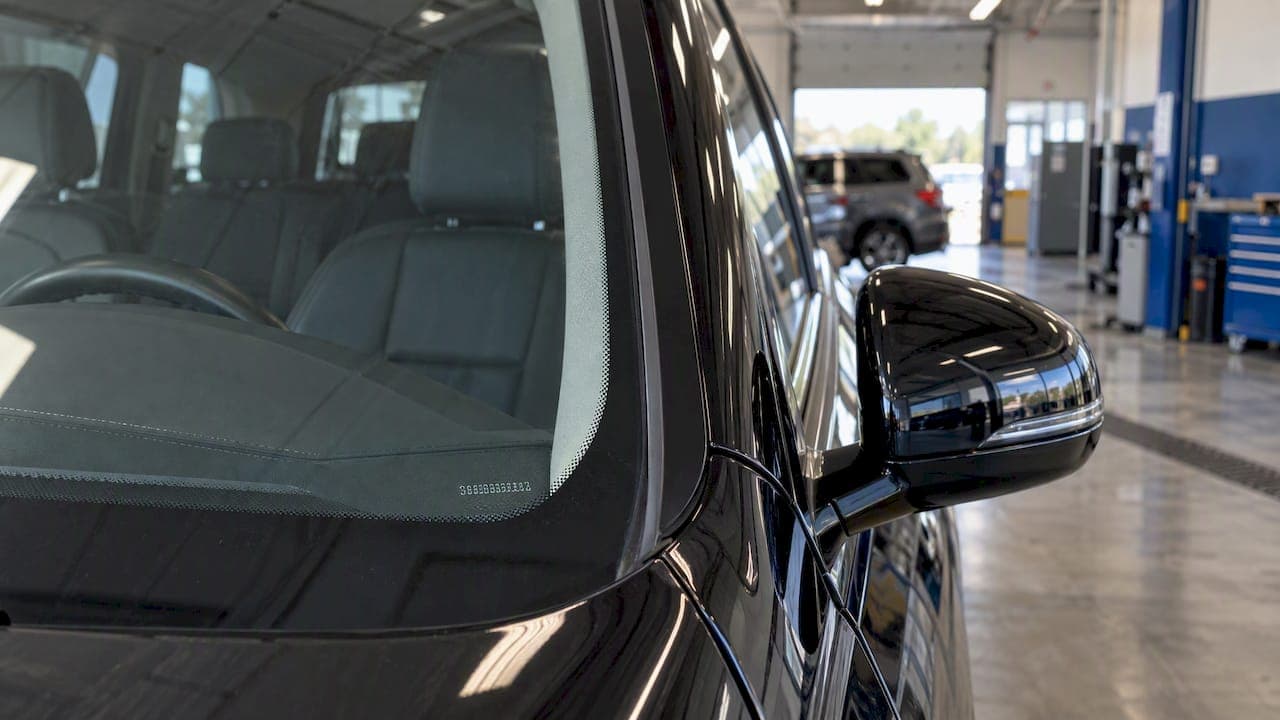
Usually, VIN etching is worth it only when it costs very little. A dealer-installed package at several hundred dollars rarely pays for itself. The same protection costs a fraction of that through a DIY kit, a police event or an auto glass shop. It is also optional, so you can decline it. The one clear case for paying is an insurer that gives a comprehensive-coverage discount large enough to cover the cost.
This guide covers what the service is, what it costs, what the research says about theft, how insurance discounts work (including in Florida), and how to handle it when a finance office adds it to your paperwork.
TL;DR
- VIN etching engraves your 17-digit vehicle identification number into the windows. It is meant to make a stolen car or its parts harder to resell.
- Consumer Reports says dealers have charged $200 to $300 for it. DIY kits run about $20 to $30, and some police departments etch for free at community events.
- Studies of parts marking are mixed. One found it could be cost-effective for high-theft vehicles, and another found no significant difference in recovery rates.
- Some insurers discount comprehensive coverage for etching. Ask your insurer before you pay anyone.
- You are not required to buy it. If a fee appears on a buyer's order you did not ask for, ask for it to be removed.
Table of Contents
- What VIN etching is and how it is supposed to work
- Does it actually reduce theft?
- What VIN etching costs, and who charges what
- How long it takes and whether you can do it after you buy
- Will your insurer give you a discount?
- Can a dealer make you pay for it?
- A simple way to decide
- Shopping for a used luxury vehicle in Fort Lauderdale
- FAQ
- Sources
What VIN etching is and how it is supposed to work
VIN etching is the permanent engraving of a vehicle's 17-digit identification number onto its window glass. Capital One's car-buying guide describes it as a visual deterrent: a thief who sees the number on every window faces a car that is harder to disguise and parts that are less profitable to sell.
The logic has two parts:
- Deterrence. A thief wants a car that can be resold quickly. Replacing every etched window adds cost and time.
- Recovery. If a car or its glass turns up, the etched number ties it back to the original vehicle. Consumer Reports describes the purpose in the same terms: deterring theft and helping recovery.
The etching is usually done with a stencil and a chemical or abrasive. It is not a tracking device and it does not stop a car from being driven away. It only makes the stolen vehicle less convenient to sell.
Does it actually reduce theft?
The evidence is older and more mixed than most sales pitches suggest, and it is worth knowing before you pay for it.
- A National Institute of Justice evaluation of automobile parts marking found that marking could be cost-effective for high-theft vehicles. The investigators it surveyed were divided on how much it deters thieves.
- A NHTSA report, Auto Theft and Recovery, found no statistically significant difference in recovery rates between vehicles with and without aftermarket parts marking.
The studies are from 1999 and 1991, and vehicle theft has changed since then. Still, they point to the same practical conclusion: etching is a modest, low-tech measure. It makes the most sense on a vehicle that thieves target, and when it is cheap.
If theft is your main concern, etching is one layer among several. Parking in a garage or a well-lit lot, keeping key fobs out of sight and using a factory or aftermarket alarm all address the way most cars are actually stolen. Etching is a low-cost addition, not a substitute.
What VIN etching costs, and who charges what
Price is where the "worth it" question is usually settled. The same service is sold at very different prices.
| Where you get it | Typical cost | Notes |
|---|---|---|
| Dealer add-on | $200 to $300 reported by Consumer Reports | Often added to the buyer's order before you ask for it |
| Dealer or auto glass shop (independent quote) | $25 to $75 per InsureMojo's 2026 guide | Shop around, since prices differ widely |
| DIY kit | About $20 to $30 per Capital One | May not qualify for an insurance discount |
| Police or sheriff event | Often free, according to Capital One | Check local department calendars |
Those numbers show the gap. A $250 etching package costs roughly ten times a DIY kit, and the glass is marked the same way. Some buyers also report much larger figures on dealer paperwork. If a number like that appears, it is a negotiating item, not a standard price.
The cost also needs to be read against the fact that a new vehicle already carries its VIN stamped in several places, a point Consumer Reports makes when it calls the service optional. Etching adds a visible copy on the glass. It does not create the first record of the number.

How long it takes and whether you can do it after you buy
You do not need to decide on the day you sign. Capital One says etching takes no more than an hour and can be done at a dealership, repair shop or body shop, or with a DIY kit. The actual work is quick:
- The Prince William County, Virginia sheriff's office says the etching takes about 5 to 15 minutes, with waiting time of up to an hour.
- Arizona's Department of Insurance and Financial Institutions says about 10 minutes per vehicle. It asks for proof of ownership, current registration and a completed consent form.
- Allstate also puts it at about 10 minutes and notes that it can be done if the windows are not already marked.
So etching is a service you can add later, at a lower price, once you have compared options. Nothing about it requires a decision at the desk.
Will your insurer give you a discount?
This is the strongest argument for etching, and it is also the least uniform. Whether the discount exists depends on your state and your insurer.
What the discount covers. Capital One notes that etching discounts apply only to comprehensive coverage, and that some insurers want a form showing a professional did the work, which can rule out DIY kits. InsureMojo makes the same point about professional proof for aftermarket devices.
How big it is. CarInsurance.com describes discounts of about 5% to 15% of the comprehensive portion of the premium, with availability and legal requirements varying by state. Comprehensive is usually a small slice of a total premium, so 5% to 15% of that slice is often a few dollars a year. At $250, that could take many years to repay. At $25 or free, it can pay back quickly.
New York. The state's Department of Financial Services says window etching discounts are mandated by statute and must be offered by all New York auto insurers. Its guidance on discounts lists the eligible glass as the windshield, door glass, rear window and sun or moon roof or T-top. The amount varies by insurer.
Florida. Florida Statutes section 627.0653(5) says an insurer writing comprehensive coverage may give a premium discount when the complete manufacturer VIN is permanently etched on the windshield and all windows. The process must not destroy glass integrity or impair driver visibility, and the characters must be at least 1/4 inch high. The word is "may": Florida permits the discount but does not require insurers to offer it. Call your insurer or agent and ask three things before you buy:
- Do you offer a discount for VIN etching on my policy?
- How much is it, and does it apply only to comprehensive?
- Do you need a certificate from a professional, or will a DIY or police etching count?
If the answer to the first question is no, the main financial reason to etch disappears. You are left with a modest theft deterrent.
Can a dealer make you pay for it?
No. Consumer Reports states that you are not required to take VIN etching or pay for it. A legal explainer on dealer add-ons says no federal law requires consumers to buy it and that dealer add-ons are almost always optional. One summary of FTC and CFPB positions says the FTC holds that dealers cannot charge for add-ons buyers do not want, and the CFPB treats add-ons as optional.
Regulators have acted on this. A law firm analysis of an FTC and Illinois Attorney General case describes allegations that a dealer charged for add-ons without authorization or presented them as mandatory. The resulting consent order required express informed consent before such fees.
Some dealers say the etching is already done on the car, so the fee is not negotiable. If a vehicle arrives pre-etched and you do not want the charge, ask for the line to come off or for the vehicle to be priced without it. If the dealer will not budge, you can walk away and buy elsewhere.
How to handle it at the desk
- Ask for the out-the-door price in writing before you discuss monthly payments.
- Read every line of the buyer's order. Look for etching, "theft protection" or "security package" entries.
- Ask: "Is this optional? Can you remove it?"
- If you want etching, ask for the price per window set and whether it comes with an insurer-accepted certificate.
- If you do not, say so plainly and ask for a revised order before you sign.
Our guides on dealer fees and how to question them and on Florida doc fees walk through the same method for other line items.
A simple way to decide
VIN etching is worth it when the price is low and at least one benefit is real to you. Use this as a rule of thumb:
- Worth it: free police etching, a DIY kit under about $30, or a shop price in the $25 to $75 range, especially if your insurer confirms a comprehensive discount.
- Worth negotiating: a dealer package in the $200 to $300 range. Ask for it to be removed, or for a price near what a shop charges.
- Not worth it: a bundled etching charge that you cannot see itemized, that your insurer will not recognize, and that the dealer says is mandatory.
If you live in a state where discounts are mandated, such as New York, the calculation tilts further toward etching, as long as the price is small.
Our view at Auto Vendors
We think a fair purchase is one where every dollar on the order is something you chose. Add-ons like etching are not a bad idea in themselves. The problem is when they show up as a surprise at the end of a long day, after you have already agreed on a car.
Our approach is built around personalized help finding the right vehicle, so the conversation stays on the car, its history and its price. If you want a protective measure such as etching, we are glad to talk through your options openly. If you do not, that is a perfectly reasonable answer. Whatever you decide, ask any dealer, including us, for an itemized out-the-door price before you sign.
For luxury and premium vehicles, which are the cars we curate, theft deterrence is a fair thing to think about. The best way to weigh it is with your insurer on the phone and the facts in front of you.
Allen
Shopping for a used luxury vehicle in Fort Lauderdale
If you are comparing cars and fees at the same time, start with the vehicle. At Auto Vendors Inc we focus on a curated selection of used luxury and premium models, and our Car Finder service helps if you want something specific. You can search by make, model, body style and price, then ask us for an itemized breakdown of what you would pay.
Start with our Car Finder or browse all cars for sale, including SUVs and sedans.
For the paperwork side of a purchase, our guides on used car paperwork, dealer-arranged financing and luxury dealer red flags cover what to check before signing. Our custom vehicle search process explains how we verify VINs on cars we source.
FAQ
What is a VIN etch fee?
It is a charge for engraving your vehicle's 17-digit number onto the windows. Dealers have charged $200 to $300 for it, according to Consumer Reports, while DIY kits cost about $20 to $30. It appears as a separate line on the buyer's order, and you can ask for it to be removed.
How long does VIN etching take?
The etching itself takes about 5 to 15 minutes, according to a Virginia sheriff's office, and Capital One says the whole visit takes no more than an hour. You can do it after you buy, at a shop, at a police event or with a kit.
Does VIN etching lower my insurance?
Sometimes. Some insurers discount the comprehensive part of your premium, with CarInsurance.com citing about 5% to 15%. Some want proof of professional installation. New York requires insurers to offer the discount, while Florida lets insurers offer one. Ask your insurer before you pay.
Can I refuse VIN etching at a dealership?
Yes. Consumer Reports says you are not required to take it or pay for it. Read the buyer's order line by line and ask for any add-on you did not request to be removed before you sign.
Sources
- What Is VIN Etching? | Capital One Auto Navigator
- Just Say No to These Car Dealership Extras | Consumer Reports
- Evaluation of the Effectiveness of Automobile Parts Marking | National Institute of Justice
- Auto Theft and Recovery | NHTSA
- Anti-Theft Device Insurance Discount: 2026 Guide | InsureMojo
- VIN Etching | Prince William County Sheriff's Office
- VIN Etching | Arizona Department of Insurance and Financial Institutions
- VIN Etching: Deter Car Thieves | Allstate
- Can I get an auto discount for VIN etching? | CarInsurance.com
- Auto Insurance Discounts | New York Department of Financial Services
- Discounts and Saving Money | New York Department of Financial Services
- Florida Statutes section 627.0653 | Online Sunshine
- Do You Have to Pay for Dealer Add-Ons? The Law | LegalClarity
- How to Check if Car Dealer Add-Ons Are Optional | Verold
- US FTC Settlement With Auto Dealer Signals More Aggressive Fair Lending and UDAP Enforcement | Mondaq