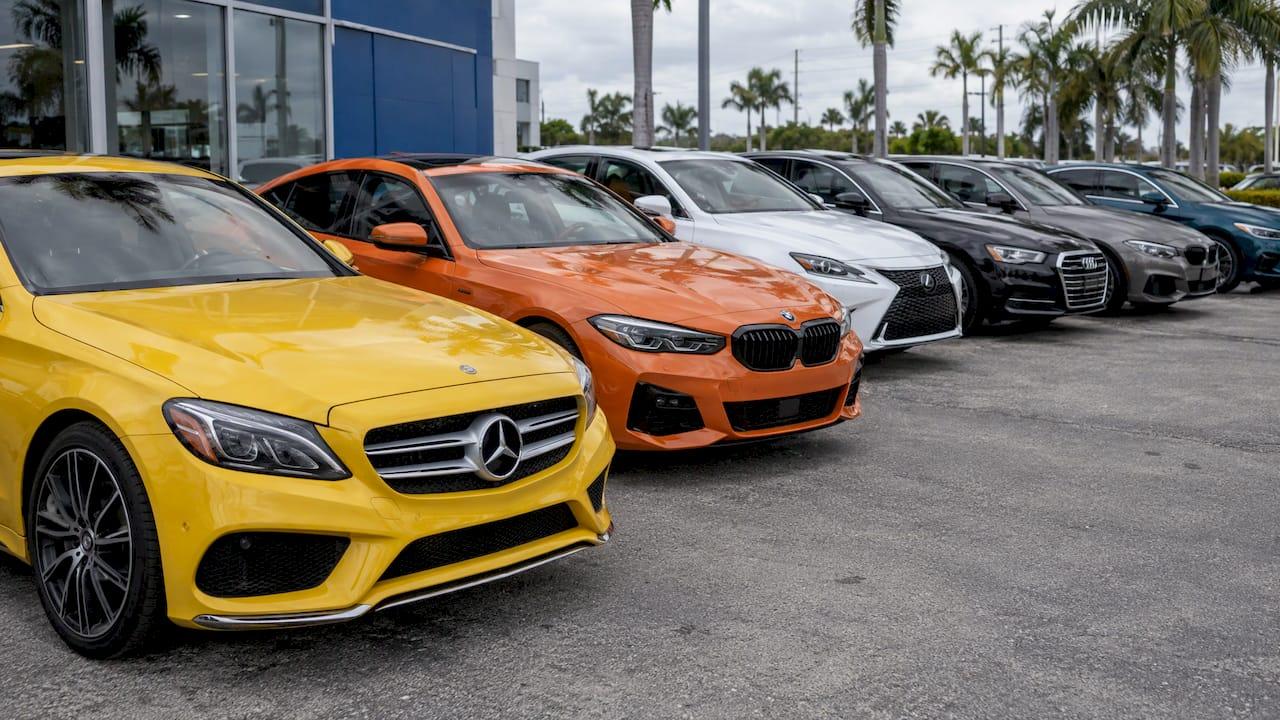
Yellow holds its value best. In the most recent large U.S. study, yellow cars lost 24.0% of their value over three years, against 31.0% for the average car. Orange and green came next. The most common colors, white and black, landed near the bottom. That ranking comes with real caveats, and the details below matter if you're about to buy or sell.
TL;DR
- Yellow, orange and green depreciated the least in the iSeeCars study of model-year 2022 cars. Gold depreciated the most.
- Color can swing a car's three-year value by roughly $3,000 between the best and worst shades. That is meaningful, but smaller than the effect of mileage, condition and trim.
- White, black, gray and silver are the easiest colors to sell. They are not always the best at keeping their percentage value.
- Rare colors can hold value yet take longer to sell, so decide whether price or speed matters more to you.
- Choose the best example of the car you want first. Let color break the tie.
Table of Contents
- The colors that hold value best
- How much money are we talking about?
- What about white, black, gray and silver?
- Why uncommon colors can win
- Value retention is not the same as selling fast
- Does the pattern change by vehicle type?
- How reliable are these studies?
- What matters more than color
- A practical way to choose a color
- Our perspective
- Find the right car in the right color
- FAQ
- Sources
The colors that hold value best
The most cited recent U.S. dataset comes from iSeeCars. It analyzed more than 1.2 million model-year 2022 used cars from August 2024 through May 2025 and measured how much value each color lost after three years.
Here is how the top and bottom of that ranking look, based on the figures the study reported:
| Color | Three-year depreciation | Dollar loss |
|---|---|---|
| Yellow | 24.0% | $13,667 |
| Orange | 24.4% | $9,951 |
| Green | 26.3% | $13,152 |
| Average, all colors | 31.0% | $14,360 |
| Gold | 34.4% | $16,679 |
The orange and green dollar figures come from the iSeeCars study as reported by Yahoo Autos. The yellow dollar figure and the overall average come from Forbes' coverage of the same research.
Notice that the dollar loss and the percentage do not always line up. Orange lost a smaller dollar amount than yellow because the orange cars in the sample tended to have lower starting prices. Percentage is the fairer measure of how well a color holds value, and dollars show what you would feel in your wallet.

How much money are we talking about?
Color matters, but it is not the biggest line on the bill. Forbes reported that yellow cars lost $13,667 over three years while gold cars lost $16,679, a gap of more than $3,000 between the best and worst colors.
Compared with the market average, the study put it this way: a yellow car saves its owner $693 after three years, while a gold car costs $2,319 more than average.
The spread is also not fixed. The gap between the best and worst colors narrowed from 12.4 percentage points in June 2023 to 10.4 points in the 2025 study. Color trends move, so a ranking is a snapshot rather than a law.
What about white, black, gray and silver?
These four are the most common colors on U.S. roads, and that matters for two reasons.
First, they sell. A white or gray car appeals to the widest pool of used buyers, so it rarely sits waiting for the right person to walk in.
Second, they do not always hold value in percentage terms. White and black lost 32.1% and 31.9% over three years respectively, slightly worse than the 31.0% average, even though they sit among the top four most common colors.
A different analysis points the other way. A 2025 NexusMedia study of 10 best-selling models found white was the most stable color, with average depreciation of about 18%, or about $7,000, while blue had the highest average depreciation at 27.11%, an average loss of $12,449.
Two studies, two different pictures. That is not a contradiction so much as a reminder that the answer depends on which cars you sample.

Why uncommon colors can win
iSeeCars executive analyst Karl Brauer explains the logic in supply and demand terms. Yellow and orange are not widely popular, but demand for them exceeds supply on the used market, which pushes value up. White and black, by contrast, are so common that they offer no distinction, which makes it easy for shoppers to hunt for the lowest price.
There is also a trim effect. Bright colors are often offered on sportier or higher-end versions of a model. A car that holds its value may owe part of that to the trim, not only the paint. We come back to that in the limitations section.
If you're curious how a color becomes scarce in the first place, our guide to rare car colors and what makes them worth buying goes deeper.
Value retention is not the same as selling fast
A color that keeps its price may still take longer to sell. The Hagerty analysis of 3,500 Porsche auction sales dating back to 2013 shows it clearly. Yellow Porsches sold for nearly $3,000 more than average, but had a sell-through rate of 63.6% against a 70.8% average.
That gives you two different goals:
- Highest price per dollar spent: a distinctive color can help, if you're patient and the right buyer appears.
- Fast, easy sale: a mainstream neutral usually draws more buyers.
Know which of the two matters before you pick. If you plan to keep the car for a decade, either point is almost moot. If you trade every three years, think about it more carefully.
Does the pattern change by vehicle type?
Yes. Reporting on the same research notes that orange is the best-retained color for trucks and green performs best for vans, and SUVs show their own color preferences that differ from the overall market.
In practice that means a family shopping for an SUV or minivan should not copy a ranking built mostly on sedans and coupes. Look at what is common on the body style you want. A color that is a familiar sight on that type of vehicle is rarely a hard sell, and one that is oddly out of place on it can be.
If you're comparing body styles, you can browse our SUVs for sale or sedans for sale and notice which colors dominate each.
How reliable are these studies?
They are useful and imperfect. Three limits are worth knowing.
- Asking prices, not sale prices. The iSeeCars study used listing prices rather than actual transaction prices, and it adjusted each car's original MSRP for inflation to 2025 dollars. The figures show what sellers asked, not necessarily what buyers paid.
- Tangled variables. Color is often tied to trim. If a vivid shade is mostly sold on performance versions, it can look better than it is. Isolating color from trim is hard.
- Small samples in some segments. A color that is rare will have fewer cars behind its average, so a few high-priced vehicles can move the result.
Treat the rankings as a nudge, not a verdict.
What matters more than color
Color is a tiebreaker. The factors that move a used car's price the most are more mundane. Investopedia notes that mileage and condition are the primary drivers of a used car's price, with options, location and color also playing a role.
Jalopnik's look at resale features comes to a similar place. Buyers should prioritize brand reputation, a clean title and documented service history over cosmetic features. It also warns that aftermarket modifications may deter buyers and reduce a vehicle's appeal, so a custom wrap or loud paint job may work against you.
A short checklist you can apply to any car, whatever its color:
- Title and history report: a clean title and a clear ownership record.
- Service records: documented maintenance is the easiest way to show a car was cared for.
- Mileage: lower mileage usually supports a higher resale price. Our piece on why super low mileage cars matter explains the logic.
- Trim and options: know exactly what the car was built with. A Monroney label can help verify special order trims on a used car.
- Reconditioning: how a dealer prepares a car affects how it looks and drives. We walk through the dealer reconditioning process in a separate guide.
- Pedigree: for luxury buyers, a car's history shapes its price, as we explain in how vehicle pedigree affects pricing.
A practical way to choose a color
Here is a simple sequence for deciding.
- Pick the car first. Narrow to the model, trim and condition you want.
- Decide how long you will keep it. For a long hold, choose the color you will enjoy looking at. For a short hold, lean on market data.
- Check what is common on that body style. A color that suits the segment is easier to resell.
- Weigh price against speed. Distinctive shades like yellow, orange and green have tended to hold value in the data. Neutrals tend to find buyers quickly.
- Avoid the extremes of the ranking. Gold sat at the bottom in the latest study, so it deserves a closer look at pricing before you commit.
- Skip the modifications. Keep the factory finish when you can.
The luxury segment adds one more angle. Buyers at that level often care about condition and provenance as much as paint, which is part of why luxury cars hold value the way they do.
Our perspective
We spend our days with used luxury and premium vehicles, and color comes up in almost every conversation. Buyers ask whether a shade will cost them later. It is a fair question, and the data gives a fair answer: color matters, within limits.
What we see is that a car chosen with care keeps its appeal. We curate our selection with elegance and craftsmanship in mind, and we look at the whole vehicle: condition, history, trim and how it presents. A great color on a tired car does not help anyone. A well-kept car in a color you love usually does well, whatever a chart says.
That is why we offer personalized vehicle finding assistance. If you want a specific model in a specific color, or you want something unusual, we would rather search on your behalf than have you settle. Tell us what you want, including the color, and we will look for the right match.
Allen
Find the right car in the right color
If you already know the color you want, you do not have to scroll through listings hoping it appears. Our Car Finder service is built for exactly that. You describe the vehicle, and we help you track down a match.
Prefer to look yourself? Browse our full used inventory by make, model, body style and price, or start with the Car Finder and tell us your color preferences. If you plan to trade a vehicle in, our overview of how luxury trade-in appraisal works shows what to expect.
FAQ
What car color has the best resale value?
In the 2025 iSeeCars study, yellow came out on top, losing 24.0% of its value over three years compared with a 31.0% average. Orange and green followed. Keep in mind that these colors are uncommon, so the sample is smaller and cars can take longer to sell.
Is white a good resale color?
It depends on the study. iSeeCars data put white at 32.1% three-year depreciation, slightly worse than average. A separate NexusMedia study of 10 best-selling models found white the most stable color at about 18%. White is easy to sell because so many buyers accept it.
How much can color change what my car is worth?
In the latest iSeeCars figures, the gap between yellow and gold was a little over $3,000 after three years. That is real money, but mileage, condition and service history usually have a larger effect on what a used car sells for.
Should I choose a color for resale or for myself?
For most people, the second. If you will keep the car for many years, you will see it every day, and a color you like is worth more to you than a small percentage point. If you plan to sell within a few years, a mainstream shade or a proven performer such as green or orange may be sensible.
Do bold colors take longer to sell?
Often, yes. A rare color appeals to a narrower group of buyers. In the Hagerty analysis of Porsche auction sales, yellow cars brought higher prices but sold less often than average. Plan for patience if you choose a distinctive shade.
Sources
- The Best and Worst Car Colors for Resale Value, Yahoo Autos
- What's The Best Vehicle Color For Resale Value?, Forbes
- Which colors are best for your car's resale value?, USA Today
- Your car's color may impact its resale value, WUSA9
- 2 Car Colors Hurt Resale Value, Yahoo Autos
- Insider Insight: Does paint color really impact value?, Hagerty
- Car Color Could Hurt Resale Value
- Key Factors Influencing Your Used Car's Value, Investopedia
- What Features Increase A Car's Resale Value Most?, Jalopnik