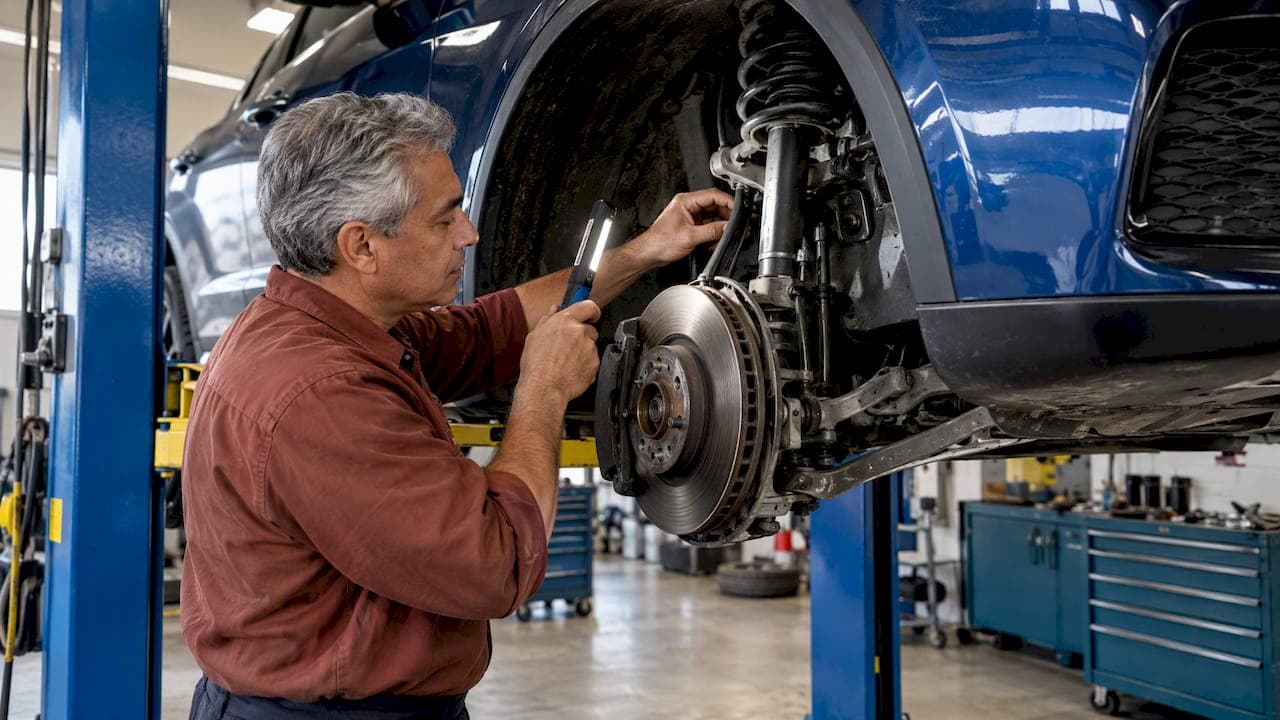
Reconditioning is the work a dealer does to turn a freshly acquired used car into one that is ready to sell: an inspection, any needed mechanical, safety and cosmetic repairs, a deep cleaning and a final check before it goes on the front line. Autoweb describes it as preparing a used vehicle for resale through inspection, cleaning and necessary repairs. What it covers, how long it takes and what it costs differ from dealer to dealer, so the useful skill for a buyer is knowing what to ask to see.
This guide walks through each stage in the order a typical dealership handles it, explains why the timeline and the price vary, and gives you a short list of questions and documents that protect you when you shop.
TL;DR
- Reconditioning is a sequence: intake, inspection and estimate, mechanical repairs, body and paint work, detailing, photography, pricing and front-line placement.
- The clock usually runs from acquisition to front-line readiness, and dealers work to shorten it because every day a car sits is a day of holding cost.
- Reconditioning fees can run from hundreds to thousands of dollars, are negotiable, and may be built into the price or charged separately.
- "Reconditioned" describes work done, not a guarantee of condition. Ask for the work order and have an independent mechanic inspect the car.
- A dealer's recon records are most useful when they list specific repairs and parts, not just a general statement that the car was serviced.
Table of Contents
- What vehicle reconditioning actually is
- The dealer reconditioning process, step by step
- How long reconditioning takes
- What reconditioning costs, and who pays
- What "fully reconditioned" does and does not mean
- How to check a reconditioned car before you buy
- Our perspective on reconditioning
- Looking for a car without the guesswork?
- Reconditioning and your trade-in
- FAQ
- Sources
What vehicle reconditioning actually is
A used car arrives at a dealership from a trade-in, an auction or another source, and almost never in showroom condition. Reconditioning is the bridge between that arrival and a car a buyer can reasonably consider. Auto Finance describes it as a comprehensive process that restores used vehicles to a condition suited for resale through mechanical, safety and cosmetic improvements.
Dealers do it for three practical reasons. They want the car to work properly, they want it to look good, and they want buyers to feel confident. According to Autoweb, better reliability, appearance and appeal help dealers sell cars faster and at higher prices. In other words, reconditioning is both a service to the buyer and a business decision for the seller.
It is also not the same thing as a restoration or a rebuild. Reconditioning aims at a vehicle that is sound, clean and presentable for its age and mileage. A ten-year-old luxury sedan will still show the normal signs of a decade of driving after reconditioning, and a good dealer will not pretend otherwise.

The dealer reconditioning process, step by step
Every store sets up its own workflow, but the stages are broadly consistent. Vehicle Recon Tracker lists the typical steps as intake, inspection and estimate, mechanical repairs, body and paint work, detailing, photography and merchandising, pricing, and placement on the front line. Here is what each one means in practice.

1. Intake
The car is logged into the dealership's system, its keys and paperwork are collected, and its identification is recorded. This is when the clock starts. NADA's reconditioning handout defines "Time to Line" as the span from in-transit or purchase to the front line, which is why a car that sits unassigned for two days already counts against the dealer.
2. Inspection and estimate
A technician goes over the car to decide what it needs. According to Vehicle Recon Tracker, a thorough inspection includes a road test, electrical checks, mechanical items such as fluids and brakes, tire tread, and the condition of the body and interior. The result is an estimate that lists each item, its cost and whether it is a must-do or a nice-to-have.
NADA's handout recommends a standardized inspection process and a dedicated approval process for maintenance and repair items. That matters to you as a buyer, because a dealer with a written checklist and an approval step is far more likely to be able to show you what was done.
Typical must-do items include:
- Brakes worn near their limit
- Tires with low tread or uneven wear
- Fluid leaks or overdue fluid service
- Warning lights on the dash
- Safety items such as lights, wipers and seat belts
Typical judgment calls include small dents, curb-rashed wheels, faded headlights and worn trim. Whether a dealer repairs, replaces or leaves these alone is a business choice, and it is one reason two cars of the same model can feel so different on the lot.
3. Mechanical repairs
Mechanical work comes first because it determines whether the car is safe and drivable. It may be done in the dealership's own service department or sent to an outside shop. Common jobs are brake service, fluid changes, battery replacement, belts, filters, suspension components and diagnosing any stored fault codes. On luxury vehicles, this is also where electronics, air suspension, infotainment and driver-assistance features get tested, since they are costly to fix later.
4. Body and paint work
Cosmetic repair follows. Dent removal, bumper scuffs, paint touch-ups, windshield chips and wheel refinishing all happen here. Good cosmetic work is meant to be invisible, but invisible does not mean the history is absent. A repaint on one panel can be a minor cosmetic fix or it can follow an accident, which is why a vehicle history report and an independent inspection are worth the time even when the car looks perfect.
5. Detailing
Detailing is the deep clean: interior shampoo, leather conditioning, odor removal, engine bay wipe-down, headlight restoration, paint polish and a wash. It is the most visible step, and buyers often judge the whole car by it. A spotless car is not proof of mechanical health, though, so treat detailing as presentation and the inspection as substance.
6. Photography and merchandising
Once the car is clean, it is photographed and listed online with its features, mileage and description. Good listings show the whole vehicle, including the interior, the wheels and any imperfections. If a listing hides the angles that usually show wear, ask for more photos or a video walkaround before you drive across town.
7. Pricing and front-line placement
Finally the dealer sets a price that reflects the purchase cost, the money spent on reconditioning, market demand and the time the car is expected to take to sell. The car is then moved to the front line and made available for test drives. A quick last-minute check, including tire pressure, fluid levels and a fresh wash, is common.
How long reconditioning takes
There is no universal number, but dealers measure it closely. An industry piece from Dent Wizard puts the national average reconditioning cycle at 12.2 days from acquisition to frontline readiness, though that figure should be read as an industry estimate, not a promise for any single car. A simple cleaning and safety check may take a couple of days, while a vehicle waiting on parts, body work or a sublet repair can take weeks.
The factors that stretch the timeline are predictable:
- Parts availability. Luxury and import parts can take longer to arrive than parts for high-volume domestic models.
- Sublet work. Paint, glass, wheel repair and upholstery are often sent to outside specialists, and each hand-off adds days.
- Approval delays. If a repair estimate sits waiting for sign-off, the car sits too.
- Shop capacity. A busy service department prioritizes paying customers' cars, and recon vehicles may wait their turn.
- Scope. The more items on the estimate, the longer the queue.
For you, the practical point is that a car listed online may not yet be ready for a test drive. Asking whether it has finished reconditioning, and what remains, saves a trip. Our guide to common car buying time wasters covers more habits that cost shoppers hours.
What reconditioning costs, and who pays
Dealers spend real money on it, and that cost has to be recovered somewhere. CarEdge offers a round figure of about $1,500, and sometimes a lot more, that a dealer spends to recondition a used vehicle. Autoweb notes that these costs are often passed on to the buyer, which is one reason dealer-sold used cars cost more than comparable private-party listings.
There are two common ways the cost reaches you:
| How it appears | What it means for you |
|---|---|
| Built into the asking price | The advertised price already reflects the work. Compare the total, not the line items. |
| Charged as a separate reconditioning fee | Ask what work it covers and request an itemized breakdown. |
NerdWallet reports that reconditioning fees can range from hundreds to thousands of dollars and are negotiable. The same source says they are legal in the U.S., and that buyers should question a high fee when the work was minor. A fair approach is to compare the final out-the-door price across dealers instead of arguing over a single line.
A reconditioning fee is also different from a documentation fee. If you want to understand every charge that can appear on a buyer's order, our dealer fees explained playbook breaks them down and offers scripts for asking about them.
What "fully reconditioned" does and does not mean
You will see phrases such as "fully reconditioned," "detailed and serviced" or "dealer inspected" in listings. There is no single national definition that makes any of them a guarantee, so the phrase tells you the dealer did some work, not which work. One dealer may mean a new set of tires and brakes. Another may mean a wash and an oil change.
The Federal Trade Commission is blunt about the safest response: it advises having any used car inspected by an independent mechanic before you buy it, even if it is certified. Checkbook, a consumer-advocacy publication, has likewise found that dealer inspection claims are often not as meaningful as they sound.
So read the phrase as an opening for a question, not a conclusion. Useful follow-ups:
- What specific items were inspected, and can I see the checklist?
- What was repaired or replaced, and with what parts?
- What was left as is, and why?
- Is any work still in progress or waiting on parts?
A dealer who is proud of the work will answer these easily.
How to check a reconditioned car before you buy
Reconditioning records help, but you still do the verification. The FTC's used car guidance tells buyers to ask for maintenance records, check for recalls and vehicle history, and get an independent inspection. Here is how to turn that into a routine.
Ask for the recon report
WardsAuto has described reconditioning reports, which document the work performed, as a way to give used car buyers the same kind of transparency a home inspection gives a real estate buyer. It also reports an industry view that they go further than a standard history report by detailing what was done to make the car sale-ready. If a dealer has one, ask to see it. If not, ask for the repair order.
Verify the vehicle history report
Checkbook advises checking that a history report such as Carfax is authentic, since missing or tampered pages are possible. Run the VIN yourself if you can. Our walkthrough on verifying service records shows five steps for matching paperwork to the car in front of you.
Check for open recalls
Autoweb notes that dealers are not legally required to perform recall repairs before resale, but it pays to check for outstanding recalls and insist they be handled. Search the VIN on the manufacturer's recall lookup before you sign.
Read the Buyers Guide
The FTC's Used Car Rule requires a Buyers Guide on a vehicle before it is displayed for sale, according to Vehicle Recon Tracker's summary, which also notes that Maine and Wisconsin have their own rules. The guide states whether the car is sold with a warranty or as is, so read it before you talk numbers.
Get an independent inspection
A mechanic you choose, who does not profit from the sale, can lift the car, scan for codes and check what a test drive can't reveal. For luxury models, pick a shop familiar with the brand. Our pre-owned luxury car inspection checklist and guide on how to inspect a pre-owned luxury vehicle list what to look at yourself first.
Our perspective on reconditioning
Reconditioning is where a dealership shows what it values. Anyone can wash a car and put it in the front row. A dealership that cares about craftsmanship decides which cars are worth buying in the first place, then looks closely at each one before it earns a place on the lot.
That is how we think about our selection at Auto Vendors Inc. We curate, with a focus on luxury and premium models, and we believe a smaller, carefully chosen inventory serves buyers better than a long list of cars nobody has looked at twice.
We also think the buyer should never feel they are guessing. Ask us about a vehicle, its history and its records, and we will talk it through with you. If the car you want isn't on the lot, our personalized vehicle finding service exists for exactly that reason: we search so you don't spend your evenings scrolling listings.
Our advice is the same whoever you buy from: ask what was done, ask to see it in writing, and get a second opinion on the car. A confident seller welcomes all three.
Allen
Looking for a car without the guesswork?
If you would rather not sort through listings alone, we can help. Auto Vendors Inc in Fort Lauderdale offers a used inventory you can browse by make, model, body style and price, along with personalized vehicle finding for buyers who want a specific luxury or premium model. Trade-in valuation and financing options are available as part of the process.
Start with our Car Finder to tell us what you are looking for, or browse the current used inventory, including SUVs and sedans. Ask any vehicle's records questions before you visit, and we will point you to what is on file.
Reconditioning and your trade-in
The same process affects the car you hand over. When a dealer appraises a trade-in, it estimates what reconditioning the car will need and subtracts that from what it expects to resell for. That is why a clean, well-documented car with its service records on hand tends to appraise more comfortably than one with unknowns. Our guides on how luxury vehicle trade-in appraisal works and trade-in appraisal tips explain how to prepare.
FAQ
What is a fully reconditioned vehicle?
It is a used car the dealer says has been inspected, repaired as needed and cleaned for resale. The phrase has no single legal definition, so it does not tell you which repairs were made. Ask for the work order and confirm the condition with an independent mechanic.
Can I negotiate a reconditioning fee?
Yes. NerdWallet reports that these fees are legal but negotiable, and that buyers should question high charges for minor work. Ask what the fee covers, request an itemized list and compare the out-the-door price with other dealers.
How long does it take a dealer to recondition a car?
It depends on the car's needs. Dealers track the time from acquisition to front-line readiness, and the industry average cited by Dent Wizard is about 12 days. Parts, outside repairs and approvals can add time. Ask whether a listed car is finished before you visit.
Does reconditioning mean a car has never been in an accident?
No. Reconditioning addresses wear and condition, and good cosmetic work can hide past repairs. Use a vehicle history report, check that it is genuine, and have an independent mechanic inspect the body and frame.
Sources
- What Is Vehicle Reconditioning and Why Should I Care? (Autoweb)
- What is Auto Reconditioning? (Auto Finance)
- The Complete Dealership Reconditioning Process Checklist (Vehicle Recon Tracker)
- Reconditioning (NADA)
- How Vehicle Reconditioning Becomes a Dealership Bottleneck
- What Is a Reconditioning Fee on a Used Car? (NerdWallet)
- How Much Do Dealers Pay for Used Cars? (CarEdge)
- Buying a Used Car (FTC)
- Dealers promise rigorously inspected rides (Checkbook)
- Putting Cards on the Table With Used-Vehicle Shoppers (WardsAuto)