
Press-fleet vehicles attract serious collectors because they carry documented manufacturer provenance, factory-specification features, and a verifiable role in a model's public debut — a combination that no private-ownership history can replicate. When a car served as a launch demonstrator, appeared in period road tests, or traveled internationally for a press event, it becomes a reference point in that marque's history. Curators like Ted Ryan, who established Ford's North American Heritage Fleet at the request of CEO Jim Farley, treat these vehicles as active archives rather than static relics. Jonathan Klinger's research on nostalgia-driven collecting confirms that emotional and historical context often drives buyer premiums as powerfully as mechanical rarity. For luxury buyers evaluating press-fleet cars as investments, the core question is always the same: does the documentation tell a complete, verifiable story?
Table of Contents
- Why provenance is the real value driver for press-fleet cars
- Factory specs and one-off features that set press cars apart
- How press-fleet operational history affects condition and desirability
- Why emotional and historical significance drives collector premiums
- How to evaluate a press-fleet vehicle before you buy
- Are press-fleet cars sound investments? Weighing the trade-offs
- Where collectors typically find press-fleet vehicles
- Key Takeaways
- A collector's perspective on what the market actually rewards
- Autovendorsfl helps you source and verify press-fleet vehicles
- Useful sources and further reading
Why provenance is the real value driver for press-fleet cars
Historic press cars appeared at launches, in period media, and in brochure photography — which means their value extends far beyond mileage or service stamps alone. Provenance is the narrative that turns a used car into a collectible artifact.
The documents that matter most to collectors and appraisers include:
- Original manufacturer press releases tied to the specific chassis
- Event and launch logs showing where the vehicle appeared and when
- Period photography placing the car at a specific launch or road test
- Magazine road tests referencing the vehicle's registration or VIN
- Manufacturer correspondence (letters, internal memos, heritage confirmations)
- Full registration history showing unbroken manufacturer ownership before retail sale
- Transport and customs paperwork for vehicles used at international launches
Documentation gaps — lost press releases, separated accessories, fragmented records — erode the historical narrative and reduce collectible value even when the car is mechanically sound. A buyer who cannot connect the vehicle to a specific event or period is essentially paying for a claim, not a fact. Understanding how vehicle pedigree affects pricing is the first step toward avoiding that trap.
Pro Tip: When validating press documents, check for period-correct letterhead, manufacturer watermarks, and a chain-of-custody note showing how the paperwork transferred with the vehicle. A provenance chain that includes chassis-level references in manufacturer archives is the gold standard.
Factory specs and one-off features that set press cars apart
Press-fleet vehicles frequently carried features that never entered standard production. Manufacturers fitted launch-spec paint colors, prototype trim levels, early engineering specifications, and nonstandard options specifically for media evaluation — details that make these cars genuinely distinct from retail examples.
Common press-fleet-only attributes include:
- Launch-spec exterior colors discontinued before public sale
- Prototype or pre-production interior trim not available to retail buyers
- Factory-fitted telemetry or nonstandard wheels used during high-speed testing
- Early engineering calibrations that differ from the final production tune
- Nonstandard options ordered by the manufacturer's communications team
Original, unmodified factory components preserve the vehicle as a true reference example, which is precisely why collectors pay a premium for press cars that have never been altered. Once a factory-fitted component is swapped, the proof of original specification disappears permanently. Linking those features back to launch materials — a press release naming the color, a photo showing the nonstandard wheels — is what converts a physical detail into a documented collectible attribute. Buyers interested in this category should also review why factory test cars become collectible for a broader framework.
How press-fleet operational history affects condition and desirability
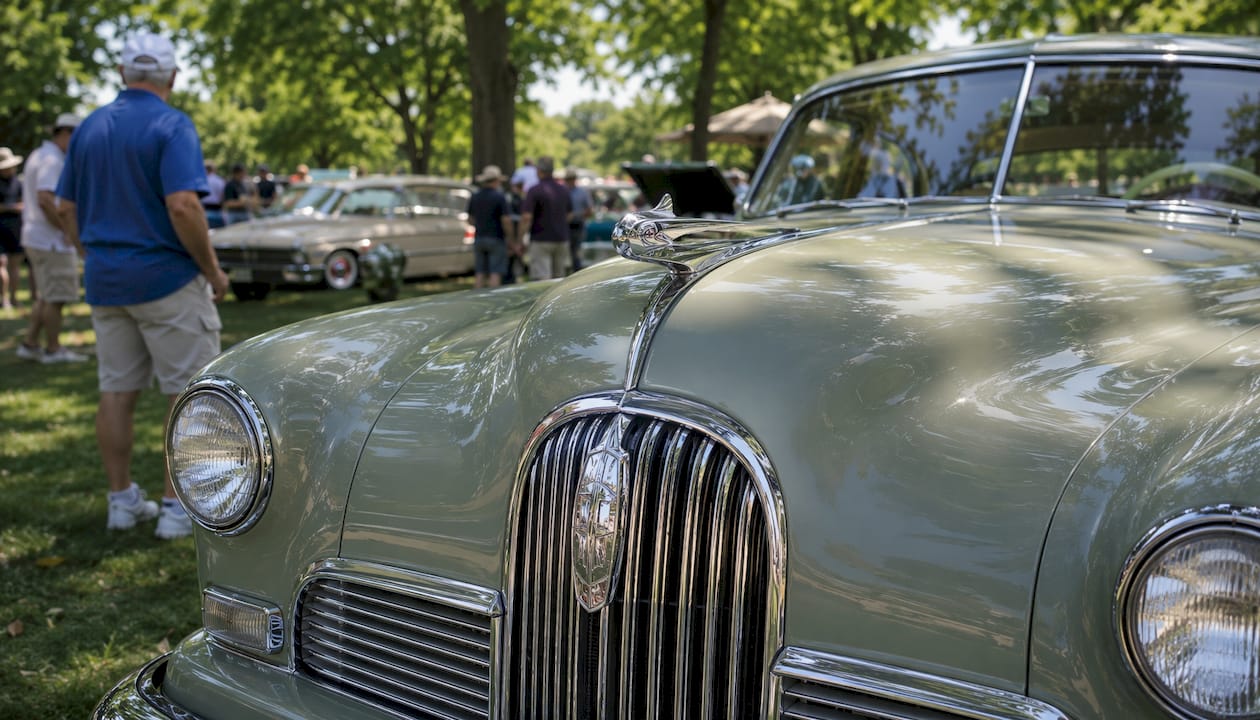
Press cars are not gently driven. Journalists and test drivers exercise vehicles in ways that create hidden mechanical stress — high-speed runs, repeated hard braking, multiple drivers in a single week, and international transport that exposes the chassis to varied climates and road surfaces.
Typical operational stresses to investigate:
- Multiple-driver test cycles with no single accountable owner
- High-speed and track evaluation runs that stress brakes, suspension, and drivetrain
- International transport (sea freight, air freight) with associated humidity and vibration exposure
- Repeated display transport loading and unloading
- Elevated early mileage concentrated in a short window
Manufacturer-maintained service documentation mitigates some of that risk. Ford's Heritage Fleet, maintained for active use by engineering and brand teams, demonstrates that manufacturers can and do keep meticulous records when operational intent is clear. The problem is that retired press cars often enter dealer retail channels with paperwork that labels them generically as manufacturer-owned vehicles rather than identifying them as press demonstrators — a disclosure gap buyers must actively close.
Pro Tip: Always insist on a marque-specialist pre-purchase inspection (PPI). Compare service stamps against known press-event timelines for the model. Unusual brake pad wear patterns, non-factory fasteners, and tire wear consistent with high-speed testing are the mechanical tells that cosmetic inspection misses.
Why emotional and historical significance drives collector premiums
The technical case for a press car is only part of the story. Collectors frequently pay premiums for vehicles that carry cultural weight — cars that defined a model's public image at launch and became shorthand for what that nameplate meant.
Jonathan Klinger's research on collector behavior shows that desirability tends to rise 20–30 years after production as buyer cohorts age into wealth and begin seeking the cars that shaped their formative memories. A press car that appeared in the first wave of magazine reviews for an iconic model carries exactly that kind of cultural imprint.
This is why collector interest in normcore vehicles — cars that were ordinary in production — has grown steadily. When a vehicle connects to buyers' formative memories, rarity within a social cohort creates real demand. For a press car, the story is already written and documented. That documented story is the premium.
How to evaluate a press-fleet vehicle before you buy
A structured pre-purchase process protects buyers from paying a provenance premium for a car whose history cannot be verified.
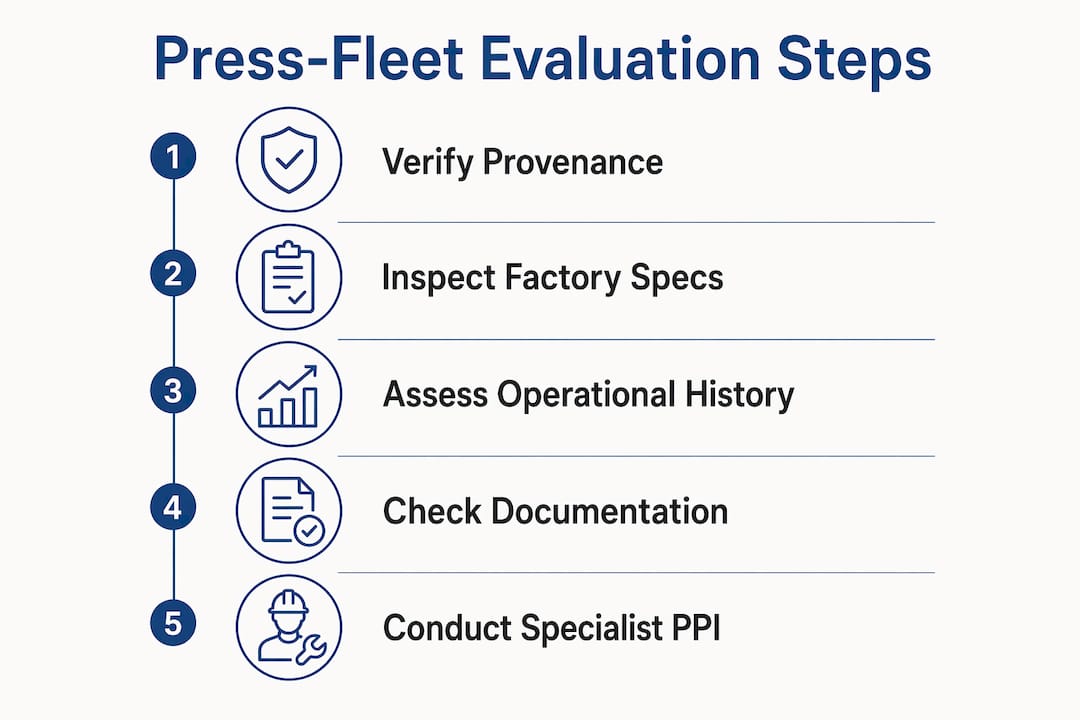
- Request the full provenance package from the seller: original press paperwork, launch photos, event logs, transport and insurance records, and any manufacturer correspondence referencing the chassis.
- Cross-reference registration history against known press-event timelines for the model. Gaps in manufacturer ownership or unexplained private-ownership periods before retail sale are red flags.
- Commission a marque-specialist PPI before committing. A generalist mechanic will miss the wear patterns specific to press use. Autovendorsfl coordinates these inspections for buyers, connecting them with specialists who know what press-cycle stress looks like on a given marque.
- Conduct a physical condition audit focused on subframe integrity, suspension wear, brake rotor and caliper condition, and engine wear patterns consistent with high-rev test cycles.
- Request manufacturer or heritage confirmation where available. Some manufacturers will confirm press-fleet status through their heritage or archivist departments when provided with the VIN.
Pro Tip: Read brake pad wear patterns carefully. Uneven wear across an axle often indicates multiple drivers with different braking habits — a reliable mechanical indicator of press use that sellers rarely disclose.
The pre-owned luxury car inspection checklist from Autovendorsfl's blog provides a complementary framework for the full physical audit.
Are press-fleet cars sound investments? Weighing the trade-offs
Investment advantages:
- Unique provenance premium unavailable in standard retail examples
- Documented launch history that supports a higher, defensible asking price
- Limited supply of authentic, fully documented press examples
- Historical significance that tends to appreciate as the model ages into collectibility
Investment risks:
- Heavy early-life use that may not be visible in cosmetic inspection
- Market preference shifts that can reduce demand for specific models
- A narrow buyer pool that limits liquidity compared to mainstream collectibles
- Higher insurance and storage costs for heritage-grade vehicles
Specialist collector insurance with agreed-value policies is the appropriate coverage for press-fleet cars — standard auto policies do not account for provenance premiums. Missing documentation or undisclosed heavy use can materially reduce resale value, sometimes below comparable private-ownership examples. For a broader view of why luxury cars hold value over time, the dynamics of provenance-driven appreciation apply directly here.
Where collectors typically find press-fleet vehicles
Acquisition channels vary significantly in documentation transparency and buyer protection:
- Direct dealer disposition: Manufacturers sell retired press cars to dealer networks, though paperwork often labels them generically as manufacturer-owned stock. Ask specifically about press-fleet status.
- Manufacturer heritage sales: The most transparent channel. Ford's Heritage Fleet, for example, is cataloged with clear selection criteria and provenance records.
- Specialist auctions: Historics and similar houses occasionally list press cars with documented manufacturer ownership history.
- Private dealer networks: Specialty brokers who focus on provenance-rich inventory, including barn finds reported to them directly.
| Channel | Documentation transparency | Buyer protection | Pricing pattern |
|---|---|---|---|
| Manufacturer heritage sale | High | High | Premium, non-negotiable |
| Specialist dealer network | Medium to high | Medium to high | Negotiable with provenance |
| Specialist auction | Variable | Medium | Competitive, bid-driven |
| Private sale | Low to medium | Low | Widest range |
When vetting auction lots, request the full provenance file before bidding — not just the catalog description. For sourcing tactics, how to find rare luxury model inventory covers the practical steps in detail.
Key Takeaways
Press-fleet vehicles command collector premiums when provenance is complete, factory specifications are unaltered, and documented manufacturer use connects the car to a specific historical moment in the marque's story.
| Point | Details |
|---|---|
| Provenance is the price driver | Original press releases, event logs, and manufacturer correspondence directly support a higher, defensible valuation. |
| Factory originality outperforms restoration | Unmodified factory components act as reference artifacts; once altered, that proof is permanently lost. |
| Press use creates hidden wear | Multiple drivers, high-speed cycles, and international transport require a marque-specialist PPI before purchase. |
| Emotional context adds real premium | Desirability tends to rise 20–30 years post-production as buyer cohorts age into wealth and seek formative-memory cars. |
| Autovendorsfl supports authenticated acquisitions | Autovendorsfl coordinates provenance verification and marque-specialist PPIs for luxury buyers sourcing press-fleet vehicles. |
A collector's perspective on what the market actually rewards
The conventional wisdom says press-fleet cars are risky because of heavy use. That is true, but it misses the more important point: the risk is manageable, and the upside is not available anywhere else. A private-ownership car, however well-maintained, cannot carry the documented story of a manufacturer's launch event. That story is a fixed asset. It either exists or it does not.
What the market consistently underestimates is how much of the premium is narrative-driven rather than mechanical. Buyers who focus exclusively on mileage and condition grades miss the collector who will pay significantly more for a car that appeared in the first road test of a model they grew up reading about. That emotional layer is not irrational — it is the same logic that drives fine art and first-edition book markets. The story, fully documented, is the asset.
The practical implication for buyers is straightforward: spend as much time auditing the paperwork as you spend inspecting the car. A press car with a thin provenance file is just a used car with an interesting claim. A press car with a complete chain of custody, manufacturer confirmation, and period photography is a different category of purchase entirely.
For dent repair and sympathetic restoration decisions on collector-grade vehicles, the same principle applies: preserve what is original, and document any corrective work carefully.
Autovendorsfl helps you source and verify press-fleet vehicles
Collectors who want press-fleet provenance without the research burden have a direct path through Autovendorsfl. The dealership's personalized vehicle-finding service includes provenance verification, marque-specialist PPI coordination, and access to a matched buyers-and-sellers network focused on authenticated luxury inventory. Rather than sorting through auction lots with incomplete documentation, buyers work with a team that already knows what a complete provenance file looks like and what questions to ask before a transaction moves forward.
Autovendorsfl's hands-on approach means buyers get a clear picture of a vehicle's history, condition, and fair market value before committing. Secure transport and storage coordination are available for buyers who need to move vehicles across state lines or into climate-controlled facilities. To start a conversation about sourcing a specific press-fleet vehicle or verifying a car you have already found, contact Autovendorsfl directly and describe what you are looking for.
Useful sources and further reading
The following sources support the factual claims and attributed perspectives in this guide:
- Preserving a Legacy: Maintaining Historic Press Fleets — Birch Automotive. Covers press-fleet operational history, documentation requirements, and the curatorial challenges of maintaining vehicles as both archive and working asset.
- Ford Heritage Fleet Gives New Life to Historic, Concept Vehicles — Forbes / Edgar Sten. Details Ted Ryan's establishment of Ford's North American Heritage Fleet and the criteria used to select and catalog vehicles.
- Normcore Car Collectibles: When People Come to Care About Unexceptional Cars — Capital One / Jonathan Klinger. Explains the 20–30 year desirability curve and how emotional memory drives collector demand.
- What Happens to Press Cars When the Press Is Done with Them? — Jalopnik. Documents how retired press cars enter retail channels and the disclosure gaps buyers face.
- Pennsylvania's Hidden Gem: A Square Body Truck Trove Discovered — Clean Fleet Report. Supports the originality-over-restoration principle and the collector preference for unmodified factory examples.
| Source | What it supports | URL |
|---|---|---|
| Birch Automotive | Provenance, documentation gaps, press-use wear | birchautomotive.com |
| Forbes / Ted Ryan | Manufacturer heritage fleet intent and cataloging | forbes.com |
| Capital One / Klinger | Nostalgia curve, emotional value drivers | capitalone.com |
| Jalopnik | Retail disclosure gaps, press-car pipeline | jalopnik.com |
| Clean Fleet Report | Originality premium, unmodified factory components | cleanfleetreport.co |