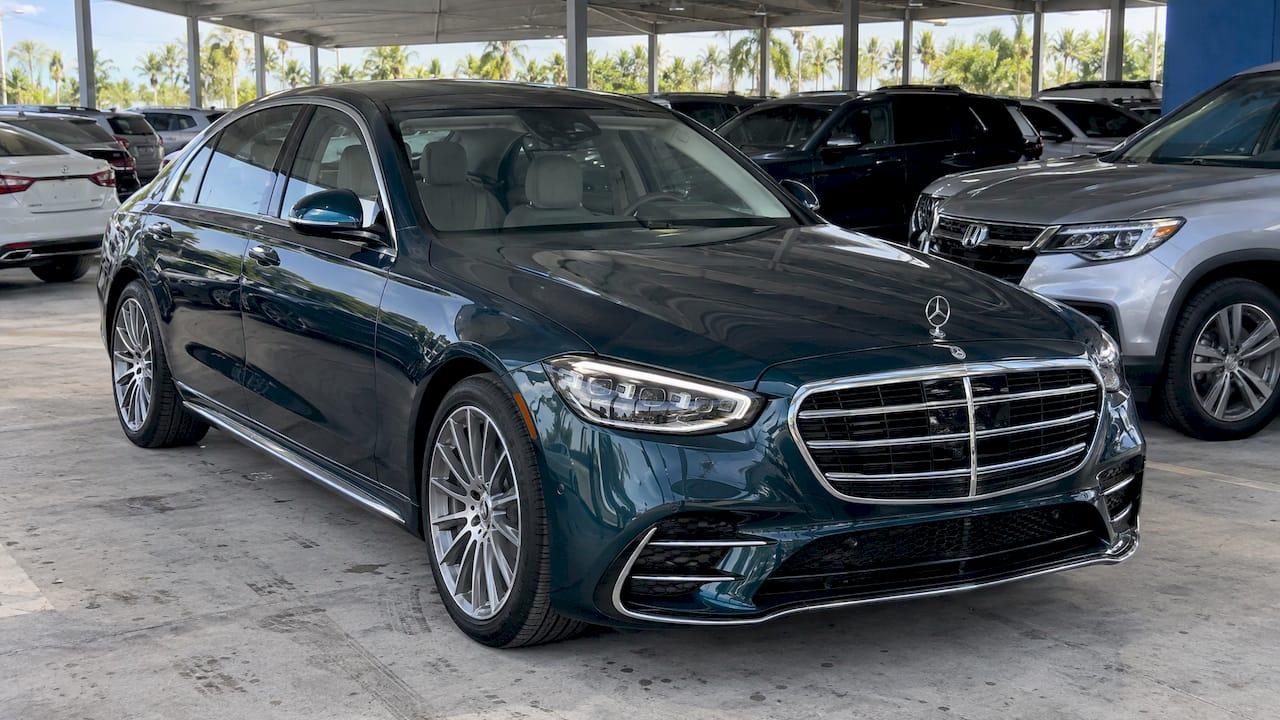
Buying a used luxury car is a smart move when you pick the right model, budget for ownership and not just the sticker price, and verify the car's condition before you sign. The first owner absorbs the steepest depreciation, and you get the leather, the engineering and the technology at a far lower entry cost. This guide covers what to expect, what to budget, which cars have the best reliability record, and how to check a car properly.
TL;DR
- Depreciation works in your favor: a new car is commonly worth only 60% to 80% of its original value after three years, and the rate slows after that.
- Budget for ownership: insurance, premium fuel, brakes, fluids and parts all run higher on luxury models, so leave room beyond the monthly payment.
- Choose the model before the badge: reliability records vary widely, and simpler drivetrains tend to cost less to repair.
- Verify every car: get the service records, a history report and an independent mechanic's inspection, even on certified cars.
- Finance on your terms: get quotes from banks and credit unions first, then compare them with the dealer's offer.
Table of Contents
- Why used luxury makes sense
- What to budget beyond the price
- Choosing a model with a strong record
- How to check a used luxury car
- Certified pre-owned and warranties
- Financing a used luxury car
- Our perspective
- Find your car with Auto Vendors Inc
- FAQ
- Sources
Why used luxury makes sense
The case rests on one number: depreciation. Luxury cars tend to lose value quickly in the first years. AP News reports that after three years of ownership a new vehicle is commonly worth 60% to 80% of its original value, and that the loss typically slows afterward. When you buy at that point, the first owner has already paid for the steepest part of the drop.
A worked example makes it concrete. HowToGeek describes a new 2021 Mercedes-Benz S-Class priced around $140,000 when well equipped. Per Kelley Blue Book figures it cites, a very good example with 50,000 miles trades for roughly $50,000, so the original owner lost about $90,000. A buyer who pays $60,000, drives it five years and trades it in for $20,000 loses $40,000 over that time. That is the kind of car that once cost six figures, owned at a fraction of the price.
There is a second benefit: features. A used luxury model often matches or beats a new mainstream car on power, comfort and equipment. AP News notes that a 2023 BMW X3 offers up to 382 horsepower, a level of performance and refinement you would not find in a typical new compact crossover at a similar price.
If you want the longer cost comparison, our article on why pre-owned luxury beats new car cost walks through it.

What to budget beyond the price
The purchase price is only one line. Luxury cars use pricier parts, premium fluids and specialized labor, so a realistic budget covers all of it. HowToGeek's Joe Kucinski makes the point well: the risk is not the car itself but an emotional, impulsive purchase. Buy carefully, budget realistically and leave room for maintenance, and the ownership experience is a good one.
Insurance
Premiums rise with the value and repair cost of the car. Citing CarEdge, HowToGeek puts insurance for a Toyota Crown at about $2,474 per year and for a Mercedes-Benz S 580 at about $5,118, roughly $220 more each month. Older models help: Capital One's Auto Navigator notes that older cars, luxury included, tend to cost less to insure than newer versions. Get an insurance quote on the exact car before you commit.
Fuel
Many luxury engines are tuned for premium gasoline. Capital One calculated that an owner of an 18-mpg luxury car driving just over 14,000 miles a year paid nearly $6,000 extra over ten years for 91-octane fuel when gas was $4, assuming a 60-cent premium per gallon. Check what the manufacturer specifies and price your annual mileage against it.
Maintenance and repairs
Brakes, fluids and other wear items cost more on luxury models, and parts and labor rates run higher. Edmunds estimates, as AP News reports, that a BMW X3 costs about twice as much to maintain on average as a Honda CR-V. A simple habit solves most of the surprise: set aside a monthly maintenance fund as part of the car budget from day one.
For a full walk-through of numbers aimed at newcomers, see what to budget for your first luxury car.
A quick budget table
| Cost | What drives it | What to do |
|---|---|---|
| Purchase price | Age, mileage, condition, trim | Compare similar cars before choosing |
| Financing | Credit, term, down payment | Get outside quotes first |
| Insurance | Car value, repair cost | Quote the exact car beforehand |
| Fuel | Premium vs. regular requirement | Check the manufacturer's specification |
| Maintenance | Parts, labor, drivetrain complexity | Keep a monthly reserve |
Choosing a model with a strong record
Not all luxury cars age the same way. Consumer Reports warns that the wrong used luxury model can mean an uncomfortable ride, frustrating controls and a heavy bill for out-of-warranty repairs, while its recommended models scored well in road tests, reliability and crash tests. Choosing the model deliberately is the biggest lever you have.
Use reliability data
Consumer Reports says a used car earns its recommendation only if it performed well in road tests, showed consistently above-average reliability over several years and had standard electronic stability control. Those are sensible filters for any shortlist. The same organization ranks Lexus first in used car reliability and notes that several Lexus models carry its used-car recommendation. TopSpeed adds that the 2021 and 2022 Lexus GX were the only years of that generation to earn a perfect 5 out of 5 in a Consumer Reports used-car reliability study. Yahoo Autos reports that in J.D. Power's 2025 study Lexus ranked highest for dependability for the third year running, at 104 problems per 100 vehicles against an industry average of 202.
Look at the drivetrain
Capital One cites the Long-Term Quality Index, a study of more than 3 million professionally inspected vehicles, finding that luxury cars with direct injection, turbochargers and CVTs score lower on reliability. Its top-rated luxury cars, including the Lexus LS, Cadillac XTS and Lincoln Town Car, all used naturally aspirated engines and conventional automatics. That does not rule out turbocharged cars, which can be excellent when well maintained. It means a car's service history matters even more when the powertrain is complex.
Luxury or premium?
The badge matters less than the fit. If you are weighing a top-tier marque against a well-equipped premium brand, our guide to what separates luxury from premium cars helps you decide which suits your driving and budget.
Matching the car to your life
- Busy professionals: A late-model luxury sedan with a full service record keeps surprises low.
- Families: A used luxury SUV gives space, safety technology and comfort.
- Enthusiasts: Rarer models reward extra diligence on mechanical condition; see how to evaluate a rare car's mechanical condition.
- High-mileage bargains: A strong dealer checklist can make them work; read how to buy high mileage luxury cars confidently.
How to check a used luxury car
A methodical inspection checklist matters on any high-value purchase, and the same disciplined approach used when inspecting a yacht applies to a luxury car: work through it in order and never rush. Here is the sequence we recommend.
- Read the history. Ask for service records. Copy the VIN from the driver's side of the dashboard near the window or from the driver's door, then use it to check the title through AutoCheck or the Department of Justice's National Motor Vehicle Title Information System, which the BBB notes is available for a small fee.
- Walk around the exterior. The BBB suggests looking for even body spacing, rust at fender bottoms, around lights and bumpers, under doors and in wheel wells, and for paint that does not match or overspray on chrome.
- Check tires and brakes. Uneven tire wear or signs of brake fluid leakage deserve questions. If structural damage is suspected, the frame and alignment need checking.
- Read the Buyer's Guide. Per the BBB, the guide in the window states whether the car is sold as-is or with a warranty. If the as-is box is checked, there is no warranty. If the warranty box is checked, ask for a copy and read it before agreeing.
- Test drive properly. Drive on city streets and highway, and test every electronic feature: screens, driver assistance, climate, seats and cameras.
- Get an independent inspection. More on this below.
Our own checklists go deeper: the pre-owned luxury car inspection checklist and the guide on how to inspect a pre-owned luxury vehicle.
Why an independent inspection is worth it
The Illinois Attorney General's consumer guide advises that an inspection by an independent mechanic is important even when a car is certified, dealer-inspected or sold with a warranty, and that a seller who refuses one is a red flag. Consumer Reports agrees: even among recommended models, a bad day at the factory or a neglectful owner can produce a lemon, so have a certified mechanic go over the car before you sign. A good inspection gives you facts for negotiating and peace of mind for ownership. Read more in why pre-inspection matters when buying used luxury cars.
Certified pre-owned and warranties
Certified pre-owned (CPO) cars sit between a standard used car and a new one. Consumer Reports describes them as late-model used cars that have been inspected and are backed by a warranty. It also reports that CPO cars typically have under 50,000 miles, and that the average listed price runs about 1.8 percent higher than a comparable non-certified car, according to Kelley Blue Book.
Two details help you compare programs:
- Warranty clocks start at original sale. Long five- or seven-year CPO warranties start from the original in-service date, not your purchase date. A CPO 2023 Acura MDX first registered October 1, 2022 carries its seven-year, 100,000-mile coverage until October 1, 2029 or 100,000 miles, whichever comes first.
- Programs differ. ConsumerAffairs notes that not all CPO programs are the same, so read what each one covers.
AP News adds that luxury brands commonly offer a four-year bumper-to-bumper warranty, so a recent used model may still have factory coverage remaining. Because modern luxury cars are packed with electronics, look closely at coverage for screens, sensors and driver assistance. We review this in used luxury warranties that cover electronics and ADAS and in our guide to the best certified pre-owned luxury cars.
Financing a used luxury car
A smart purchase can still be spoiled by a poor loan, so shop for financing as carefully as for the car. The Illinois Attorney General's guide recommends pulling your credit report from one of the three credit reporting agencies before shopping, getting quotes from local banks, credit unions and online lenders, and comparing those with the dealer's offer to choose the lowest annual percentage rate.
The 20/4/10 guideline
A popular benchmark is the 20/4/10 rule. LendingTree describes it as a down payment of at least 20%, a loan of four years or less, and total transportation costs of 10% or less of monthly income. To estimate a budget, it suggests adding your trade-in equity to your down payment savings and multiplying by five.

Treat it as a guideline, not a law. Edmunds reports that only 5.6% of loans were 48 months in the second quarter of 2025, while 72-month loans made up 36.1%. It also puts average used-car APRs at 10.8% in October 2025, which makes your rate and your term worth negotiating. Even if you cannot reach all three numbers, a larger down payment and shorter term lower your interest and keep you from owing more than the car is worth.
Keep your trade-in in mind too. If you have a vehicle to trade, knowing its value before you shop helps you set the down payment and the budget.
Our perspective
We have spent years helping drivers find premium and luxury vehicles, and the buyers who are happiest a year later share one habit: they decide what the car must do for them before they fall for a badge.
That is why we curate our inventory rather than stock for volume. Every car we offer is chosen with elegance, craftsmanship and engineering in mind, and we think a well-chosen used luxury car is among the best values on the road. The depreciation has been absorbed, and the quality remains.
We also know the search can be time-consuming, especially for busy professionals, families who need a quality SUV or minivan, and first-time luxury buyers watching their budget. So we work one on one. If you know the make and model you want, or only the kind of experience you want, our team helps you find it. Our trade-in valuation and financing options are there to make the numbers work, and we encourage you to bring any questions about a car's history or condition.
Buy the car that fits your life, plan for ownership, and enjoy it.
Allen
Find your car with Auto Vendors Inc
If you are ready to start, browse our pre-owned inventory in Fort Lauderdale by make, model, body style and price, covering sedans, SUVs, coupes, pickups and minivans.

Can't spot the exact car? Our Car Finder service puts our team to work on your behalf, searching for the vehicle that matches your needs. We also offer trade-in valuation and financing options, so you can handle the whole purchase in one place.
FAQ
Is it smart to buy a used luxury car?
Yes, when you choose carefully. You avoid the steepest depreciation, and you get premium features at a lower price. The main requirement is budgeting for higher insurance, fuel and maintenance costs and checking the car's history and condition before buying.
What is the most reliable luxury car to buy used?
Consumer Reports ranks Lexus first in used car reliability, and several Lexus models carry its used-car recommendation. Reliability still varies by model, year and powertrain, so check the specific car's service record and have a mechanic inspect it.
What is the 20% rule when buying a car?
It is the first part of the 20/4/10 guideline: put at least 20% down, finance for four years or less, and keep transportation costs at or under 10% of monthly income. It is a rule of thumb, and many buyers adjust it to fit their budget and loan terms.
What is the $3,000 rule for cars?
It is an informal guideline with a few versions. In one, a repair estimate near $3,000 prompts you to compare the cost with the car's value and get a second opinion. In another, it is a cash reserve for repairs after purchase, which is a sensible habit with any luxury car.
Sources
- AP News: The advantage of buying a used luxury car rather than a new one
- HowToGeek: What to consider before taking that good deal on a used luxury car
- Capital One Auto Navigator: The hidden costs of driving a used luxury car
- Consumer Reports: Popular used luxury cars to avoid and what to buy instead
- Consumer Reports: How to find a safe and reliable used car
- Consumer Reports: Lexus cars and SUVs
- TopSpeed: The Lexus SUV you should buy used
- Yahoo Autos: Consumer Reports on a top luxury vehicle
- BBB: Tip on buying a used car
- Illinois Attorney General: Consumer guide to buying a used vehicle
- ConsumerAffairs: When should you get a pre-purchase inspection?
- Consumer Reports: Used car and certified pre-owned warranties
- LendingTree: What is the 20/4/10 rule for car buying?
- Edmunds: How long should a car loan be?
- Chuck's Garage: What is the $3,000 rule for car repairs?
- Yacht inspection checklist: a complete buyer's guide