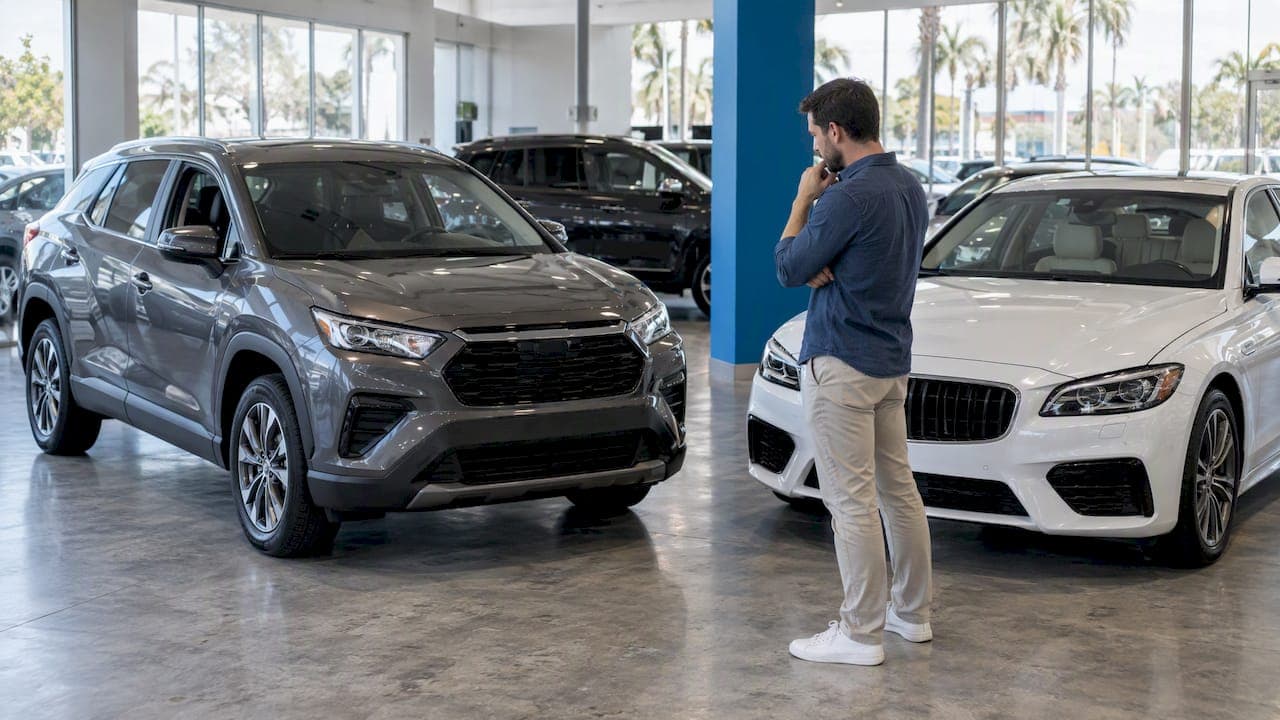
A premium car is usually an upscale version of a mainstream vehicle. A luxury car is usually built by a marque whose whole identity is refinement, with its own engineering and a higher price and ownership cost to match. No law defines either word, so the line is blurry, and it is getting blurrier. What matters for your wallet is what you get for the money, what the car costs once the warranty ends, and whether the specific car in front of you has been properly checked.
This guide explains how the two labels are used, where they overlap, and how to decide when you are shopping used, which is where most of the value in both categories sits.
TL;DR
- "Premium" usually means a high-end trim or a near-luxury brand. "Luxury" usually means a purpose-built marque with its own platforms, materials and technology. Neither term has an official definition.
- The gap in daily comfort has narrowed. The gap in long-term cost has not: European luxury brands cost the most to maintain over a decade, according to Consumer Reports.
- On a used car, the build and the maintenance history matter more than the badge. Get an independent inspection and run the VIN for open recalls.
- Judge a loan by total cost, not the monthly payment, and get pre-approval elsewhere to compare against dealer financing.
- Our Fort Lauderdale team can search for a specific make, model and budget on your behalf.
Table of Contents
- What "luxury" and "premium" actually mean
- Where the two overlap
- Side by side: how they compare
- What you can see and feel in the car
- The real difference shows up after the warranty
- Which one fits you?
- Why used is where both categories shine
- Before you buy: inspection and recall check
- Financing a luxury or premium car
- Our perspective: buy the car, not the label
- Find your car in Fort Lauderdale
- A short checklist for the test drive
- FAQ
- Sources
What "luxury" and "premium" actually mean
Ask five people and you will get five answers, because the industry never settled on one. Edmunds notes that no single legal definition exists. Luxury cars are generally recognized by premium craftsmanship, advanced technology, high-end interior materials and refined driving dynamics, and they command higher prices because of it.
In practice, shoppers and dealers use the words in two loose ways:
- Luxury points to a brand whose business is exclusively upscale vehicles: Mercedes-Benz, BMW, Audi, Lexus, Porsche, Lincoln and similar marques. The best of these tend to be stand-alone designs that do not share major hardware with a cheaper mainstream car, a point Edmunds makes in its luxury brand rankings.
- Premium points to a step up within a mainstream lineup: a top trim with leather, a bigger screen, a better audio system and driver aids. Some analysts also use it for near-luxury brands that sit between the two worlds.
We cover the grading side of this in more depth in our piece on what defines premium automotive grade. The short version: treat the words as a starting point and judge the actual car.
Where the two overlap
The distinction is fading because mainstream makers have raised their game. Edmunds observes that many high-quality mainstream models now offer sophisticated cabins and comfortable rides, which is why some analysts file certain upscale trims under "premium" rather than true luxury.
So a fully loaded mainstream SUV can feel more special than an entry-level badge from a luxury marque. A base luxury sedan, meanwhile, may have a smaller engine and fewer features than a well-optioned premium trim. The badge alone tells you little.
Side by side: how they compare
The table shows the typical pattern. Individual cars break every rule here, so use it as a map, not a verdict.
| Factor | Premium (upscale trim or near-luxury) | Luxury (dedicated marque) |
|---|---|---|
| Platform | Often shared with mainstream models | More often unique or heavily tuned |
| Interior materials | Leather or leather-look, soft-touch plastics | Natural leather, real wood or metal, tighter fit and finish |
| Technology | Strong for the price, often a generation behind at launch | Frequently debuts new driver aids and comfort features |
| Ride and refinement | Comfortable, sometimes noisier | Quieter cabin, more sophisticated suspension |
| Purchase price | Closer to the mainstream range | Higher, and depreciation can be steep early on |
| Repair costs | Usually moderate | Higher, especially for complex systems |
| Used-market appeal | Easier to afford and insure | More car per dollar, if the history is clean |
What you can see and feel in the car
The quality differences are physical, which is good news: you can check them in a test drive. Look for panel gaps that are even all the way around, doors and windows that close with a solid, quiet action, and paint with depth and no orange-peel texture. Inside, check whether the switchgear feels weighted and consistent, whether the headliner and seams are tight, and how much road noise comes through at highway speed.
Features matter too. A higher-end audio system, a larger infotainment screen and better interior accents are common luxury differences. Also test the unglamorous things: how the seats feel after 30 minutes, how easy the controls are to use without looking, and how the car rides over a rough patch of road, something Fort Lauderdale's older streets provide in abundance.
If you want to keep that finish looking right, a professional can help. Owners who want paint and interior kept in top condition often turn to mobile detailing professionals rather than automatic car washes.
The real difference shows up after the warranty
This is where the labels stop being abstract. Buying a luxury car is one price. Owning it is another.
Consumer Reports analyzed what brands cost to maintain over time. Its findings put Buick and Lincoln among the cheapest to own and European brands among the most expensive. Across a 10-year period, the gap between certain European marques and domestic luxury brands can run to thousands of dollars.
That does not make European luxury a bad idea. It means you should budget for it. Factory warranties and free maintenance periods typically fade after the first three to five years, and a used luxury car is often right at or past that point.
Complexity plays a part as well. John Ibbotson, Chief Mechanic at Consumer Reports, has pointed out that adaptive suspensions and complex electronics deliver a premium experience but raise both the odds and the cost of future repairs. Air suspension, multi-screen dashboards and sophisticated driver aids are lovely when they work and pricey when they do not.
A practical way to budget
- Pick the specific model and model year, not just the brand.
- Ask for service records and check whether major scheduled work has been done.
- Look up the model's known problem areas and common repair costs.
- Set aside a monthly repair reserve on top of the payment, insurance and fuel.
- Compare against a Japanese or domestic luxury alternative to see whether you are paying for features you will use.
Consumer Reports also publishes a roundup of brands and models that can save money over time, which is worth reading before you commit.
Which one fits you?
First-time luxury buyers
If affordability is the main concern, a late-model premium trim or a Japanese or domestic luxury car is often the sensible entry point. You get leather, good tech and a quiet ride without the highest running costs. Move up to a European marque once you know what you value.
Families
For families, space and safety features matter more than the badge. A premium-trim SUV or minivan can deliver the third row, cargo room and driver aids you need. You can browse SUVs for sale in Fort Lauderdale and compare trims and mileage side by side.
Busy professionals
If you drive every day and have no time for shop visits, prioritize a car with a clean service history and simpler systems. Reliability is the luxury you will notice most.
Enthusiasts
If you want a particular engine, a manual gearbox or a rare configuration, the true luxury and performance marques are where the choice is. Expect to search harder, and to inspect more carefully.
Why used is where both categories shine
Depreciation is the hidden gift of the used market. A car that lost a big share of its value in the first years may still have most of its engineering, comfort and technology. Industry reports put the average price of a used car near $28,000, according to the Federal Trade Commission, and Edmunds says national average new vehicle prices sit a little under $50,000, so a used premium or luxury car can land in a price range many buyers did not expect.
The trade-off is that you inherit the history. That is why the next two steps matter.
Before you buy: inspection and recall check
Get an independent inspection
Even a dealer-certified car does not guarantee mechanical reliability. The FTC's consumer advice recommends an independent inspection by a mechanic, which also gives you a cost estimate you can use when negotiating. Look for a shop with ASE-certified technicians, and ask them to focus on the systems that are costly on luxury cars: suspension, electronics, brakes, cooling and any leaks.
Our team has written two practical guides if you want to go deeper: a pre-owned luxury car inspection checklist and a look at why pre-inspection matters on used luxury cars.
Check the VIN for open recalls
Enter the 17-character VIN on NHTSA's recall page. A VIN search is the definitive way to find open safety recalls, and the repair is free at a manufacturer's dealership. It cannot tell you whether non-OEM parts, such as improper air bag inflators, were installed, so that still needs a physical inspection by a qualified mechanic.
Financing a luxury or premium car
It is easy to fall for the monthly payment. A longer loan term lowers it but raises the total interest you pay, as the Consumer Financial Protection Bureau explains. Add the cost of extras such as GAP insurance or an extended warranty and compare the total out-of-pocket figure.
The same CFPB source says only about half of consumers compare loan offers, and that pre-approval from a bank or credit union can give you more leverage than relying on dealer financing alone. Its step-by-step auto loan guide starts with setting a budget before you shop for a loan.
For more on this, see our guides to pre-approval for luxury auto financing and why luxury dealers offer payment plans. If you are trading in a car, how luxury trade-in appraisal works will help you know what to expect.

Our perspective: buy the car, not the label
We are a Fort Lauderdale dealership that curates used vehicles with a focus on luxury and premium models, so we see this question constantly. Our view is simple.
The badge is the least reliable part of the decision. We have seen buyers happier in a well-kept premium trim than in a neglected luxury car that cost more to acquire and far more to keep. What makes a car feel luxurious is craftsmanship: how it is built, how it has been maintained, and whether it suits the person who drives it.

So we start from your life, not the brand. How many miles a week? How many passengers? Do you care more about quiet comfort, technology or driving feel? Then we look at the models that fit, check the history, and talk plainly about ownership costs. If a car is not right for your budget, we would rather say so than make the sale.
When the car you want is not on the lot, that is where personalized searching helps, and it is why we offer it. If you want a longer look at that approach, our article on hiring a personal car buying service for luxury cars explains how it works.
— Allen
Find your car in Fort Lauderdale
If you are ready to compare real vehicles, browse our used cars for sale by make, model, body style and price, including sedans and SUVs. If you are after something specific or hard to find, tell us what you want through our Car Finder and we will help you look. Trade-in valuation and financing options are part of what we offer.
A short checklist for the test drive
- Drive the car on both city streets and the highway.
- Switch every function on and off: seats, climate, screens, driver aids.
- Listen for suspension noises over bumps and for wind or road noise at speed.
- Check for warning lights at startup and ask about stored codes.
- Review service records, ownership history and any accident reports.
- Ask about the DOC fee and all charges up front so you can compare the full price.
FAQ
Is a premium car the same as a luxury car?
Not exactly. Premium usually describes an upscale trim or near-luxury brand, while luxury describes a dedicated marque with its own engineering and materials. There is no official definition, and the two overlap, so evaluate the individual car.
Are luxury cars worth the money?
They can be, if you value the refinement, technology and comfort and you budget for upkeep. Buying used lowers the entry price, but repair costs after warranty can be significant, particularly on European brands. An inspection and service history make the difference between a bargain and a burden.
Which luxury brands cost the least to maintain?
Consumer Reports' analysis found Buick and Lincoln among the cheapest to own, with European brands among the most expensive, and lists Lexus among luxury alternatives that often cost less over the long term. Costs vary by model, so check the specific car you are considering.
Should I buy a certified used luxury car without an inspection?
No. Certification does not guarantee mechanical reliability, so have an independent mechanic inspect the car before you sign. The report also gives you a repair estimate to use in negotiation.
Sources
- Best Luxury Car Brands of 2026, Edmunds
- Car Brands Ranked by Maintenance and Repair Costs Over Time, Consumer Reports
- Car Brands and Models That Can Save You Money Over Time, Consumer Reports
- Buying a Used Car From a Dealer, FTC (inspection advice)
- Vehicle Safety Recalls Week, NHTSA
- Know Before You Owe Auto Loans Shopping Sheet, CFPB
- Take control of your auto loan: A step-by-step guide, CFPB