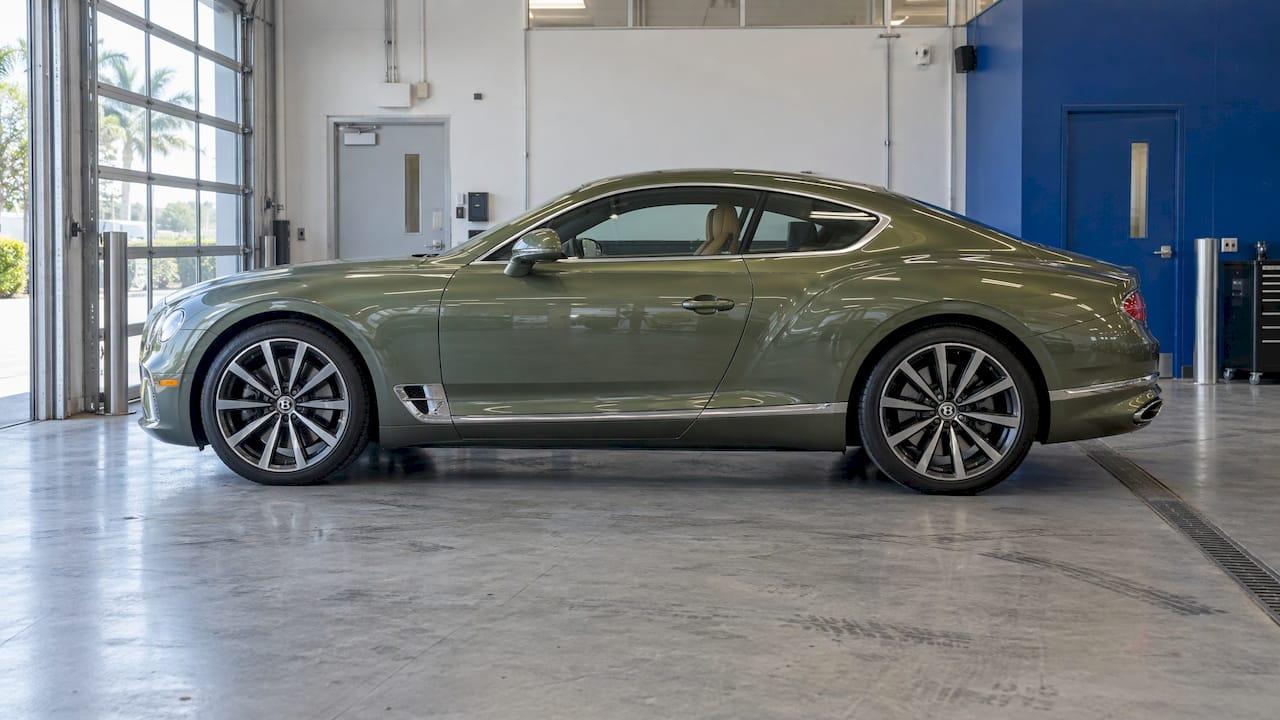
Finding a rare or distinctive car comes down to three steps. Define what "unique" means to you, search the channels where scarce cars actually surface, and verify the car's identity and history before you pay. Online marketplaces make the search wider than ever, but they also make careful checking more important. A personal car finder can handle the first two steps for you.
This guide walks through each step with a buyer's eye: what makes a model or an individual car special, where to look in the United States, how to confirm that a car is what it claims to be, and what to plan for after you buy.
TL;DR
- Decide what "unique" means for you: a rare model, a rare color or configuration, or a single car with a documented past. Each one is searched differently.
- Search a mix of channels: online auctions, specialty marketplaces, showrooms and a dealer who will look for the car on your behalf.
- Verify before you buy: matching numbers, title, service records and an independent inspection protect you from mismatched parts and inflated histories.
- Budget for ownership, not just the purchase. Insurance, storage, service and repair reserves shape the real cost of a distinctive car.
- If time is short, a personal car finder can run the search and screen the candidates for you.
Table of Contents
- What makes a car unique?
- Where to look for rare cars in the US
- A comparison of search channels
- How to verify rarity, provenance and history
- Buying wisely: condition, rarity and honest expectations
- What owning a distinctive car costs
- For first-time luxury buyers and families
- Our perspective
- Let us do the searching
- FAQ
- Sources
What makes a car unique?
Before you search, it helps to know which kind of rarity you want, because the word covers several different things.
A rare model. Low production numbers, limited editions, or a model sold only in certain markets. These are the cars enthusiasts mean when they talk about hard-to-find models. Our guide to unique foreign market car models covers what is worth knowing if your interest runs to cars built for other regions.
A rare configuration. A common model can still be special in an unusual color, transmission or option package. We explain how scarcity and desirability interact in our piece on rare car colors.
A rare individual car. Two cars that look identical can be worth very different amounts. Provenance, documented history, significant ownership and a meaningful place in automotive history can make one example substantially more valuable than a visually similar one.
A modern car with collector potential. Not every distinctive car is old. Some recent models are already attracting collector attention, and we keep a shortlist of collector-worthy modern cars for buyers who want something special that still feels current to drive.
Write your answer down in one sentence, such as "a low-mileage luxury coupe in an unusual color with full service records." That sentence becomes your search filter and your brief if you work with a finder.
Where to look for rare cars in the US
No single channel holds every interesting car. Buyers who succeed usually combine several.
Online auctions and specialty marketplaces
The internet has made the search far easier. Online auction sites and large listing platforms let buyers search worldwide, research market trends and common faults, check seller reputations, and arrange remote inspections and shipping. One classic-car insurer's buying guide lists the main options as big online auction sites, established classic marketplaces, major live auction houses and a handful of real-world showrooms.
The trade-off is that the best cars attract many bidders, and you are often buying from a distance. Remote purchases make the verification steps below essential rather than optional.
Dealers with curated inventory
A dealership that curates its stock does part of the screening before a car reaches you. At Auto Vendors Inc in Fort Lauderdale, we focus on a premium selection of used and luxury vehicles, and you can browse by make, model, body style and price. Start with the used cars for sale page, or narrow things down with our SUV and sedan listings.
For a deeper look at how scarce luxury stock is sourced, see our guide on how to find rare luxury model inventory.
Off-market cars and professional locators
Many interesting cars never reach a public listing. They move between owners, through enthusiast circles, or through trade contacts. Reaching them takes relationships and persistence, which is why buyers with busy schedules often hand the job to a professional. Our walkthrough on off-market rare cars, pro locators and VIN checks explains how that process works.
Model-specific research and communities
Before you spend, learn the model. Buyer's guides that combine model history, specifications, model-year changes, variants, originality considerations and current listings tell you which years and versions are the ones to chase. Owner communities add the practical knowledge: known weak points, parts availability and which cars are quietly overpriced.
A comparison of search channels
| Channel | Best for | Main strength | What to watch |
|---|---|---|---|
| Online auctions | Wide selection, price discovery | Global reach and transparent bidding history | Remote buying, competitive bidding, shipping |
| Specialty marketplaces | Specific models and eras | Easy filtering by make, model and price | Seller claims vary in quality |
| Curated dealer inventory | Late-model luxury and premium cars | Cars already screened and ready to see in person | Selection limited to current stock |
| Personal car finder | Specific or hard-to-find cars | Someone else does the searching and screening | Works best with a clear brief |
| Owner clubs and forums | Enthusiast models | Honest feedback on weak points | Slower, relationship based |
How to verify rarity, provenance and history
Rarity only counts if it is real. Collector cars can carry mismatched engines and chassis, false bodywork, exaggerated histories, and counterfeit or otherwise bogus identities, so research and a physical examination both matter.
What a good history file contains
A strong provenance file establishes the car's precise identity, its ownership chronology, notable events, original configuration, title status and any distinguishing history. A bare list of owners or unverified seller statements is not enough. For older and specialist cars, a file may also include chassis, engine, gearbox and registration alignment, factory records, invoices, service records, restoration evidence, photographs and correspondence with marque experts.
We cover the paperwork side in detail in how to document a rare vehicle acquisition, and the service history in 5 steps to verify service records.
A practical verification routine
- Confirm the identity. Match the VIN on the car to the title and the paperwork. Check that engine and transmission numbers agree with what the seller claims.
- Request the records. Ask for the title, service records and any restoration receipts. Matching numbers, a pre-purchase inspection by a specialist and price research are the standard recommendations.
- Compare the story to the car. Do the wear, paint and options fit the documented history? A low-mileage claim should match the interior and the service pattern.
- Get an independent inspection. A specialist who knows the model will see what a general mechanic may miss. Our guide to evaluating a rare car's mechanical condition and the pre-owned luxury inspection checklist give you a structure to follow.
- Check the cabin carefully. Interior condition tells you a lot about how a car was used. A top-to-bottom interior detailing checklist is a handy way to look at every surface systematically, from seats and headliner to vents and trim.
Buying wisely: condition, rarity and honest expectations
How much rarity should you pay for? One investing guide suggests that at the lower end of the market you should favor condition over rarity, and at the higher end favor rarity over condition. The same guide urges buyers to choose a car they would actually drive, and to buy from sellers who lose nothing if you walk away. That last point is a good test of any seller's motives.
First-time buyers can take a lesson from one collector who cautions against a fixer-upper unless you know the car well and are an experienced mechanic. He also notes that a cheap exotic can turn out expensive because of parts and labor costs. A well-kept example usually beats a bargain that needs work.
If you want to spot value before the crowd, our buyer's guide to undervalued collector vehicles explains what to look for.

What owning a distinctive car costs
The purchase price is the first bill, not the last. Published estimates for classic cars give a sense of the categories to plan for. These come from consumer finance and investing sites rather than from regulators, so treat them as planning ranges and confirm quotes with your own insurer and local providers.
For a classic worth $25,000 to $30,000 and driven about 2,000 miles a year, one estimate puts agreed-value insurance at a few hundred dollars, annual service at $300 to $600, tires at about $150 per year, storage at $1,200 to $3,000 if you lack a garage, and a repair reserve of $800 per year. It also notes that most states offer reduced historic or antique registration rates, usually with use restrictions.

At the higher end, another guide suggests a serious classic costs roughly 2 to 4 percent of its value annually to maintain. Use the percentage as a rough guide when you set your budget.
A practical way to plan is to list six lines before you shop: insurance, registration, storage, routine service, tires and a repair reserve. Fill each with a real quote, then add them to your monthly payment if you finance.
For first-time luxury buyers and families
A distinctive car does not have to be a collector piece. Many buyers simply want something better made and more interesting than the average used car.
According to Consumer Reports, small luxury cars in the $35,000 to $65,000 range commonly offer quick acceleration and nimble handling, but sportier models usually have stiff rides and expensive tires that can wear quickly. Midsized and large luxury cars in the $48,000 to $85,000-plus range offer high-quality materials, roomy seats and many hybrid and plug-in options. Those are new-car ranges, so a used example typically gives you a way into the segment for less. Check actual listing prices for current figures.
Families have extra items on the list. Good Housekeeping advises parents to start with crash-test scores from IIHS and NHTSA, test driver-assistance features such as automatic emergency braking and lane-keep assist, and confirm there is room for car seats and cargo. It found that several mid-size SUVs could not fit a convertible rotating car seat behind the driver's seat, so bring your own seat to the lot. A third row that folds flat is a useful extra for bulky loads.
Our perspective
Most buyers who ask us about unique cars are not really asking for a model name. They are asking for a car that feels chosen rather than settled for. That is a curation problem before it is a search problem.
We build our selection around that idea. We look for vehicles that show elegance, craftsmanship and innovation, and we would rather present a smaller set of cars we stand behind than a long list of anything available. When a buyer has something specific in mind, our personalized Car Finder service puts that search in our hands, so a busy professional or a first-time luxury buyer does not have to spend evenings refreshing listings.
Our advice is simple. Be clear about what you want, insist on documentation, and work with a dealer who will talk through the car's history in plain terms. Long-standing experience in this market has taught us that good relationships produce better cars than any single search tool.
Allen
Let us do the searching
If you know the kind of car you want but not where it is, our Car Finder service is built for that. Tell us the make, model, body style or the feel you are after, and we will look for it on your behalf. You can start on our Car Finder page, or browse the current used inventory in Fort Lauderdale first. We also help with trade-in valuation and financing options, so the whole purchase can be handled in one place.

Ask us about the dealer documentation fee when you inquire, so there are no surprises when you plan your total cost.
FAQ
How do I find rare cars for sale?
Combine channels: online auctions, specialty marketplaces, dealers with curated stock and owner communities. Research the model first so you know which years and versions matter. If you would rather not run the search yourself, a car finder can track down candidates for you.
How can I tell if a car is really rare?
Check production numbers for the model and compare the car's VIN, engine and transmission numbers with its paperwork. Ask for the title, service records and any restoration receipts. An independent specialist inspection is the best safeguard against mismatched parts and exaggerated histories.
Is a rare car a good first luxury purchase?
It can be, if you choose a well-maintained, robust example you will actually drive. Be wary of cars that need extensive work, because parts and labor can cost more than the purchase price suggested. A documented, late-model luxury car is often an easier first step.
What should families look for in a distinctive SUV or minivan?
Start with IIHS and NHTSA crash-test results and driver-assistance features. Then confirm that your car seats fit and that cargo space suits your routine. Browse our SUV listings to see what is available.
Sources
- How to Navigate the Collector-Car Market, Car and Driver
- I Drive and Collect Classic Cars: How to Get in the Game, Kiplinger
- The Best Places to Buy a Classic Car, American Collectors
- SCM Buyer's Guides, Sports Car Market
- About Provenance, Vintage Car Research
- Collector Vehicle Provenance Checks Explained, Masters of Motoring
- Classic Car Investing for the New Collector: 2026 Guide, Trillionaire Daily
- What a Classic Car Actually Costs You Every Year, bro.com
- How to Find the Best Luxury Car or SUV, Consumer Reports
- Family Car Shopping Guide, Good Housekeeping