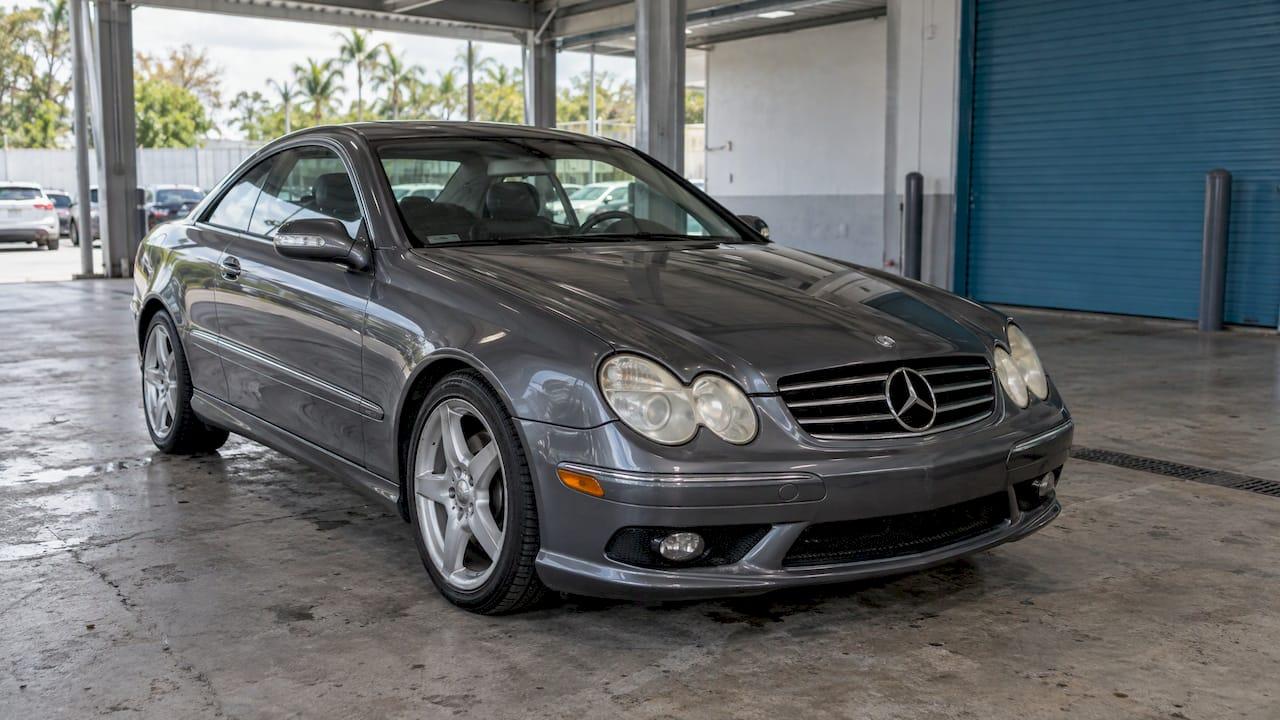
A discontinued model finder does two jobs. It tells you whether a car is really out of production, and it helps you locate a good example of that car now that new ones are gone. The first job takes a VIN, a model year and a few official checks. The second is where a dealership that hunts for specific cars on your behalf saves you the most time. At Auto Vendors Inc in Fort Lauderdale, you can search our used inventory by make, model, body style and price, and our Car Finder service helps when the car you want is not on the lot.
This guide is written for buyers who have a retired nameplate in mind: a luxury sedan you loved, an SUV or minivan your family wants, or a model that enthusiasts already call a keeper.
TL;DR
- "Discontinued" covers several outcomes: a permanent end, a pause of a year or two, an exit from one country, or a nameplate folded into another. Find out which one applies to your car.
- The model year is the key fact. The 10th character of the VIN encodes it, and the VIN also points to the model and powertrain.
- Production end and last model year are different dates. Confirm both before you assume a car is "the last one."
- Before buying any retired model, run the VIN through the federal recall lookup, read the FTC Buyers Guide on the window, and have a mechanic inspect the car.
- If the exact car is not on the lot, a personal vehicle search is faster than scrolling listings for weeks.
Table of Contents
- What "discontinued" actually means
- Cars that have recently left the U.S. market
- Step 1: Identify the exact model and model year
- Step 2: Confirm when it ended and what "ended" means
- Step 3: Check what a discontinued car needs before you buy
- Step 4: Find the car itself
- Where Auto Vendors fits in
- Perspective
- Which retired model fits which buyer
- A quick checklist you can use today
- FAQ
- Sources
What "discontinued" actually means
The word sounds final, but car makers use it loosely. A Car and Driver roundup republished by Quartz (November 2026) describes several outcomes under that single label: a model ending for good, skipping a year or two, leaving one country while staying on sale elsewhere, or being folded into a sibling nameplate.
The same piece gives a useful example. The Acura RDX ends with the 2026 model year, and a redesigned version is expected only as a 2028 model because of supplier part shortages. That is a pause, not a funeral. A buyer who read "RDX discontinued" and assumed the nameplate was gone would have the wrong picture.
The article also notes that many exits trace back to three causes: factories being assigned new work, suppliers that can no longer provide parts, and new platforms replacing old ones. So the question worth asking about any car is not "is it discontinued?" but "which kind of discontinued is it?"
| Outcome | What it means for you |
|---|---|
| Permanent end | No new units will arrive. Used examples are the only way to own one. |
| Pause | The nameplate may return, often redesigned. Earlier years remain the known quantity. |
| Regional exit | The car is gone from the U.S. but may still be built and sold elsewhere. |
| Rebrand or merge | The badge ends, but a successor with similar hardware may exist. |
Cars that have recently left the U.S. market
Seeing real examples helps you spot the pattern. These are confirmed by the sources linked here:
- Chevrolet Malibu. USA Today reports that GM wrapped up Malibu production in late 2024, which made 2025 the last model year. The Fairfax plant was retooled for the Bolt EV.
- Subaru Legacy. The same report says production ended in spring 2025 after 1.3 million U.S. units sold since 1989.
- Volvo S60 and S90. U.S. sales ended with the 2025 model year, according to the same article.
- Tesla Model S and Model X. Tesla held a final Signature Edition delivery event at Fremont, handing over the last 250 units. That ended 14 years of Model S production and 11 years of Model X production.
Notice how each one ended differently. The Malibu's production stop and its last model year are not the same event. Tesla's flagships ended with a ceremonial final batch. Volvo's sedans ended in the U.S. as a sales matter. Each tells you a slightly different thing about how many units are out there and which years to target.
Step 1: Identify the exact model and model year
Everything else depends on the model year. Consumer Reports says the model year is the key to looking up a car's equipment, performance, reliability, values and recalls. It also defines a generation as the period between complete redesigns, which matters because a discontinued model's final generation is often the most refined one.
The VIN, the 17-character vehicle identification number, is the most reliable way to get there. You can find it at the base of the windshield, on the door jamb, or under the hood.
Car and Driver's VIN guide explains how to read it:
- The 10th character encodes the model year. An "S" means 2025, and the letters recycle every 30 years, so an "S" can also mean 1985.
- Characters 4 to 8 describe the model and powertrain, using a code each manufacturer defines.
The Conversation adds the rest of the layout: a first character of 1, 4 or 5 means U.S. assembly, characters 2 and 3 identify the manufacturer, character 9 is a check digit, character 11 is the assembly plant, and the last six characters are the serial number. It also notes that NHTSA offers a free VIN decoder that identifies make, model, year and transmission.
Why this matters for a discontinued car: a listing may say "2019" while the VIN says something else, and the last production year is often split between early and late builds. Decode the VIN yourself rather than trusting a headline year.
If you only have a photo or a description
When you remember a car but not its name, work from visible traits: body style, headlight and taillight shape, wheel design and badge placement. Narrow it to a make and a generation, then confirm with a VIN on any specific car you consider. At Auto Vendors Inc, our inventory search filters by make, model, body style and price, so you can browse sedans, SUVs, coupes, pickups and minivans in one pass. Start with the sedan or SUV pages if you know the body style.
Step 2: Confirm when it ended and what "ended" means
A headline like "Model X discontinued" can describe an announcement, the end of production, the end of orders, or the end of sales. Those can be months apart. Tesla is a clean illustration: the end of Model S and X production was announced on an earnings call in January 2026, and the final units were delivered in May 2026, as the Tesla source above reports.
To pin down the dates for any car, work through these questions:
- When was production announced to end, and when did it actually end? Use the maker's own press materials or a major outlet reporting on them.
- What is the last model year? A car built in late 2024 can be a 2025 model, as with the Malibu.
- Is the end U.S.-only? The Malibu example is instructive: U.S. production ended in November 2024 as the plant was retooled, according to Wikipedia's Malibu entry, while production in China continued longer. A model can be gone from American showrooms and still exist abroad.
- Is a successor or return planned? The RDX case above shows that a gap does not always mean a goodbye.
Retired cars hold a particular appeal here. Once a final model year is known, the supply is fixed and you can study the whole production run, including which years were best sorted out.
Step 3: Check what a discontinued car needs before you buy
Buying a retired model is a normal used-car purchase with a few extra points of attention. The federal guidance is the same as for any used car, and it is worth following to the letter.
Recalls and history
The FTC's Used Car Buyers Guide, which dealers display on the window of used cars, tells buyers to get a vehicle history report and to check for open safety recalls using the VIN. Do both, every time. If you want a method for reading the report, our guide to verifying a luxury vehicle history report walks through it.
Warranty status
The same Buyers Guide requires dealers to disclose warranty status, including whether the manufacturer's original warranty still applies to some components. It also notes that buying a service contract within 90 days of purchase may give you additional rights under state implied-warranty laws. Read that box before you sign. If a car is a few years old, part of the factory coverage may still be running, and the sticker tells you which.
Reliability for the specific year
Consumer Reports recommends looking for a model that did well in road tests and showed consistently above-average reliability in its member surveys. For a retired model, this is easy to do because the full record is in. Read the reviews for your exact generation and year, and note the problems owners reported so you know what to look for when the car is in front of you.
Inspection
Consumer Reports also recommends a thorough inspection by a certified mechanic before purchase, even among recommended models, and the FTC guide says to ask the dealer whether your mechanic can inspect the car. Plan for it. For a luxury or rare model, these resources help you know what to look at:
- Pre-Owned Luxury Car Inspection Checklist
- How to Evaluate a Rare Car's Mechanical Condition
- 5 Steps to Verify Service Records
A complete service history is especially valuable on a car that will not be made again, because it shows how the previous owner treated it.
Step 4: Find the car itself
For a current model, you pick a trim and the dealer orders it. For a retired one, you are looking for individual cars, and each is different in mileage, options, color and history. The practical approach has three parts.
Define what you will accept. Decide the model years you would take, the mileage ceiling, the must-have options and the colors you can live without. A wide-enough range finds cars faster, and the VIN step above tells you which years are truly the same car.
Search inventory by the fields that matter. Make, model, body style and price are the filters that cut through noise. You can browse everything we have on our used cars for sale page, which also covers pickups, minivans and coupes. If you want a practical example of what a typical listing looks like, see the Honda Civic page.
Ask for a search to be done for you. Cars that are rare, discontinued or specific in trim do not always sit in one place. That is the job of our Car Finder service.
Where Auto Vendors fits in
We are a Fort Lauderdale dealership focused on used vehicles, with a curated selection leaning toward luxury and premium models. Beyond the inventory you can search online, we offer personalized vehicle finding assistance: tell us the make, model and years you are after, and we help you look for it. Trade-in valuation and financing options are part of the same visit, so you can handle the car you are selling and the car you are buying in one place.

If you are a busy professional, that means one conversation instead of hours of listings. If you are a first-time luxury buyer, it means someone walking you through what a particular model year offers and what fits your budget. If you are a family looking for a quality SUV or minivan, it means narrowing a long list to the few that match your needs.
Tell us what you are looking for with Car Finder
The dealership documents a buyer will see, including a DOC fee, are explained on our inventory page. For the paperwork side of the purchase, our guide to used car paperwork and DMV delays covers the steps after you choose.
Perspective
A discontinued car is a finished story. That is the appeal. When a model ends, every year it was built, every trim and every fix is known, and you can pick the version you want with your eyes open instead of guessing at what the next redesign will do.
We built our approach around that idea. Our selection is curated rather than piled up, and we care about craftsmanship, elegance and innovation in the cars we offer. When a buyer comes in asking for a retired model, we do not treat it as an odd request. It is exactly the kind of search our personalized vehicle finding service is for.
Our advice is simple. Decode the VIN, confirm the model year, read the history and service records, and inspect the car. Then choose the one that feels right. We are happy to help with each of those steps and to line up trade-in and financing at the same time, so the purchase stays straightforward.
Allen
Which retired model fits which buyer
Different readers come to a discontinued-model search with different goals. Here is how the logic plays out.
- Discerning luxury buyers. A final model year of a luxury nameplate gives you a car with a fully settled design. Check the service records and the history report, and look at the inspection resources linked above. Our guide on buying used luxury cars covers the broader picture.
- First-time luxury buyers watching affordability. A retired luxury model often becomes a way into the badge. Use the price filter, set a ceiling you are comfortable with, and review financing options before you shop so the number is clear. If you are weighing ownership styles, the lease versus buy checklist helps.
- Busy professionals. Hand the search to someone. Give a short list of must-haves and let the finder work while you do your job.
- Families. Focus on the body style that fits your household, SUV or minivan, then use recall and reliability checks for the exact year. Browse the SUV inventory to see what is available.
- Enthusiasts. You already know the generations. Use the VIN to verify originality. MotorTrend's Camaro buying guide advises checking the VIN, engine ID and fender tags on collectible models, and notes that some older carbureted Camaros remain subject to emissions requirements in certain states, so original smog equipment should be intact.
A quick checklist you can use today
- Write down the make, model and the range of years you would accept.
- Decode the VIN of any candidate and confirm the 10th-character model year.
- Look up the model's end date and whether it was U.S.-only, a pause or permanent.
- Check the VIN for open safety recalls and read a full history report.
- Read the Buyers Guide on the window for warranty status.
- Review the service records, then arrange a mechanical inspection.
- Settle trade-in and financing before you negotiate the final price.
If you are buying from out of town, the steps in buying a car sight unseen keep you protected. And if you want to understand what happens to a car before it is listed, the dealer reconditioning process explains it.
FAQ
How do I know if a car model has been discontinued?
Start with the maker's announcement and a major automotive outlet reporting on it, then confirm the last model year. Remember that an announcement, the end of production and the end of sales can fall on different dates. A discontinued status can also be permanent, a pause or a regional exit.
Where can I find the model and year of my vehicle?
Read the VIN at the base of the windshield, on the driver's door jamb or under the hood. The 10th character gives the model year, and characters 4 to 8 describe the model and powertrain. NHTSA's free decoder can turn the number into a make, model and year.
Can I still buy a car that has been discontinued?
Yes. Used examples remain available, and you can search by make, model, body style and price. If a specific car is hard to locate, our Car Finder service can help you look for it. Run the usual recall, history, warranty and inspection checks first.
Which cars have been discontinued recently?
Examples confirmed in 2026 reporting include the Chevrolet Malibu, Subaru Legacy, Volvo S60 and S90 in the U.S., and Tesla's Model S and Model X. Lists change every model year, so check a current report from a major outlet for the latest names.
Sources
- 10 cars discontinued for 2027: which are ending, pausing or changing (Car and Driver via Quartz)
- Chevrolet, BMW, Subaru among car models axed for 2026 (USA Today)
- Tesla Delivers Its Final Model S and Model X (TeslaNorth)
- Chevrolet Malibu (Wikipedia)
- How to Decode a VIN (Car and Driver)
- What's in a VIN? (The Conversation)
- Used Car Buyers Guide (FTC)
- How to Find a Safe and Reliable Used Car (Consumer Reports)
- Chevrolet Camaro: History, Buying Tips (MotorTrend)